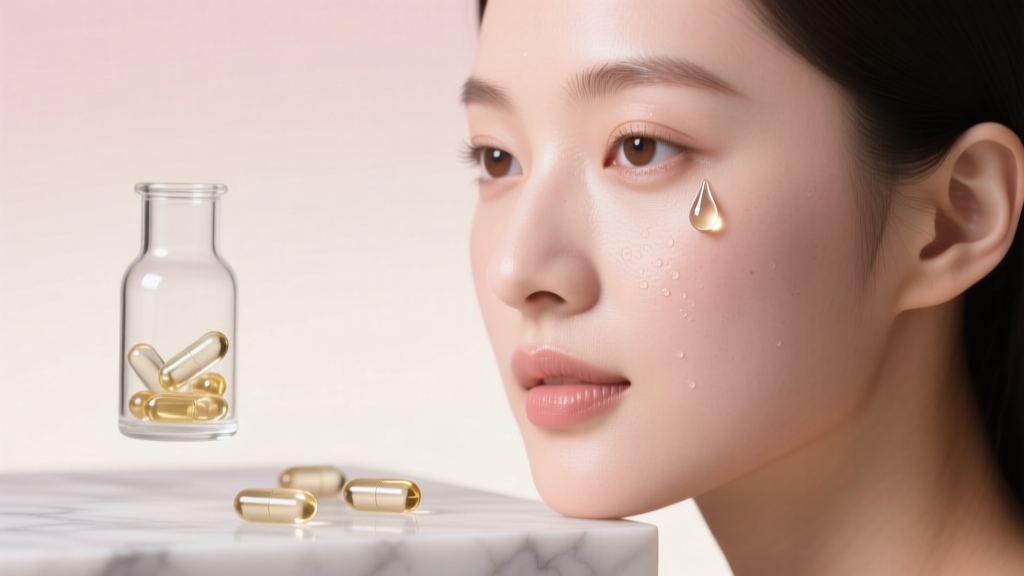
Collagen Supplements: Do They Really Work for Skin
The Collagen Supplement Boom
Hydrolyzed collagen peptides are one of the fastest-growing supplement categories. Claims range from reducing wrinkles to improving skin elasticity and hydration. But what does the science actually say?
What the Clinical Studies Show
Multiple randomized controlled trials show 2.5-10g daily collagen peptides improve skin elasticity by 7-15% and hydration by 12-28% after 8-12 weeks. The effects are modest but statistically significant.
How Oral Collagen Works
Digestion breaks collagen into amino acids and small peptides (di/tri-peptides). Some of these bioactive fragments survive digestion and signal skin fibroblasts to produce new collagen and hyaluronic acid.
Types of Collagen for Skin
Type I collagen (from bovine or marine sources) is most relevant for skin. Marine collagen has smaller peptides that may be better absorbed. Type II (chicken) targets joints, not skin.
Quality Matters: What to Look For
Choose hydrolyzed collagen (peptides), not gelatin. Look for products tested by third parties (NSF, USP). Effective doses are 5-10g daily. Take on an empty stomach for better absorption.
Limitations and Skepticism
Some studies are industry-funded. Effects are modest compared to prescription retinoids. Collagen supplements work best as part of a comprehensive anti-aging approach, not as a standalone solution.
Our Verdict
Collagen supplements show genuine but modest benefits for skin hydration and elasticity. They're a worthwhile addition to a good skincare routine but won't replace proven topicals like retinoids and sunscreen.
