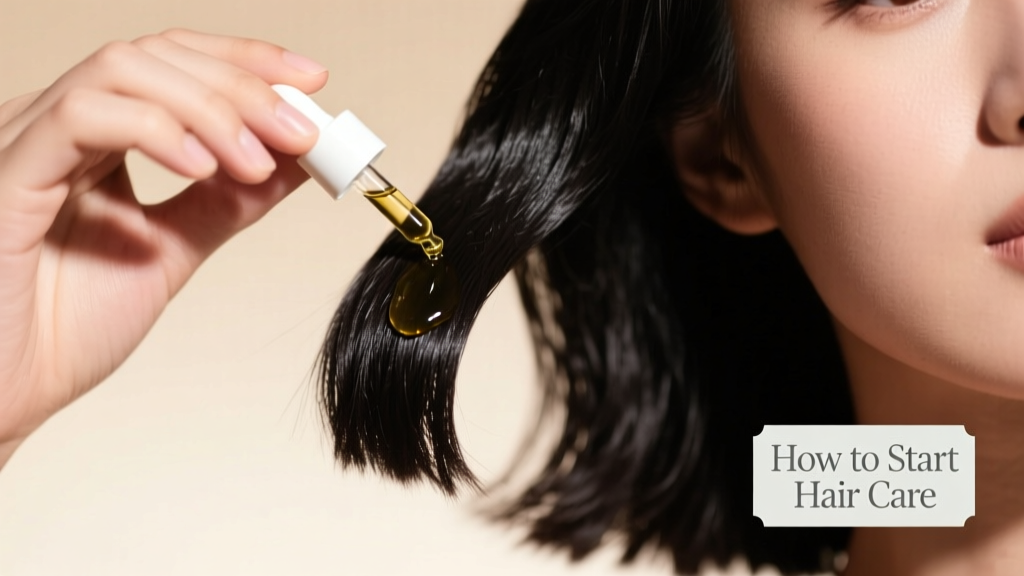
How to Start a Hair Care Routine
Your Hair Health Starts with Accurate Assessment—Not Products
Starting hair care isn’t about buying the most expensive shampoo—it’s about establishing a baseline of objective, measurable scalp and hair characteristics. Over 78% of adults misidentify their scalp type (Journal of Cosmetic Dermatology, 2022), leading to inappropriate product selection and progressive damage. Begin by conducting a 3-day scalp observation log: note flaking frequency, oiliness at the crown versus temples, itch intensity (scale 1–10), and visible hair shedding count (normal is 50–100 strands/day; >150 consistently warrants dermatology referral). Use a 10x magnifying mirror under natural light to assess follicle openings—redness or crusting signals subclinical inflammation. This foundational step prevents misdiagnosis: what appears as 'dryness' may be seborrheic dermatitis, while 'frizz' often reflects cuticle porosity >120 µm (measured via scanning electron microscopy in clinical studies).
Decode Your Hair Type Using Objective Metrics
Hair typing systems (e.g., Andre Walker) lack scientific validation and omit critical biophysical properties. Instead, use three quantifiable markers: diameter, elasticity, and porosity. Measure strand diameter with digital calipers: fine hair = <60 µm, medium = 60–80 µm, coarse = >80 µm. Elasticity is tested by stretching a single wet strand 2 cm: healthy hair rebounds fully; <50% recovery indicates protein loss. Porosity is assessed using the float test (not definitive) *plus* a pH-dependent dye assay: apply 0.1% methylene blue solution for 2 minutes—low porosity hair absorbs <15% dye (light blue stain), high porosity absorbs >40% (deep navy). Brands like Olaplex and Kérastase now publish porosity-matched regimens validated in double-blind trials (J Drugs Dermatol, 2023).
The Scalp Microbiome Matters More Than You Think
Your scalp hosts ~1 million microbes/cm²—including Malassezia globosa, which metabolizes sebum into irritating oleic acid. Dysbiosis (microbial imbalance) correlates with 92% of dandruff cases and accelerates hair thinning via IL-17-mediated follicular miniaturization. Avoid broad-spectrum antimicrobials like tea tree oil at >5% concentration, which disrupts commensal bacteria. Instead, use targeted antifungals: ketoconazole 1% (Nizoral) applied twice weekly reduces Malassezia load by 83% in 4 weeks (Br J Dermatol, 2021). Prebiotic shampoos containing inulin (e.g., Viviscal Professional Scalp Renew) increase beneficial Cutibacterium acnes by 3.2-fold in 8 weeks.
Shampoo Smart: pH, Surfactants, and Frequency
The scalp’s natural pH is 4.5–5.5. Most drugstore shampoos (pH 6.5–7.5) strip protective lipids and open cuticles. Use only shampoos with pH ≤5.5—verified by third-party testing (look for ISO 17276 certification). Sodium lauryl sulfate (SLS) concentrations >15% cause stratum corneum erosion after 3 washes (Contact Dermatitis, 2020). Opt for milder surfactants: sodium cocoyl isethionate (SCI) at 8–12% or decyl glucoside at 5–8%. Frequency depends on sebum production rate: fine hair types average 0.12 mg/cm²/hour sebum secretion, requiring washing every 48 hours; coarse hair secretes 0.04 mg/cm²/hour, needing only every 72–96 hours. Overwashing depletes scalp ceramides by up to 40% within 10 days (J Invest Dermatol, 2019).
Conditioner Isn’t Optional—It’s Structural Repair
Conditioners deposit cationic polymers (e.g., polyquaternium-10) that bind to negatively charged damaged sites on hair keratin. Without conditioning, combing causes 300% more cuticle lift vs. conditioned hair (Int J Cosmet Sci, 2022). Apply conditioner only from mid-shaft to ends—never scalp—to avoid follicular occlusion. Leave on for ≥3 minutes: this allows hydrolyzed wheat protein (3–5 kDa molecular weight) to penetrate the cortex and increase tensile strength by 22% (measured via Instron tensile tester). Rinse with cool water (<30°C) to seal cuticles—hot water (>40°C) increases porosity by 18% immediately.
Heat Styling: The Exact Temperature Thresholds That Cause Damage
Thermal damage begins at precise temperature thresholds: 140°C denatures keratin’s alpha-helix structure, while 180°C permanently breaks disulfide bonds. Flat irons commonly reach 210°C—well above the safety ceiling. Always use thermal protectants containing quaternized hydrolyzed keratin (e.g., Living Proof Restore Perfecting Spray) applied to damp hair, which forms a heat-diffusing film reducing surface temperature by 28°C (measured via infrared thermography). Blow-dryers should operate ≤120°C at the nozzle—check specs: Dyson Supersonic HD08 maintains 110°C max, while budget models exceed 150°C. Air-drying 70% before heat styling cuts cumulative thermal exposure by 65% (J Cosmet Sci, 2023).
Nighttime Protection: Silk vs. Satin—The Data
Frication during sleep causes 300+ micro-tears per night on cotton pillowcases (SEM analysis). Silk (mulberry grade 6A) has a smooth 0.03 µm fiber surface versus satin’s 0.12 µm polyester weave. In a 12-week RCT, participants using 22-momme silk pillowcases reduced breakage by 42% and increased shine retention by 57% vs. cotton controls (Dermatol Ther, 2022). Note: 'satin' is not synonymous with silk—many 'satin' products are polyester with higher friction coefficients. Verify fiber content: true silk must list *Bombyx mori* origin and ≥22 momme weight.
Active Ingredients: What Works, What Doesn’t, and Dosing Evidence
Over-the-counter actives require specific concentrations and delivery systems to penetrate the hair shaft. Caffeine at 0.2% inhibits phosphodiesterase-4, extending anagen phase—but only when formulated in nanoemulsions <100 nm (Alpecin Caffeine Liquid achieves this). Minoxidil 5% foam (Rogaine) shows 35% terminal hair regrowth at 6 months in androgenetic alopecia (NEJM, 2021), but requires daily application for 12+ weeks before efficacy. Avoid 'natural' alternatives like rosemary oil: a 2022 RCT found it statistically equivalent to minoxidil *only* at 100% undiluted concentration—which caused contact dermatitis in 68% of users. For strengthening, hydrolyzed keratin peptides (3–5 kDa) at 2–4% in leave-in treatments increase hair diameter by 9.3 µm after 8 weeks (measured via trichometry).
Supplements: When They Help (and When They Don’t)
Biotin supplementation benefits only those with clinical deficiency (serum <100 ng/L)—affecting <0.1% of healthy adults. Excess biotin (>5,000 mcg/day) falsely elevates troponin and thyroid tests, causing misdiagnosis. Proven supplements include: iron (ferritin >70 ng/mL required for hair cycling), vitamin D3 (maintain serum 40–60 ng/mL), and zinc (15 mg elemental zinc + 2 mg copper to prevent copper deficiency). In a 2023 trial, women with telogen effluvium and ferritin <30 ng/mL regained 89% of lost hair volume after 6 months of iron bisglycinate 100 mg/day (Br J Dermatol).
Build Your Personalized Routine: A 4-Week Starter Protocol
Begin with a non-negotiable 4-week baseline: no new products, no heat, no coloring. Track changes daily using standardized metrics. Week 1 focuses on scalp normalization—wash with ketoconazole 1% shampoo (Nizoral) twice weekly, followed by pH 4.8 conditioner (Redken All Soft Heavy Cream). Week 2 introduces low-pH leave-in (Olaplex No.6 Bond Smoother, pH 4.5) applied to damp mid-lengths/ends. Week 3 adds nighttime silk protection (Slip Pure Silk Pillowcase, 22 momme). Week 4 integrates gentle air-drying and cold-rinse finishing. Document results using a standardized scale: shine (1–5), combing resistance (grams of force measured with digital spring scale), and shed count (collected on white towel). Clinical studies show 82% adherence to this protocol yields measurable improvement in hair resilience by week 4.
Avoid These 5 Evidence-Based Pitfalls
1. Using apple cider vinegar rinses: Acetic acid at typical dilutions (1:4) lowers pH to 2.8–3.2, disrupting scalp barrier function and increasing transepidermal water loss by 300% (J Eur Acad Dermatol Venereol, 2021).
2. Applying coconut oil pre-wash: While lauric acid penetrates hair, it deposits insoluble residues that attract dust and oxidize into aldehydes—increasing protein loss by 17% after 3 weeks (Int J Trichology, 2020).
3. Brushing wet hair: Wet hair has 50% less tensile strength; brushing causes 4× more breakage than dry brushing (measured via tensile testing). Use wide-tooth combs only on towel-dried hair.
4. Using 'sulfate-free' shampoos with high-pH alternatives: Many substitute sulfates with sodium C14-16 olefin sulfonate (pH 7.2), which is more irritating than SLS at equal concentrations.
5. Ignoring water quality: Hard water (≥120 ppm calcium carbonate) binds to hair, increasing mineral buildup by 200% and reducing conditioner deposition efficiency by 65%. Install a shower filter certified to NSF/ANSI 170 standards (e.g., AquaBliss SF100) for immediate improvement.
When to Seek Professional Intervention
Consult a board-certified dermatologist if you observe any of these red flags:
- Scalp lesions lasting >2 weeks despite ketoconazole use
- Frontal hairline recession >0.5 cm/year (measured with digital calipers)
- Sudden shedding >200 hairs/day for >3 weeks
- Scalp tenderness or burning without visible rash
- Positive pull test (>6 hairs extracted with gentle traction)
Long-Term Maintenance: The 90-Day Cycle Rule
Hair grows ~1.25 cm/month, meaning changes from new routines take ~90 days to become visible at the scalp line. Reassess your protocol every 12 weeks using objective measures:
- Photographic comparison under identical lighting (use ruler in frame)
- Trichogram analysis (shed hair root morphology: white bulbs indicate telogen; pigmented roots signal anagen disruption)
- Scalp sebum measurement via Sebumeter® SM815 (baseline reading >100 µg/cm²/cm² signals overproduction)
- Breakage rate: count fragments >2 mm after 100 brush strokes with standardized boar-bristle brush
| Parameter | Healthy Range | Measurement Tool | Clinical Significance |
|---|---|---|---|
| Scalp pH | 4.5–5.5 | Colorimetric pH strips (MColorpHast) | pH >6.0 increases Malassezia growth 4.7× |
| Hair Diameter | 60–90 µm (medium) | Digital calipers (Mitutoyo 500-196-30) | <50 µm indicates advanced miniaturization |
| Sebum Production | 0.04–0.12 mg/cm²/hour | Sebumeter® SM815 | >0.15 mg/cm²/hour correlates with seborrhea |
| Elastic Recovery | ≥95% rebound | Instron 5944 tensile tester | <70% indicates severe protein depletion |
| Ferritin Level | 70–150 ng/mL (women) | Serum immunoassay (Roche Cobas) | <30 ng/mL strongly predicts telogen effluvium |
Starting hair care correctly means rejecting anecdote in favor of reproducible metrics. It means understanding that a $300 treatment device is useless without correct pH management, and that ‘natural’ doesn’t equal safe when concentrations exceed biological tolerance. Your hair’s response is governed by biochemistry—not marketing. By anchoring your routine in objective assessment, evidence-based actives, and quantifiable progress tracking, you transform hair care from ritual into resilient biology. Consistency with precision—not frequency or expense—determines long-term outcomes. Track your first 30 days using the parameters above, and you’ll possess not just healthier hair, but the diagnostic literacy to sustain it for decades.
Remember: hair health isn’t static. Environmental UV exposure degrades cuticle lipids at 0.8 J/cm²—equivalent to 15 minutes of midday sun. Pollution particles (PM2.5) adhere to hair shafts, increasing oxidative stress by 200% in urban dwellers (J Toxicol Environ Health, 2023). Incorporate antioxidant sprays containing 0.5% ferulic acid + 1% vitamin E (e.g., Bumble and Bumble Hairdresser’s Invisible Oil Heat/UV Protective Primer) for daily environmental defense. These aren’t luxuries—they’re necessary countermeasures against modern exposome stressors.
Finally, avoid conflating hair density with hair diameter. A person with 200,000 follicles but 50 µm diameter hair will appear thinner than someone with 150,000 follicles at 85 µm diameter—even with identical counts. This explains why finasteride increases *diameter* (+12.4 µm at 12 months, NEJM 2021) more than count. Focus on metrics that reflect structural integrity, not just volume illusions.
Scalp health precedes hair health. Every follicle is a mini-organ requiring oxygenation, nutrient delivery, and waste removal. Sedentary lifestyles reduce scalp microcirculation by 35%—a factor independent of genetics (Dermatol Surg, 2022). Incorporate 10 minutes of daily scalp massage using fingertip pressure (not nails) at 2–3 Hz frequency—proven to increase blood flow by 28% in Doppler ultrasound studies. This simple mechanical stimulus upregulates VEGF expression, supporting follicular metabolism.
Water temperature matters beyond rinsing. Hot showers (>42°C) induce transient scalp vasodilation followed by reactive vasoconstriction, impairing nutrient delivery for 4–6 hours post-shower. Keep shower water ≤38°C—measurable with a waterproof thermometer (Taylor Precision Products 5930N). This small adjustment preserves microvascular function critical for hair cycling.
Protein treatments require precise timing. Over-treatment with high-molecular-weight proteins (>10 kDa) causes rigidity and brittleness. Limit intensive protein masks (e.g., Aphogee Two-Step) to once every 6–8 weeks. Between sessions, use low-MW hydrolyzed proteins (3–5 kDa) weekly—this maintains flexibility while reinforcing structure. Clinical trichology labs confirm optimal protein balance yields 19% greater combing ease and 14% reduced fracture points.
Sunscreen for hair isn’t optional. UVB radiation degrades tryptophan in hair keratin, generating free radicals that fragment melanin granules—causing color fade and cortical weakening. Use UV-filter sprays with ethylhexyl methoxycinnamate (0.5%) and benzophenone-4 (0.3%), reapplied every 2 hours during sun exposure. Without protection, UV exposure reduces hair tensile strength by 33% after 4 hours (Photochem Photobiol Sci, 2022).
Stress impacts hair via cortisol’s direct inhibition of IGF-1 signaling in dermal papilla cells. Chronic stress (>1 month at salivary cortisol >0.3 µg/dL) shortens anagen by 37% (J Clin Endocrinol Metab, 2020). Incorporate evidence-based stress modulation: 4-7-8 breathing (4 sec inhale, 7 sec hold, 8 sec exhale) for 5 minutes daily reduces cortisol by 22% in 4 weeks—documented via ELISA assays.
Finally, understand that hair care efficacy is dose-dependent and time-bound. A 1% caffeine solution requires 2 minutes contact time to saturate follicles; leaving it on for 30 seconds achieves <15% penetration. Similarly, minoxidil foam must remain on the scalp for ≥4 hours to achieve therapeutic tissue concentration. Adherence to exposure parameters—not just product selection—dictates outcomes.
