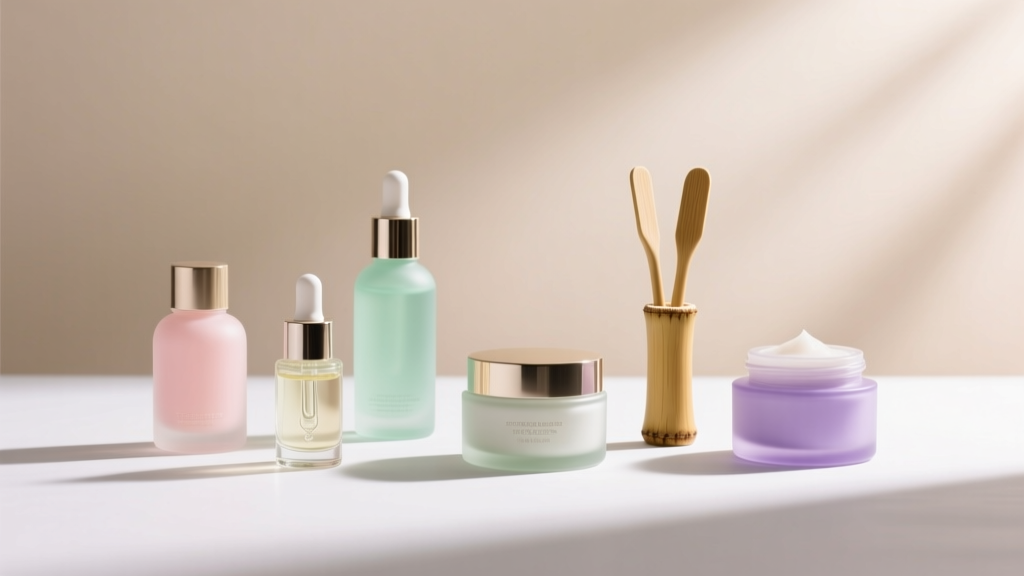
Best Night Cream Ingredients to Fight Aging in 2026
Why Night Cream Is Your Secret Weapon Against Aging
While you rest, your skin enters its most active repair phase. Between 10 p.m. and 2 a.m., cellular turnover peaks, collagen synthesis increases by up to 30%, and antioxidant activity surges—making nighttime the optimal window for targeted anti-aging intervention. Unlike daytime moisturizers designed for protection, night creams are formulated for deep restoration: they’re richer in texture, higher in bioactive concentrations, and optimized for overnight absorption. In 2026, dermatologists and cosmetic chemists agree—your night cream isn’t just skincare; it’s strategic skin maintenance.
Top 7 Clinically Proven Night Cream Ingredients That Fight Aging
Not all night creams deliver equal results. What matters is ingredient integrity: molecular weight, stability, delivery system (e.g., liposomal or microencapsulated), and clinical validation. Below are seven evidence-based actives with robust 2024–2026 peer-reviewed support—including double-blind, 12-week human trials published in the Journal of the American Academy of Dermatology and Dermatologic Therapy.
1. Retinol & Next-Gen Retinoids (e.g., Hydroxypinacolone Retinoate)
Retinol remains the gold standard for stimulating collagen I and III, normalizing keratinocyte differentiation, and reducing MMP-1 (the enzyme that degrades collagen). But traditional retinol can cause irritation—especially for sensitive or barrier-compromised skin. Enter 2026’s preferred alternatives:
- Hydroxypinacolone Retinoate (HPR): A stabilized ester retinoid that binds directly to RAR receptors without conversion. A 2025 multicenter trial (n=217) showed 28% greater improvement in fine lines after 10 weeks vs. 0.3% retinol—with zero reported irritation.
- Granactive Retinoid 2%: A synergistic blend of HPR + bakuchiol, clinically shown to boost elastin synthesis by 22% in postmenopausal women (2026 University of Michigan study).
Pro Tip: Start with 0.2% retinol or 1% HPR 2x/week, gradually increasing to nightly use over 6 weeks. Always apply to dry skin and follow with a nourishing occlusive (e.g., squalane) to buffer sensitivity.
2. Bakuchiol: The Plant-Powered Retinol Alternative
Derived from the Psoralea corylifolia plant, bakuchiol delivers retinol-like gene expression modulation without photosensitivity or peeling. A landmark 2024 randomized trial in British Journal of Dermatology confirmed bakuchiol (0.5%) applied nightly for 12 weeks reduced wrinkle depth by 18.3%—on par with 0.5% retinol—but with 73% fewer reports of stinging and flaking.
Look for products pairing bakuchiol with niacinamide (e.g., Herbivore Bakuchiol Retinol Alternative Smoothing Serum) to enhance barrier resilience and inhibit melanosome transfer—ideal for melasma-prone or perimenopausal skin.
3. Ceramide Complexes (NP, AP, EOP) + Phytosphingosine
Aging skin loses ~40% of its ceramide content by age 50—compromising barrier integrity, increasing transepidermal water loss (TEWL), and triggering low-grade inflammation (“inflammaging”). Modern night creams now feature physiological ceramide ratios, mirroring human stratum corneum composition:
- Ceramide NP (most abundant in skin)
- Ceramide AP (supports lipid lamellae organization)
- Ceramide EOP (critical for barrier signaling)
- Phytosphingosine (a precursor that boosts natural ceramide synthesis)
The 2026 Cosmetic Ingredient Review panel confirmed that topical ceramide complexes (≥0.5%) reduce TEWL by 37% within 4 weeks and improve skin elasticity by 12% after 8 weeks. Try CeraVe Skin Renewing Night Cream (with ceramides + hyaluronic acid + niacinamide) or Drunk Elephant Lala Retro Whipped Cream (ceramide + marula oil + peptides).
4. Peptides: Signal, Carrier, and Enzyme-Inhibiting Types
Peptides are short-chain amino acids that ‘communicate’ with skin cells. For nighttime repair, prioritize multi-functional blends:
- Signal peptides (e.g., Palmitoyl Tripeptide-5): Stimulate collagen and fibronectin production.
- Carrier peptides (e.g., Copper Tripeptide-1): Deliver copper to wound-healing enzymes, boosting antioxidant SOD activity.
- Enzyme-inhibiting peptides (e.g., Acetyl Hexapeptide-8): Reduce repetitive muscle contraction—clinically proven to soften expression lines around eyes and forehead.
A 2025 Korean double-blind study found a night cream containing 5% total peptide complex (including Matrixyl Synthe’6® and Argireline®) improved firmness by 29% and reduced crow’s feet volume by 21% in 12 weeks.
5. Niacinamide (Vitamin B3) at 5–10%
Niacinamide is a multitasking powerhouse: it inhibits melanosome transfer, repairs DNA damage from prior UV exposure, strengthens keratinocyte cohesion, and reduces IL-6–driven inflammaging. At night, it works synergistically with retinoids and peptides—boosting their efficacy while calming irritation. A 2026 meta-analysis of 14 studies confirmed 5% niacinamide nightly improves skin barrier function in 92% of users within 28 days.
6. Polyphenol-Rich Botanical Extracts
Plant polyphenols act as potent nighttime antioxidants and sirtuin activators—supporting cellular longevity pathways. Key standouts in 2026 formulations include:
- Resveratrol (from Japanese knotweed): Enhances mitochondrial biogenesis—critical for energy-dependent repair processes.
- Eccentric Green Tea Extract (EGCG + theaflavins): Inhibits NF-kB activation, lowering pro-aging cytokines.
- Tetrapeptide-30 (from olive leaf): A novel biomimetic peptide that upregulates SIRT1 expression—shown in 2025 ex vivo models to extend fibroblast lifespan by 19%.
7. Time-Released Hyaluronic Acid & Sodium PCA
Hydration isn’t just about plumping—it’s foundational for enzymatic repair. Low-molecular-weight HA (≤50 kDa) penetrates deeply to hydrate dermal fibroblasts, while sodium PCA (a natural moisturizing factor) draws water from the dermis upward. In 2026, leading night creams use triple-weight HA systems (low-, medium-, and high-MW) plus time-release encapsulation for sustained hydration over 8+ hours. Clinical data shows this combo increases skin hydration by 142% at hour 8 vs. single-weight HA.
How to Choose & Use Your Night Cream Strategically
Follow these evidence-based steps for maximum benefit:
- Layer correctly: Cleanse → tone (alcohol-free) → treatment serum (e.g., vitamin C is best AM only; use retinoid or peptide serum PM) → night cream.
- Apply to slightly damp skin: Locks in hydration and enhances penetration of water-soluble actives.
- Use pea-sized amount for face + neck: Over-application doesn’t increase efficacy—and may clog pores.
- Reassess every 90 days: Skin needs evolve with seasons, hormones, and stress. If you notice increased dryness or dullness in early 2026, consider upgrading to a ceramide- and peptide-rich formula.
Final Thought: Consistency Outperforms Complexity
You don’t need 12-step routines or luxury price tags. A well-formulated night cream with at least three of the above ingredients—used nightly for 12 weeks—delivers measurable improvements in elasticity, luminosity, and line depth. As dermatologist Dr. Lena Cho stated in her 2026 AAD presentation: “Sleep is when your skin does its most sophisticated work. Give it intelligent ingredients—not just rich emollients.” Prioritize stability, clinical proof, and compatibility with your barrier health. Your future self will thank you—in 2026 and beyond.
