Dehydrated Scalp: Causes and Best Treatments for
Understanding Scalp Dehydration
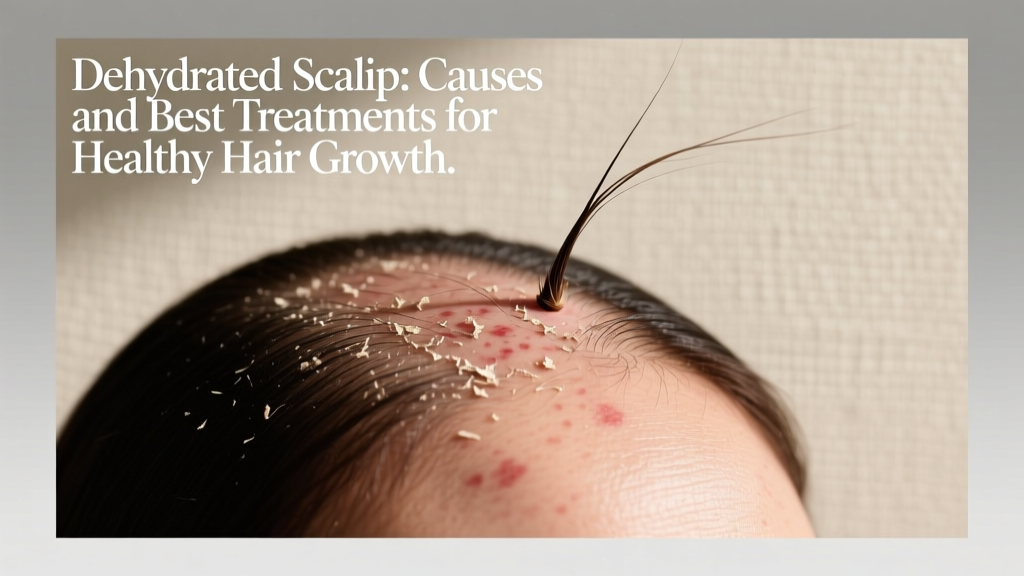
Like facial skin, your scalp can become dehydrated. This affects the hair follicle environment, potentially leading to weaker hair growth, increased shedding, and an uncomfortable, tight feeling.
Common Causes
Harsh shampoos with sulfates, hot water washing, frequent heat styling, chemical treatments, and environmental factors like air conditioning all contribute to scalp dehydration.
Signs of a Dehydrated Scalp
Tightness after washing, fine white flakes (not dandruff), itching, dull hair, and increased hair breakage. Unlike dandruff, dehydrated scalp flakes are small and dry, not oily.
Gentle Cleansing Routine
Switch to a sulfate-free, pH-balanced shampoo. Wash with lukewarm water, not hot. Reduce washing frequency to 2-3 times per week to allow natural oils to protect the scalp.
Scalp Serums and Treatments
Apply a hyaluronic acid scalp serum after washing. Ingredients like panthenol, aloe vera, and niacinamide soothe and hydrate the scalp without weighing down hair.
Weekly Scalp Mask
Use a scalp-specific hydration mask once weekly. Look for formulas with tea tree oil (antimicrobial), argan oil (nourishing), and glycerin (humectant). Massage in circular motions for 5 minutes.
Diet and Lifestyle Factors
Omega-3 fatty acids, biotin, zinc, and adequate water intake all support scalp hydration from within. Consider a fish oil supplement if your diet lacks fatty fish.