Dehydrated Scalp vs Dry Scalp: How to Tell and Treat Each Condition

Dehydrated Scalp vs Dry Scalp: How to Tell and Treat Each Condition

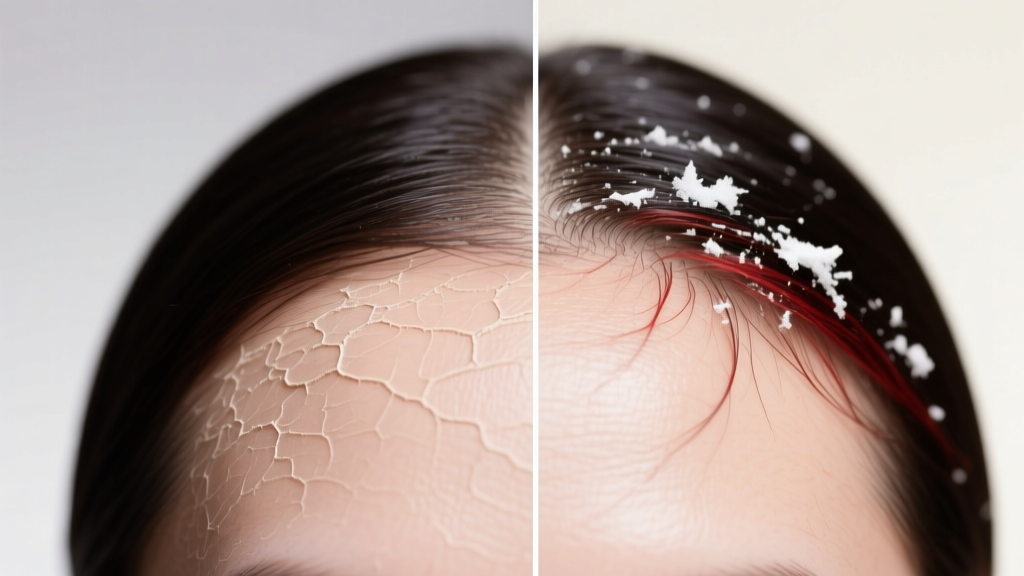
## Dehydrated Scalp vs Dry Scalp: Know the Difference Many people confuse dehydrated scalp with dry scalp, but they require completely different treatments. Using the wrong approach can make your condition worse. ### The Key Difference **Dehydrated scalp**: Lacks water (can happen to any scalp type, even oily) **Dry scalp**: Lacks oil/sebum (specifically a lack of natural oil production) ### Signs of Dehydrated Scalp - Itching that comes and goes - Tight feeling after washing - Small, dry flakes (like powder) - Scalp feels oily but still itches - Hair looks dull and lacks bounce - Increased static and frizz ### Signs of Dry Scalp - Persistent itching - Larger, visible flakes - Scalp feels rough and tight all the time - Hair is dry and brittle - No oil production visible - Scalp may be red or irritated ### Treatment for Dehydrated Scalp **Goal**: Add water, maintain existing oil **Step 1: Hydrating Shampoo** - Sulfate-free, pH balanced (4.5-5.5) - Contains: aloe vera, glycerin, hyaluronic acid - Recommended: Briogeo Scalp Revival, The Inkey List Salicylic Acid **Step 2: Scalp Serum/Treatment** - Hyaluronic acid scalp serum (The Ordinary HA) - Aloe vera gel applied to scalp - Apply to damp scalp after washing **Step 3: Lightweight Leave-In** - Water-based leave-in conditioner - Avoid heavy oils that trap heat **Step 4: Internal Hydration** - 2.5L water daily - Electrolyte-rich foods - Omega-3 supplements ### Treatment for Dry Scalp **Goal**: Add oil, repair lipid barrier **Step 1: Nourishing Shampoo** - Cream or oil-based cleanser - Contains: shea butter, coconut oil, ceramides - Recommended: SheaMoisture Manuka Honey, Moroccanoil Hydrating **Step 2: Scalp Oil Treatment** - Pre-wash: Warm jojoba or argan oil massage (30 min) - Post-wash: Light scalp oil (2-3 drops) - Weekly: Hot oil treatment **Step 3: Rich Conditioner** - Apply to scalp AND hair - Leave on 5+ minutes - Contains: ceramides, fatty acids **Step 4: Protective Styling** - Avoid tight styles that stress the scalp - Use silk/satin pillowcase - Minimize heat styling ### Common Mistakes | Mistake | Why It's Wrong | Fix | |---------|---------------|-----| | Using anti-dandruff shampoo on dehydrated scalp | Zinc pyrithione is drying | Switch to hydrating shampoo | | Applying heavy oils to dehydrated scalp | Traps heat, blocks hydration | Use water-based products first | | Washing too frequently | Strips natural oils | Reduce to 2-3x per week | | Hot water washing | Increases TEWL from scalp | Use lukewarm water | | Ignoring the scalp | Treating only hair, not skin | Include scalp in skincare routine | ### When to See a Trichologist - Persistent flaking despite treatment - Hair loss accompanying scalp issues - Scabs, sores, or bleeding - Severe itching that disrupts sleep - No improvement after 4 weeks of proper care ### The Connection to Skin Dehydration If you have dehydrated facial skin, you likely have a dehydrated scalp too. The skin is one organ—treating it holistically yields better results. Your scalp skincare should mirror your facial skincare: gentle cleansing, hydration, and protection.