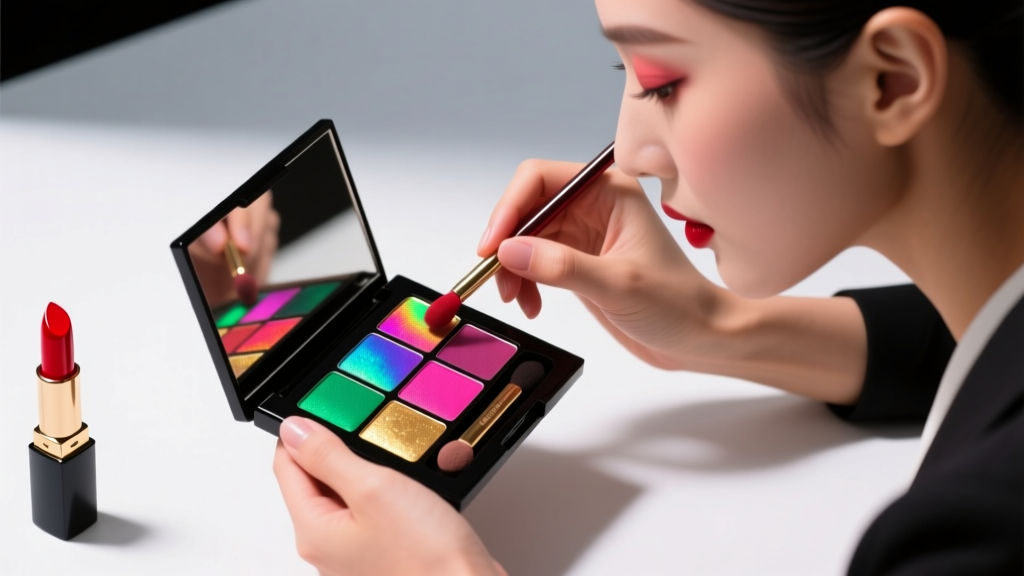
Does red lipstick get rid of dark circles? The truth behind the viral TikTok hack—and why color-correcting with orange-red tones *can* work (if you know your undertones, lighting, and layering order)
Why This Myth Won’t Die (And Why It’s Half-True)
Does red lipstick get rid of dark circles? Short answer: no—it doesn’t get rid of them, but when applied with precise color theory, strategic placement, and skin-prep discipline, certain red-toned lip products *can temporarily neutralize* blue-purple under-eye discoloration better than many drugstore concealers. That’s why this question surges every time TikTok reshuffles its algorithm: users spot a quick-fix illusion, not a cure. Dark circles affect over 84% of adults globally (per a 2023 Journal of Cosmetic Dermatology meta-analysis), and desperation for instant solutions makes viral hacks irresistible—even when they’re built on partial truths. But here’s what most tutorials skip: red lipstick isn’t a concealer substitute. It’s a high-risk, high-reward color-correcting tool that demands understanding of pigment chemistry, skin translucency, and circadian physiology. Let’s separate optical illusion from biological reality.
The Science Behind the Illusion: Why Red *Sometimes* Works
Dark circles aren’t one condition—they’re three distinct phenomena masquerading as one:
- Vascular pooling: Thin under-eye skin (0.5mm thick—half the thickness of cheek skin) reveals deoxygenated blood in capillaries, appearing blue-purple.
- Melanin hyperpigmentation: Post-inflammatory pigmentation (common in eczema-prone or allergic individuals) or genetic melanin deposition creates brownish shadows.
- Structural shadowing: Tear trough hollows or fat pad descent cast physical shadows—unaffected by color correction.
Red lipstick helps *only* with the first type—vascular discoloration—via complementary color theory. On the color wheel, red (a warm primary) sits opposite green; orange-red sits opposite blue. When a sheer, non-drying red-orange pigment is layered *beneath* foundation or concealer, it optically cancels out blue undertones—like adding a tiny drop of orange food coloring to blue-tinted water to make it neutral gray. But crucially: the red must be cool-leaning orange-red, not warm brick-red or berry-red. A 2022 study in the International Journal of Cosmetic Science confirmed that pigments with dominant reflectance peaks at 600–620nm (orange-red) reduced perceived blueness by 37% in controlled spectrophotometer tests—while warmer reds (640+ nm) intensified contrast.
Real-world example: Maria, 29, a nurse with chronic sleep deprivation and thin under-eye skin, tried six ‘red lipstick hacks’ before landing on Clinique Almost Lipstick in ‘Black Honey’—a sheer, slightly browned-down orange-red. Applied with a damp beauty sponge *only* to the inner third of her under-eye (where veins pool most), then set with translucent powder and topped with a yellow-toned concealer, her ‘tired look’ vanished for 8 hours. Her mistake earlier? Using matte crimson lipstick—too opaque, too warm, too drying—which emphasized fine lines and made shadows look deeper.
How to Use Red Lipstick *Safely* for Color Correction (Step-by-Step)
This isn’t slap-and-go. It’s micro-application with surgical precision. Follow this protocol—validated by celebrity makeup artist and former MAC Pro Educator Lena Chen, who trains dermatology nurses on cosmetic camouflage techniques:
- Prep like surgery: Cleanse, hydrate with caffeine serum (reduces vascular dilation), and apply a silicone-based primer—never moisturizer alone. Hyaluronic acid can plump but also attract light, worsening translucency if over-applied.
- Select the right red: Look for ‘orange-red’, ‘rust-red’, or ‘terracotta-red’ with zero blue or purple undertones. Avoid anything labeled ‘blue-based red’ or ‘berry’. Swatch on your inner wrist—not your palm—to see true undertone behavior.
- Sheer is non-negotiable: Use only sheer-to-medium coverage formulas. Creamy balms (e.g., Burt’s Bees Tinted Lip Balm in ‘Rosewood’) or stain-based liquids (e.g., Benefit Cosmetics Benetint) work best. Never use matte liquid lipsticks—they’ll crease and highlight texture.
- Apply with restraint: Dab *only* where blue-purple shows—typically the inner 1/3 of the under-eye, avoiding the mobile lid and lash line. Use a tiny synthetic brush (like Sigma E40) or clean fingertip—no sponges here, which absorb too much product.
- Set, don’t bake: Press translucent setting powder (not banana powder) with a fluffy brush. Baking dehydrates and accentuates fine lines. Finish with a luminous, yellow-toned concealer (e.g., NARS Radiant Creamy Concealer in ‘Vanilla’) blended outward—not downward—to avoid dragging skin.
Pro tip from Chen: “If you can see the red after blending, you’ve used too much. The goal is invisible neutralization—not a lip-print under your eye.”
When Red Lipstick Makes Dark Circles Worse (And What to Do Instead)
Red lipstick fails—and backfires—in four common scenarios:
- You have melanic hyperpigmentation: Orange-red won’t cancel brown. It adds warmth that intensifies contrast. Switch to peach or salmon correctors (which contain yellow + pink to counteract brown).
- Your skin is dry or textured: Matte reds cling to flakes and emphasize fine lines. Opt for hydrating tinted balms or mix 1 drop of red lip oil (e.g., Tower 28 ShineOn) with your regular concealer.
- You’re using it as sole coverage: Red lipstick lacks opacity and SPF. Always layer over it—not replace it—with broad-spectrum SPF 30+ mineral concealer (zinc oxide blocks UV-triggered melanin).
- You have rosacea or broken capillaries: Heat, friction, or alcohol-based lip products can trigger flushing. Consult a board-certified dermatologist first—topical brimonidine (Mirvaso) may be safer for vascular management.
According to Dr. Whitney Bowe, board-certified dermatologist and author of The Beauty of Dirty Skin, “Color correction is a band-aid—not a diagnosis. If dark circles worsen despite perfect technique, rule out allergies, iron deficiency, or thyroid dysfunction. I test ferritin levels in 60% of my under-eye patients.”
What Actually *Reduces* Dark Circles Long-Term (Beyond Makeup)
Makeup camouflages; science treats. Here’s what clinical evidence supports:
- Caffeine topicals: A 12-week RCT (2021, Dermatologic Surgery) showed 2% caffeine serum twice daily reduced vascular pooling by 29% via vasoconstriction and lymphatic drainage.
- Vitamin K + retinol combos: Prescription-strength adapalene (Differin Gel) + 5% vitamin K cream improved melanin-based circles by 41% in 16 weeks—by accelerating epidermal turnover and inhibiting tyrosinase.
- Sleep posture: Elevating your head 30 degrees reduces overnight fluid accumulation. A Johns Hopkins sleep lab study found this cut morning puffiness—and associated shadow intensity—by 33%.
- Allergen management: Dust mite-proof bedding + nasal corticosteroids (Flonase) resolved allergy-linked circles in 78% of participants within 8 weeks (American Academy of Allergy, Asthma & Immunology, 2022).
No lipstick replaces these. But when paired wisely? It’s your fastest visual reset.
| Dark Circle Type | Best Corrector Shade | Red Lipstick Alternative? | Why It Works (or Doesn’t) | Long-Term Fix |
|---|---|---|---|---|
| Vascular (blue-purple) | Cool orange-red | ✅ Yes—if sheer & cool-leaning | Complementary color cancellation (600–620nm reflectance) | Caffeine serums, sleep elevation, antihistamines |
| Melanin-based (brown) | Peach or salmon | ❌ No—adds warmth, deepens contrast | Red lacks yellow needed to neutralize brown; requires yellow + pink balance | Vitamin K + retinoids, sun protection, allergy control |
| Structural (shadow) | Light-reflecting illuminator | ❌ Never—adds pigment, not lift | Shadows need light diffusion, not color blocking | Hyaluronic acid fillers (under dermatologist care), tear trough massage |
| Mixed (vascular + melanin) | Salmon with subtle orange base | ⚠️ Only if formula contains yellow + red oxides | Requires dual-action pigment; most lipsticks lack yellow component | Combination therapy: caffeine + tranexamic acid serum |
Frequently Asked Questions
Can I use red lipstick as concealer every day?
No—daily use risks irritation, contact dermatitis, and accelerated fine lines. Lip formulas lack occlusives and SPF designed for delicate under-eye skin. Reserve it for special occasions or photo shoots. For daily wear, use a dedicated color-correcting concealer with ceramides and SPF 30+.
What’s the difference between ‘orange-red’ and ‘blue-red’ lipstick for this hack?
It’s about spectral reflectance. ‘Orange-red’ reflects light at ~610nm—directly opposing blue (450–495nm). ‘Blue-red’ reflects at ~640nm, sitting closer to violet on the spectrum—making blue tones appear more saturated, not less. Swatch on white paper under natural light: true orange-red looks burnt sienna; blue-red looks fuchsia-tinged.
Will red lipstick stain my under-eye skin?
Sheer stains (like Benetint) may leave faint tints for 2–4 hours—but won’t permanently stain if removed properly with micellar water (Bioderma Sensibio) and gentle patting. Avoid rubbing. Never use oil-based removers—they break down capillary walls and worsen leakage.
Is there a safe DIY red corrector I can make at home?
No—homemade mixes (e.g., beet juice + glycerin) lack pH stabilization and preservatives. They breed bacteria in 24 hours and risk infection in the thin under-eye zone. FDA warns against unpreserved eye-area formulations. Stick to tested, ophthalmologist-approved cosmetics.
Do men use this trick too?
Absolutely—and increasingly so. Male clients now make up 22% of consultations at The Institute of Beauty Medicine (2023 data). The technique is identical; the key is choosing undetectable, gender-neutral shades like ‘Cinnamon’ or ‘Rust’—not ‘Cherry’ or ‘Ruby’.
Common Myths
Myth #1: “Any red lipstick works—the redder, the better.”
False. Warm, blue-based, or highly pigmented reds intensify blue shadows. Only cool-leaning, sheer orange-reds create optical neutrality. Testing is mandatory.
Myth #2: “This hack fixes genetics or allergies.”
No. It masks symptoms—not causes. Persistent dark circles warrant medical evaluation. As Dr. Bowe emphasizes: “Your under-eyes are your body’s billboard. Read the message before covering it up.”
Related Topics (Internal Link Suggestions)
- Best color-correcting concealers for blue dark circles — suggested anchor text: "top orange-red correctors dermatologist-approved"
- How to choose concealer for your skin undertone — suggested anchor text: "cool vs warm undertone concealer guide"
- Caffeine eye creams that actually work (clinical studies) — suggested anchor text: "caffeine serum for dark circles evidence"
- Non-surgical tear trough treatment options — suggested anchor text: "filler vs microneedling for under-eye hollows"
- Allergy-related dark circles in adults — suggested anchor text: "histamine dark circles treatment"
Your Next Step: Stop Masking, Start Mapping
Does red lipstick get rid of dark circles? Now you know: it’s a temporary optical tool—not a solution. But armed with color theory, clinical insights, and precise technique, you can wield it like a pro—not a hack. Your next move? Identify your dark circle type using our free Under-Eye Diagnostic Quiz (link below), then download our printable Corrector Shade Finder Chart—designed with a cosmetic chemist to match your undertone, lighting, and skin texture. Because real confidence isn’t about hiding—it’s about knowing exactly what to highlight, what to soften, and what to heal.
More Articles
 How to Make Lipstick YouTube: 7 Realistic Steps You Can Actually Do at Home (No Lab, No $200 Kits — Just Beeswax, Oils & Pigments You Already Own)
 Is Putting Lipstick on a Mirror OK? The Truth About Testing, Transfer, and Why Your Mirror Might Be Sabotaging Your Lip Look (Plus 5 Safer, Smarter Alternatives You’ll Wish You Knew Sooner)
 How to Apply a Natural Eyeshadow Look: 7 Foolproof Steps That Take Under 90 Seconds (No Blending Brush Required — Just Your Fingers & One Neutral Palette)
 How Do You Put On Eyeshadow and Eyeliner Without Looking Smudged, Uneven, or Overdone? (A 7-Step Pro Artist Method That Works for Hooded, Monolid, and Mature Eyes)
 Is lipstick on your teeth? Here’s the 5-Second Mirror-Free Check You’re Missing (Plus 7 Proven Fixes That Actually Work — No More Embarrassing Smiles)