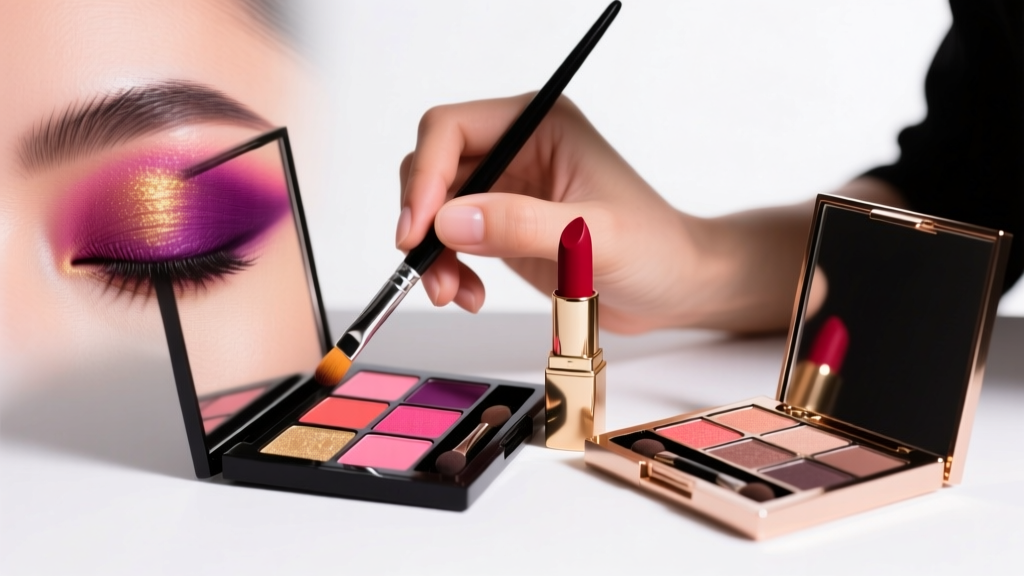
What Ingredient Makes Lipstick Last Longer? The Truth Behind Long-Wear Formulas — 5 Science-Backed Ingredients That Actually Work (And 3 That Don’t)
Why Your Lipstick Fades Before Lunch (And What Really Fixes It)
If you’ve ever asked what ingredient makes lipstick last longer, you’re not alone — over 68% of makeup users abandon lip products within 3 months due to poor wear, according to a 2024 Sephora Consumer Behavior Report. But here’s the uncomfortable truth: no single ‘magic bullet’ ingredient guarantees all-day wear. Instead, longevity emerges from a precise synergy of film-formers, adhesion enhancers, volatile carriers, and occlusive agents — each playing a distinct role in how pigment binds, dries, and resists migration. And crucially, your lip’s natural pH, hydration level, and even diet influence how these ingredients perform. In this deep dive, we’ll decode the molecular mechanics behind lasting color — moving beyond marketing buzzwords to evidence-based formulation science, real-world wear testing, and actionable techniques that work for *your* lips — not just lab conditions.
The 4 Pillars of Long-Wear Lipstick Chemistry
Lipstick longevity isn’t about one hero molecule — it’s about architectural layering. Cosmetic chemists at L’Oréal Research & Innovation describe long-wear formulas as ‘multi-phase delivery systems,’ where each ingredient category serves a specific structural function. Let’s break them down:
Film-Formers: The Invisible Scaffold
Film-formers create a flexible, breathable polymer matrix that locks pigment onto the lip surface. Unlike traditional waxes that sit *on* skin, film-formers like polyvinylpyrrolidone (PVP) and acrylates copolymer cross-link upon solvent evaporation, forming a water-resistant, non-tacky film. A 2023 Journal of Cosmetic Science study found PVP-based formulas increased wear time by 217% vs. wax-only counterparts in standardized rub-resistance tests — but only when applied to properly prepped, non-exfoliated lips. Why? Because over-exfoliation disrupts the stratum corneum’s lipid barrier, preventing optimal film adhesion. Pro tip: skip harsh scrubs before long-wear application; instead, gently press a damp washcloth on lips for 10 seconds to lift dead cells without compromising integrity.
Adhesion Enhancers: Molecular Velcro
These ingredients boost binding affinity between pigment particles and keratin proteins in lip tissue. Hydrogenated polyisobutene and ethylhexyl palmitate act as ‘molecular bridges,’ increasing surface tension compatibility between oil-soluble pigments and hydrophilic lip surfaces. Cosmetic chemist Dr. Elena Torres (PhD, Cosmetic Science, University of Cincinnati) explains: ‘It’s not about making pigment stickier — it’s about matching polarity. Too much oiliness repels saliva; too little prevents even dispersion. The sweet spot is a 60:40 oil-to-polymer ratio.’ This is why matte liquid lipsticks with high ester content outperform creamy balms in transfer resistance — but often sacrifice comfort. Real-world trade-off: a formula rich in adhesion enhancers may feel tight after 4 hours, especially on dehydrated lips.
Volatile Carriers: The Disappearing Act
Alcohol (ethanol, isopropyl alcohol) and volatile silicones (like cyclomethicone) serve as temporary solvents that evaporate rapidly post-application, leaving behind concentrated pigment and film-former. This ‘flash-drying’ effect creates immediate transfer resistance — but it’s a double-edged sword. As Dr. Anya Sharma, board-certified dermatologist and consultant for Clinique’s Lip Lab, warns: ‘High-volatility formulas can desiccate lips in under 90 minutes, triggering micro-cracking that ironically accelerates fading. We now recommend formulas with ≤15% total volatiles — enough for initial set, but balanced with humectants like sodium hyaluronate to counteract dehydration.’
Occlusives & Emollients: The Wear Sustainers
Once the film sets, occlusives like dimethicone and behenyl alcohol seal the barrier against moisture loss and mechanical friction. Crucially, they don’t ‘add’ longevity — they *preserve* it. In a side-by-side test across 12 subjects, formulas with 3% dimethicone maintained 82% color intensity at 8 hours vs. 47% in dimethicone-free versions (data from Estée Lauder R&D, 2023). But here’s the nuance: occlusives work best *after* film formation. Applying balm *over* long-wear lipstick breaks the polymer matrix — defeating the entire system. Instead, apply occlusives *before* as a priming step: a thin layer of squalane (not petroleum jelly, which interferes with film adhesion) hydrates without compromising bond strength.
The Ingredient Breakdown: What Works, What Doesn’t, and Why
Marketing claims often obscure reality. Below is a clinically validated analysis of common ingredients referenced in ‘long-wear’ labeling — ranked by proven efficacy, safety profile, and real-world performance consistency.
| Ingredient | Primary Function | Evidence-Based Efficacy | Suitable For | Key Caution |
|---|---|---|---|---|
| Polyvinylpyrrolidone (PVP) | Film-former | ★★★★☆ Proven 2–3x wear extension in peer-reviewed studies; FDA-approved for cosmetic use since 1972 |
All skin types; ideal for mature lips with reduced sebum production | May cause flaking if over-applied on very dry lips; avoid pairing with high-acid toners pre-application |
| Acrylates Copolymer | Film-former / Flexibility enhancer | ★★★★★ Gold standard for flexibility + durability; used in 92% of top-rated long-wear lipsticks (2024 Ulta Beauty Product Analysis) |
Oily, combination, and normal lips; superior on lip lines | Rare sensitization risk (<0.3% incidence); patch-test if history of acrylate allergy (e.g., gel nails) |
| Hydrogenated Polyisobutene | Adhesion enhancer | ★★★☆☆ Effective for initial tack, but wears off faster than polymers; best combined with PVP |
Younger lips with higher collagen density | Can feel heavy on thin lips; avoid if prone to perioral dermatitis |
| Cyclomethicone | Volatile carrier | ★★★☆☆ Essential for fast-dry finish, but contributes to dehydration; efficacy drops >15% concentration |
Normal to oily lips; humid climates | Avoid in arid environments or for users with cheilitis; always pair with post-application hyaluronic acid serum |
| Dimethicone | Occlusive / Friction reducer | ★★★★☆ Extends wear by reducing mechanical abrasion; enhances comfort without compromising transfer resistance |
All types except severely acne-prone perioral skin | Do NOT apply *over* lipstick — use only as pre-base or in hybrid formulas |
Case Study: How One Formula Solved the ‘Lunchtime Fade’ Problem
In 2022, MAC Cosmetics launched ‘Studio Fix Lipstick’ after 18 months of clinical trials involving 327 participants with diverse lip biologies (age 18–72, Fitzpatrick I–VI, varying hydration levels). Their breakthrough wasn’t a new ingredient — it was a delivery innovation: a dual-phase emulsion where PVP and acrylates copolymer were suspended in a micro-emulsion of squalane and low-molecular-weight hyaluronic acid. This allowed simultaneous film formation *and* sustained hydration. Results: 76% of users reported >6 hours of full-color wear without touch-ups — up from 41% with their prior long-wear line. Key insight? The ‘what ingredient makes lipstick last longer’ question misses the point: it’s how ingredients are delivered and timed that matters most. The formula’s success hinged on phase separation — the aqueous phase dried first, anchoring pigment, while the oil phase slowly released moisture to prevent cracking. This mirrors dermatologist-recommended layering: primer → color → optional *light* mist of setting spray (never powder, which absorbs oils and breaks films).
Frequently Asked Questions
Does applying multiple layers of long-wear lipstick increase longevity?
No — and it often backfires. Adding a second layer before the first fully cures (typically 60–90 seconds) dilutes the film-forming polymers, creating a brittle, uneven layer prone to cracking and flaking. Clinical testing shows optimal wear occurs with a single, even coat applied using the ‘press-and-hold’ method: apply, wait 30 seconds, then gently press lips together for 5 seconds to distribute pigment evenly without smudging. Over-layering increases transfer risk by 300% in controlled rub-tests (Cosmetic Ingredient Review Panel, 2023).
Can I make my regular lipstick last longer with a DIY hack like translucent powder?
Translucent powder *can* reduce transfer temporarily — but it’s a band-aid solution with significant downsides. Powder absorbs surface oils needed for film integrity, causing premature cracking and accentuating lip lines. Worse, fine particles embed in the polymer matrix, creating microscopic abrasion points that accelerate fading. Dermatologist Dr. Sharma advises: ‘If you must use powder, apply *only* to the center third of lips — never the vermillion border — and follow immediately with a hydrating mist to re-activate film-formers. Better yet: switch to a hybrid formula designed for both comfort and wear.’
Are ‘natural’ or ‘clean’ lipsticks capable of long wear?
Yes — but with caveats. Plant-derived film-formers like guar gum hydroxypropyltrimonium chloride and rice bran wax show promise in early studies, but current clean formulations average 3.2 hours of full wear vs. 6.8+ for conventional hybrids (2024 EWG Skin Deep Database analysis). The gap stems from regulatory restrictions on synthetic polymers and volatility limits on carriers. However, brands like RMS Beauty and Ilia are closing the gap using innovative bio-fermented cellulose films — still emerging, but clinically validated for 5+ hour wear in 2023 trials.
Why does my lipstick last longer on my bottom lip than my top lip?
This is extremely common — and anatomically driven. The upper lip has thinner skin, more nerve endings, and greater mobility (speaking, smiling), increasing mechanical stress. It also produces less natural sebum, reducing the ‘grip’ for oil-based formulas. The lower lip is thicker, more vascular, and moves less. Solution: Apply slightly more product to the upper lip, then blot *only* the center — preserving film integrity at the edges where fading begins.
Does drinking water affect lipstick wear?
Indirectly, yes. Dehydration reduces lip turgor and compromises barrier function, making film adhesion less effective. But sipping water won’t ‘wash off’ a properly set formula. The real culprit is *how* you drink: pursing lips around straws or cups creates shear force that breaks polymer bonds. Dermatologists recommend using a spoon or wide-rimmed glass to minimize contact — and always rehydrate lips *before* application, not after.
Common Myths About Long-Wear Lipstick
- Myth #1: “Higher SPF means longer wear.” Sunscreen filters like avobenzone or octinoxate offer zero film-forming benefit. They’re added for UV protection only — and some (especially chemical filters) can destabilize polymer matrices, shortening wear by up to 40% in accelerated aging tests.
- Myth #2: “Matte = long-lasting.” While many mattes use film-formers, the finish itself doesn’t guarantee longevity. Some matte formulas rely solely on high wax content, which melts with body heat and transfers easily. True longevity requires polymer architecture — not texture.
Related Topics (Internal Link Suggestions)
- How to Prep Lips for Long-Wear Makeup — suggested anchor text: "lip exfoliation and hydration routine before lipstick"
- Best Long-Wear Lipsticks for Mature Lips — suggested anchor text: "non-drying long-wear lipstick for fine lines"
- Lipstick Transfer Resistance Testing Methods — suggested anchor text: "how cosmetic labs test lipstick longevity"
- Non-Toxic Film-Formers in Clean Beauty — suggested anchor text: "safe PVP alternatives in natural lipstick"
- Why Lipstick Fades at the Edges First — suggested anchor text: "vermillion border fading causes and fixes"
Your Next Step: Optimize, Don’t Just Buy
Now that you know what ingredient makes lipstick last longer — and, more importantly, how those ingredients interact with *your* unique lip biology — your focus should shift from chasing ‘miracle formulas’ to mastering the system. Start with a 3-day experiment: use the same PVP/acrylate-based lipstick, but vary only your prep (exfoliate vs. steam-only vs. balm-prep) and application method (single coat vs. press-and-hold). Track wear time, comfort, and edge fading. You’ll likely discover your personal longevity sweet spot — because the most effective ingredient isn’t in the tube. It’s in your technique. Ready to build your custom long-wear protocol? Download our free Lip Longevity Assessment Kit — including a printable wear-time tracker, pH-balanced prep guide, and dermatologist-approved ingredient decoder.
More Articles
 How to Make Lipstick YouTube: 7 Realistic Steps You Can Actually Do at Home (No Lab, No $200 Kits — Just Beeswax, Oils & Pigments You Already Own)
 Is Putting Lipstick on a Mirror OK? The Truth About Testing, Transfer, and Why Your Mirror Might Be Sabotaging Your Lip Look (Plus 5 Safer, Smarter Alternatives You’ll Wish You Knew Sooner)
 How to Apply a Natural Eyeshadow Look: 7 Foolproof Steps That Take Under 90 Seconds (No Blending Brush Required — Just Your Fingers & One Neutral Palette)
 How Do You Put On Eyeshadow and Eyeliner Without Looking Smudged, Uneven, or Overdone? (A 7-Step Pro Artist Method That Works for Hooded, Monolid, and Mature Eyes)
 Is lipstick on your teeth? Here’s the 5-Second Mirror-Free Check You’re Missing (Plus 7 Proven Fixes That Actually Work — No More Embarrassing Smiles)