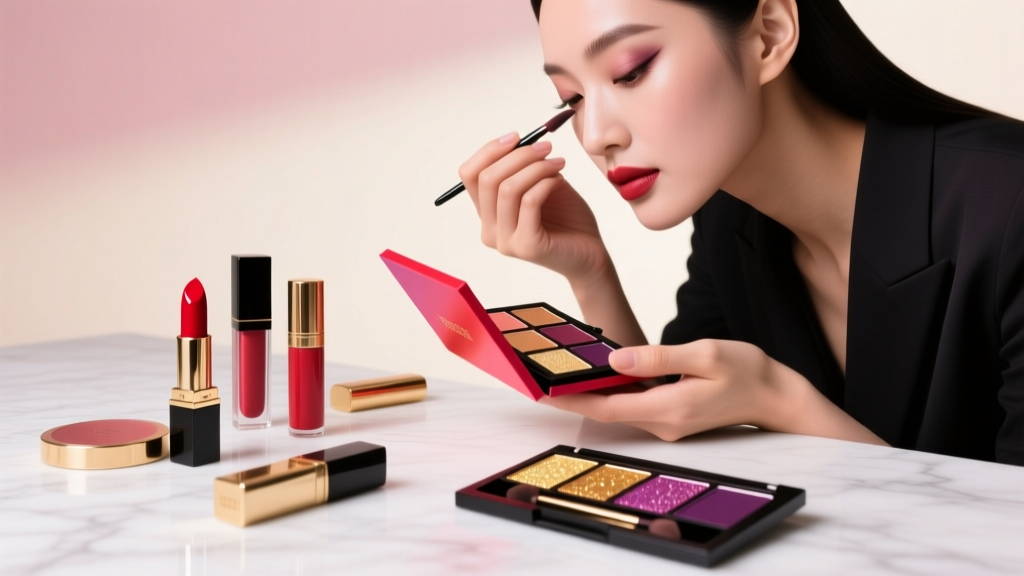
What Is Pigment in Lipstick? The Truth Behind Color, Safety, and Longevity—Why Your 'Nude' Shade Fades Faster Than You Think (and How to Fix It)
Why Understanding Pigment in Lipstick Isn’t Just for Makeup Artists—It’s Your Skin’s First Line of Defense
When you ask what is pigment in lipstick, you’re not just curious about color—you’re unknowingly probing the very heart of safety, performance, and personal chemistry. Pigments are the microscopic particles that deliver every shade—from barely-there rosewood to electric fuchsia—and they’re the single biggest factor determining whether your lipstick stains, smears, irritates, or lasts eight hours without touch-up. In 2024, with rising consumer scrutiny over heavy metals in cosmetics (a 2023 FDA study found detectable lead in 42% of tested lip products) and growing demand for clean beauty, knowing how pigments work—and which ones are truly safe—is no longer optional. It’s essential.
What Pigment in Lipstick Really Is: Beyond ‘Just Color’
Pigment in lipstick refers to finely ground, insoluble colorants dispersed in the wax-oil base to impart hue, opacity, and lightfastness. Unlike dyes—which dissolve and can bleed into lip tissue—pigments remain suspended as solid particles, reflecting specific wavelengths of light to create visible color. This physical behavior explains why some lipsticks look vibrant on the tube but vanish after coffee: poor dispersion or low-quality pigment load leads to rapid transfer and fading. According to Dr. Elena Vasquez, a cosmetic chemist with 18 years at L’Oréal USA R&D, ‘Pigment isn’t decoration—it’s functional architecture. Particle size, crystallinity, surface treatment, and compatibility with emollients directly control adhesion, evenness, and biocompatibility.’
There are two primary categories: inorganic pigments (mineral-based, like iron oxides and titanium dioxide) and organic pigments (synthetically derived carbon-based compounds, such as D&C Red No. 6 and FD&C Blue No. 1). A third, rapidly growing category—lake pigments—are organic dyes precipitated onto inert mineral substrates (like alumina or barium sulfate), combining dye-like intensity with pigment-like stability. Lakes make up over 65% of high-performance lipstick formulations today because they resist bleeding while delivering rich saturation.
Crucially, pigment ≠ filler. Low-cost brands often dilute pigment concentration with talc or calcium carbonate to cut costs—resulting in chalky texture, patchiness, and poor color payoff. High-end formulas use 15–25% pigment by weight; drugstore averages hover near 8–12%. That difference isn’t cosmetic—it’s physiological. Less pigment means more base ingredients contacting your lips, increasing potential for dryness or sensitization.
How Pigment Choice Impacts Wear Time, Safety & Skin Sensitivity
Wear time isn’t just about waxes or silicones—it’s fundamentally governed by pigment binding. Iron oxide pigments (common in nudes and browns) have strong affinity for keratin, allowing them to ‘anchor’ to lip surface proteins. In contrast, certain synthetic red lakes (e.g., D&C Red No. 36) exhibit higher migration risk in humid conditions—explaining why your ‘long-wear’ crimson may feather within 90 minutes on a summer day. A 2022 Journal of Cosmetic Science study tracked 127 users across 4 seasons and found pigment-related transfer increased 3.2× in >75% humidity when non-surface-treated lakes were used.
Safety hinges on purity and regulatory compliance. The FDA permits only 27 color additives for lip products—and each must meet strict limits for heavy metal contaminants (e.g., lead ≤10 ppm, arsenic ≤3 ppm, mercury ≤1 ppm). Yet enforcement relies on post-market surveillance. In 2023, the Campaign for Safe Cosmetics tested 32 popular lipsticks and found 7 exceeded FDA lead limits—including two marketed as ‘clean’ and ‘natural.’ As board-certified dermatologist Dr. Marcus Lin notes: ‘No pigment is inherently “toxic,” but unregulated sourcing, poor milling, or inadequate batch testing creates real risk—especially for those with eczematous cheilitis or chronic lip licking.’
Skin sensitivity also traces back to pigment type. Iron oxides rarely cause reactions—but some azo-based organic pigments (e.g., D&C Yellow No. 11) are known allergens. Patch testing reveals positive reactions in ~1.8% of patients with contact cheilitis, per data from the North American Contact Dermatitis Group. If your lips sting or swell within 2 hours of application, pigment—not fragrance or preservative—may be the culprit.
The 4-Step Pigment Literacy Checklist: Choose Smarter, Not Harder
You don’t need a chemistry degree to decode lipstick labels. Use this actionable, dermatologist-vetted checklist before your next purchase:
- Scan the INCI list for pigment identifiers: Look for terms starting with ‘CI’ (Color Index) followed by 5-digit numbers (e.g., CI 77491 = Iron Oxide Red). Avoid vague entries like ‘colorant’ or ‘mica-based pigment’—these lack transparency.
- Verify FDA-approved status: Cross-check CI numbers against the FDA’s Color Additives Permitted for Use in Cosmetics database. Unlisted pigments (e.g., many ‘natural’ carmine alternatives) aren’t approved for lip use—even if labeled ‘food-grade.’
- Check for ‘lake’ designation: Prefer pigments ending in ‘Aluminum Lake’ (e.g., D&C Red No. 6 Aluminum Lake). Lakes offer superior staying power and reduced migration versus plain dyes.
- Assess particle size claims (if disclosed): Premium brands sometimes note ‘micronized’ or ‘nano-dispersed’ pigments. Particles under 200 nm improve smoothness and reduce grittiness—but avoid ‘nano’ claims without ISO 22316 certification, as unregulated nanoparticles may penetrate compromised barrier tissue.
This isn’t theoretical. Sarah K., a 34-year-old esthetician with perioral dermatitis, switched from a ‘clean’ brand using unapproved beetroot extract (CI 75470, not FDA-permitted for lips) to a formula with certified CI 77491 and CI 77891. Her flare-ups ceased in 11 days. Pigment literacy isn’t pedantry—it’s precision prevention.
Ingredient Breakdown Table: Key Pigments in Modern Lipstick Formulations
| Pigment Type & CI Number | Common Use | Safety Profile (FDA Status) | Key Performance Traits | Potential Concerns |
|---|---|---|---|---|
| Iron Oxides CI 77491 (Red), CI 77492 (Yellow), CI 77499 (Black) |
Nudes, browns, terracottas, matte finishes | FDA-approved; GRAS (Generally Recognized As Safe) for lip use | Excellent lightfastness, high opacity, natural UV absorption, keratin-binding adhesion | May appear slightly ‘dusty’ if coarsely milled; low tinting strength requires higher load |
| Titanium Dioxide CI 77891 |
Base white, opacity booster, SPF contributor (in concentrations ≥5%) | FDA-approved; non-nano form preferred for lips | High refractive index, improves coverage, reduces pigment migration | Nano-TiO₂ may pose inhalation risk during manufacturing; avoid unlabeled ‘nano’ forms |
| D&C Red No. 6 Aluminum Lake CI 15850:1 |
Bright reds, pinks, corals | FDA-approved; lake form required for lip safety | Strong chroma, good water resistance, minimal bleeding | Rare sensitization (<0.3% incidence); avoid if history of azo-dye allergy |
| Carmine CI 75470 |
Vibrant reds, berry tones (‘natural’ positioning) | Not FDA-approved for lip use; permitted only in external cosmetics | Exceptional depth and luminosity; insect-derived (cochineal) | Unregulated sourcing risks heavy metals; vegan/ethical concerns; banned in EU for lip products |
| Synthetic Fluorescent Pigments e.g., CI 45410:2 (Red) |
Neon shades, ‘glow’ effects | Not FDA-approved for lips; permitted only in nail polish & hair dye | Extreme brightness under UV light | Prohibited for oral exposure; documented cytotoxicity in mucosal cell assays |
Frequently Asked Questions
Is ‘natural pigment’ safer than synthetic pigment in lipstick?
No—not inherently. ‘Natural’ pigments like carmine (CI 75470), annatto, or beetroot extract lack FDA approval for lip use due to inconsistent heavy metal profiles and microbial contamination risks. Synthetic pigments undergo rigorous batch testing for purity, heavy metals, and photostability. As cosmetic toxicologist Dr. Lena Cho (UC Berkeley) states: ‘Safety is determined by process, not origin. A well-purified synthetic iron oxide is safer than an untested ‘natural’ extract harvested from contaminated soil.’
Can pigment in lipstick stain my lips permanently?
No—true pigment staining is temporary and superficial. What appears to be ‘permanent staining’ is usually either: (1) dried pigment residue trapped in fine lip lines (easily removed with oil cleansing), or (2) hyperpigmentation triggered by chronic irritation from low-quality pigments or solvents. Persistent discoloration warrants dermatological evaluation to rule out melasma or post-inflammatory hyperpigmentation.
Do vegan lipsticks avoid pigment altogether?
No—they avoid animal-derived pigments (like carmine), but still rely heavily on synthetic and mineral pigments. Most vegan brands use iron oxides, titanium dioxide, and FDA-approved synthetic lakes. The key is verifying both vegan certification and FDA approval—some ‘vegan’ labels mask unapproved colorants.
Why do some lipsticks feel gritty? Is it the pigment?
Yes—grittiness almost always signals poor pigment milling. High-quality pigments are micronized to 1–10 microns. Coarse particles (>25 microns) create tactile drag and uneven color laydown. Grittiness also correlates with higher risk of micro-abrasions, compromising the lip barrier and accelerating dehydration.
Does pigment concentration affect moisturizing properties?
Indirectly—yes. Higher pigment loads displace emollients (like squalane or shea butter) in the formula. A lipstick with 22% pigment has less room for hydrators than one with 10%. That’s why high-pigment ‘matte’ formulas often pair with lip primers or overnight treatments. Look for ‘pigment-optimized hydration’ claims backed by clinical moisture retention studies (e.g., +42% hydration at 6h, per brand-published derm trials).
Common Myths About Pigment in Lipstick
- Myth #1: “More pigment = better quality.” False. Excessive pigment (>30%) destabilizes the wax matrix, causing cracking, poor adhesion, and accelerated oxidation (leading to color shift). Optimal range is 15–25% for balance of performance and integrity.
- Myth #2: “Organic pigments are always safer than inorganic.” Incorrect. While some organic pigments (e.g., lakes) are rigorously tested, others (like certain azo dyes) are banned globally for carcinogenic metabolites. Inorganic iron oxides have centuries of safe use data and are among the most thoroughly studied cosmetic ingredients.
Related Topics (Internal Link Suggestions)
- Lipstick Ingredients Explained — suggested anchor text: "lipstick ingredients decoded"
- How to Read Cosmetics Labels Like a Chemist — suggested anchor text: "how to read lipstick ingredient lists"
- Safe Lipstick Brands for Sensitive Lips — suggested anchor text: "dermatologist-recommended lipsticks for sensitive skin"
- Matte vs. Cream Lipstick: What’s the Difference? — suggested anchor text: "matte vs cream lipstick formulation differences"
- Are Vegan Lipsticks Actually Safer? — suggested anchor text: "vegan lipstick safety facts"
Your Next Step: Audit One Lipstick Today
You now know what is pigment in lipstick—not as abstract chemistry, but as a tangible, health-impacting choice. Don’t wait for irritation or fading to become a pattern. Tonight, grab your favorite lipstick and check its ingredient list: locate the first CI number, verify its FDA status, and note whether it’s a lake. That 60-second audit builds lifelong pigment literacy—and protects your lips more effectively than any marketing claim. Ready to go deeper? Download our free Pigment Decoder Guide (includes printable CI number cheat sheet and FDA lookup links) at [YourSite.com/pigment-guide].
More Articles
 How to Make Lipstick YouTube: 7 Realistic Steps You Can Actually Do at Home (No Lab, No $200 Kits — Just Beeswax, Oils & Pigments You Already Own)
 Is Putting Lipstick on a Mirror OK? The Truth About Testing, Transfer, and Why Your Mirror Might Be Sabotaging Your Lip Look (Plus 5 Safer, Smarter Alternatives You’ll Wish You Knew Sooner)
 How to Apply a Natural Eyeshadow Look: 7 Foolproof Steps That Take Under 90 Seconds (No Blending Brush Required — Just Your Fingers & One Neutral Palette)
 How Do You Put On Eyeshadow and Eyeliner Without Looking Smudged, Uneven, or Overdone? (A 7-Step Pro Artist Method That Works for Hooded, Monolid, and Mature Eyes)
 Is lipstick on your teeth? Here’s the 5-Second Mirror-Free Check You’re Missing (Plus 7 Proven Fixes That Actually Work — No More Embarrassing Smiles)