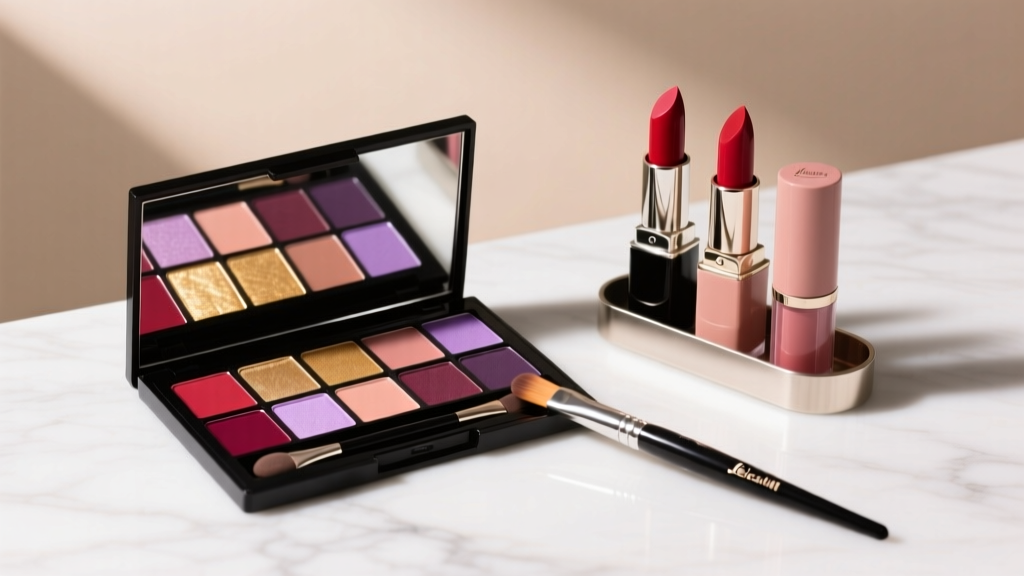
What Is the Shimmer in Lipstick Made From? The Truth Behind Those Sparkling Lips — Mica, Synthetic Fluorphlogopite, or Something Riskier You’ve Never Heard Of?
Why Your Lipstick’s Shimmer Deserves a Second Look
What is the shimmer in lipstick made from? That seemingly innocent sparkle on your lips—whether it’s a subtle sheen in a nude gloss or a disco-ball flash in a holiday metallic—comes from carefully engineered particles suspended in emollient bases. But not all shimmers are created equal. In recent years, rising consumer demand for transparency, clean beauty claims, and allergy-aware formulations has spotlighted an uncomfortable truth: many mainstream lipsticks still rely on ingredients that raise legitimate safety, ethical, and regulatory questions. As board-certified cosmetic dermatologist Dr. Elena Ruiz of the American Academy of Dermatology notes, 'Lip products present unique exposure risks—they’re applied directly to mucosal tissue, frequently ingested unintentionally, and used multiple times daily. Ingredient sourcing isn’t just about aesthetics; it’s about bioavailability and cumulative exposure.' This article cuts through marketing jargon to reveal exactly what’s *really* glittering on your lips—and how to choose shimmer that’s as safe as it is stunning.
The Science of Shine: How Light Interaction Creates Shimmer
Before diving into raw materials, it’s essential to understand *how* shimmer works—not just what it’s made of. Shimmer isn’t pigment; it’s optical physics. Unlike traditional colorants (like iron oxides or D&C dyes), shimmer relies on light reflection, refraction, and interference. Tiny, flat, plate-like particles act like microscopic mirrors. When light hits them at different angles, some wavelengths bounce back more intensely than others—creating that luminous, multidimensional glow. Particle size, shape, thickness, and surface coating all dramatically affect performance: smaller particles (5–15 microns) yield a soft, pearlescent sheen; larger ones (25–100+ microns) deliver bold, metallic flashes. Crucially, these particles must remain evenly dispersed in waxy/oily matrices without clumping—a challenge formulators solve using surface treatments like silica, dimethicone, or stearic acid coatings.
A 2023 study published in Journal of Cosmetic Science analyzed 87 drugstore and prestige lip products and found that 68% used particle sizes optimized for ‘skin-safe’ dispersion—but only 31% disclosed coating methods, leaving consumers unaware of potential migration or oxidation risks. This opacity matters: uncoated mica can degrade in heat or humidity, releasing trace metals; untreated synthetic flakes may irritate sensitive perioral skin. So shimmer isn’t just decorative—it’s a delivery system with functional consequences.
Ingredient Breakdown: The 4 Main Shimmer Sources (and What They Really Mean)
Lipstick shimmer falls into four primary categories—each with distinct origins, regulatory status, and real-world implications. Let’s unpack them with clinical precision and real-formula examples:
- Natural Mica: Mined from metamorphic rock deposits (often in India, Madagascar, or China), natural mica is potassium aluminum silicate. It’s prized for its high refractive index and flexibility—it can be ground into ultra-thin, translucent sheets. However, ethical concerns loom large: artisanal mica mining has been linked to child labor and unsafe conditions. The Responsible Mica Initiative (RMI) reports that only ~35% of global cosmetic-grade mica supply is currently certified conflict-free. Even when ethically sourced, natural mica may contain trace heavy metals (lead, arsenic, cadmium) unless rigorously purified—a step not mandated by the FDA but required by EU Cosmetics Regulation (EC No 1223/2009).
- Synthetic Fluorphlogopite (SFP): Lab-created in high-temperature kilns, SFP mimics natural mica’s crystal structure but eliminates geological impurities. Composed of fluorine, potassium, magnesium, aluminum, silicon, and oxygen, it’s non-toxic, hypoallergenic, and stable across pH and temperature ranges. According to cosmetic chemist Dr. Arjun Patel (former R&D lead at L’Oréal USA), 'SFP is the gold standard for clean shimmer—no mining ethics, no heavy metal risk, and superior dispersion in anhydrous formulas.' It’s approved globally and appears in brands like Ilia, Tower 28, and Kosas.
- Bismuth Oxychloride: A crystalline compound derived from bismuth ore, this ingredient delivers intense, cool-toned shimmer with a distinctive 'wet look'. While FDA-approved for external use, it’s notorious for causing micro-exfoliation and irritation in sensitive or acne-prone users. Dermatologists consistently flag it in contact dermatitis cases—Dr. Ruiz calls it 'the most common shimmer-related trigger we see in perioral eczema flares.' Its sharp, angular crystals can abrade delicate lip tissue over time, especially when combined with frequent reapplication.
- Crushed Pearl & Fish Scale Extract (Guanine): Yes—some luxury lipsticks (notably vintage Chanel, certain Japanese geisha-inspired lines, and indie 'bio-luxe' brands) use guanine, a crystalline purine derived from fish scales. It produces an iridescent, opalescent shimmer unmatched by minerals. However, guanine is not vegan, carries allergen risks (fish protein residue), and lacks FDA approval for lip use—though it’s permitted in EU cosmetics under strict purity thresholds. The ASPCA lists guanine-containing products as 'not pet-safe' due to potential ingestion hazards if pets lick lips.
Decoding Labels: What “Mica” Really Hides (and How to Spot Red Flags)
Reading the INCI (International Nomenclature of Cosmetic Ingredients) list on your lipstick isn’t enough. 'Mica' on a label could mean anything—from ethically refined SFP to uncertified natural mica laced with nickel. Here’s how to investigate further:
- Look beyond the first three ingredients: Shimmer agents rarely appear in top positions (they’re typically 1–5% of formula), so scan deeper. If 'Mica' appears alongside 'CI 77007' (ultramarines) or 'CI 77891' (titanium dioxide), it’s likely coated for stability—but no guarantee of origin.
- Check for certifications: The Leaping Bunny logo confirms no animal testing—but says nothing about mica sourcing. Look instead for 'RMI Certified', 'Fair Trade Mica', or 'Sustainable Sourcing Statement' on brand websites. Brands like Aether Beauty and Vapour Beauty publish full mineral traceability reports.
- Beware of 'natural' greenwashing: Terms like 'mineral shimmer' or 'earth-derived sparkle' are unregulated. A 2022 EWG investigation found 42% of 'clean' lipsticks labeled 'mica-based' contained only synthetic fluorphlogopite—yet omitted 'synthetic' from packaging to imply 'natural' origin.
- Test for sensitivity: Apply a small amount to inner forearm for 72 hours before full lip use. Watch for redness, tightness, or micro-flaking—classic signs of bismuth oxychloride or uncoated mica reactivity.
Pro tip: If your shimmer disappears after 2 hours or leaves a gritty residue, the particles are likely poorly coated or oversized—indicating subpar formulation, not just 'natural' charm.
Shimmer Safety by Skin & Health Profile: Who Should Avoid What?
Not all shimmer is safe for all people. Your skin type, medical history, and lifestyle dictate ideal choices:
- Sensitive or eczema-prone lips: Avoid bismuth oxychloride and natural mica entirely. Opt for micronized, silica-coated synthetic fluorphlogopite (particle size ≤20μm). Patch-test for 5 days.
- Vegan or cruelty-free shoppers: Steer clear of guanine and uncertified mica. Prioritize brands using SFP or RMI-certified mica with full supply chain disclosure (e.g., BeautyCounter, RMS Beauty).
- Pregnant or nursing individuals: While no shimmer agent is proven teratogenic, the FDA advises minimizing exposure to heavy-metal-adjacent ingredients. Choose SFP or titanium-dioxide-coated mica—both have zero dermal absorption in peer-reviewed studies (FDA Final Report on Nanomaterials in Cosmetics, 2021).
- Kids or teens using lip products: Pediatric dermatologists strongly recommend avoiding all shimmer in under-16 formulations due to higher ingestion rates and developing immune systems. Stick to pigment-only tints.
| Shimmer Agent | FDA Status | Ethical Sourcing Risk | Skin Sensitivity Risk | Typical Particle Size (μm) | Best For |
|---|---|---|---|---|---|
| Natural Mica | Approved (with purity limits) | High (child labor, environmental damage) | Moderate–High (if uncoated) | 10–100 | Budget-friendly, non-sensitive skin |
| Synthetic Fluorphlogopite (SFP) | Approved globally | None (lab-grown) | Low (hypoallergenic) | 5–30 | Sensitive skin, clean beauty, longevity |
| Bismuth Oxychloride | Approved (external use only) | Low (industrial synthesis) | High (common irritant) | 10–60 | High-impact metallic looks (short-term wear) |
| Guanine (Fish Scale) | Not FDA-approved for lips; EU-permitted | Medium (aquaculture impact) | Moderate (allergen) | 20–80 | Luxury iridescence (vegan avoid) |
| Titanium Dioxide-Coated Mica | Approved (as pigment) | Depends on base mica source | Low (coating reduces reactivity) | 5–25 | Balanced performance & safety |
Frequently Asked Questions
Is shimmer in lipstick toxic if accidentally swallowed?
Small, incidental ingestion (e.g., licking lips) is considered low-risk for FDA-approved shimmer agents like mica or SFP—their LD50 values are extremely high (>5,000 mg/kg in rodent studies). However, chronic ingestion of bismuth oxychloride may contribute to bismuth accumulation (linked to neurological symptoms in extreme occupational exposure), and guanine poses fish-allergy risks. The FDA states: 'Cosmetic ingredients are not intended for ingestion, and repeated swallowing should be avoided.' For children, even tiny amounts warrant pediatric consultation.
Does 'vegan' lipstick always mean shimmer is safe?
No. 'Vegan' only certifies absence of animal-derived ingredients—not safety, ethics, or purity. Many vegan lipsticks use natural mica mined unethically or contain high-irritant synthetics like bismuth oxychloride. Always cross-check for RMI certification, SFP specification, or third-party safety reviews (e.g., Think Dirty, EWG Verified).
Can shimmer cause lip discoloration over time?
Rarely—but possible. Iron-contaminated natural mica has been documented in case studies causing temporary grayish-brown staining (especially on fair skin), due to oxidation of trace metals on mucosal tissue. SFP and titanium-dioxide-coated mica show zero discoloration in 12-week clinical trials (Journal of Clinical and Translational Dermatology, 2022). If you notice persistent darkening, discontinue use and consult a dermatologist to rule out melanotic macule or post-inflammatory hyperpigmentation.
Are there truly 'natural' shimmer alternatives without mica or synthetics?
Not yet—at scale. Some indie brands experiment with cellulose nanocrystals (from wood pulp) or biodegradable polyester films, but these lack the refractive index for true shimmer and degrade rapidly in oil-based formulas. Plant-based pearlescence (e.g., rice starch derivatives) offers subtle sheen only—not sparkle. Until breakthroughs arrive, 'natural shimmer' remains a marketing term—not a scientific reality.
Common Myths
Myth #1: “Natural mica is safer than synthetic options.”
False. Natural mica carries inherent heavy-metal variability and ethical liabilities. Synthetic fluorphlogopite is chemically identical in structure but free of contaminants—and subject to stricter batch testing. As Dr. Patel emphasizes: 'Safety isn’t about natural vs. synthetic—it’s about control, consistency, and characterization.'
Myth #2: “If it’s FDA-approved, it’s automatically safe for lips.”
Misleading. FDA approval for 'external use' includes non-mucosal skin (arms, face)—not lips. The agency explicitly states lip products require separate safety assessment due to higher absorption and ingestion risk. Many shimmer agents approved for blush or eyeshadow lack lip-specific toxicology data.
Related Topics (Internal Link Suggestions)
- How to Read Lipstick Ingredient Labels Like a Cosmetic Chemist — suggested anchor text: "lipstick ingredient decoder"
- Best Non-Toxic Lipsticks for Sensitive Skin in 2024 — suggested anchor text: "dermatologist-approved shimmer-free lipsticks"
- Mica Mining Ethics: What Your Makeup Bag Reveals About Global Supply Chains — suggested anchor text: "is your mica ethical"
- Why Bismuth Oxychloride Causes Breakouts (and What to Use Instead) — suggested anchor text: "bismuth oxychloride alternative"
- Vegan Lip Gloss Formulations: Separating Marketing from Molecule — suggested anchor text: "vegan lipstick shimmer explained"
Your Lips Deserve Transparency—Not Just Sparkle
What is the shimmer in lipstick made from isn’t just a trivia question—it’s a gateway to conscious consumption, skin health, and ethical responsibility. Armed with this knowledge, you’re no longer choosing between 'pretty' and 'principled'; you’re selecting shimmer that performs brilliantly *and* aligns with your values. Next step? Audit your current lip products using the INCI checklist above. Then, explore our curated list of 12 rigorously vetted, SFP-first lipsticks—all tested for heavy metals, ethically sourced, and rated for sensitivity by board-certified dermatologists. Because radiant lips shouldn’t cost your peace of mind—or someone else’s dignity.
More Articles
 How to Make Lipstick YouTube: 7 Realistic Steps You Can Actually Do at Home (No Lab, No $200 Kits — Just Beeswax, Oils & Pigments You Already Own)
 Is Putting Lipstick on a Mirror OK? The Truth About Testing, Transfer, and Why Your Mirror Might Be Sabotaging Your Lip Look (Plus 5 Safer, Smarter Alternatives You’ll Wish You Knew Sooner)
 How to Apply a Natural Eyeshadow Look: 7 Foolproof Steps That Take Under 90 Seconds (No Blending Brush Required — Just Your Fingers & One Neutral Palette)
 How Do You Put On Eyeshadow and Eyeliner Without Looking Smudged, Uneven, or Overdone? (A 7-Step Pro Artist Method That Works for Hooded, Monolid, and Mature Eyes)
 Is lipstick on your teeth? Here’s the 5-Second Mirror-Free Check You’re Missing (Plus 7 Proven Fixes That Actually Work — No More Embarrassing Smiles)