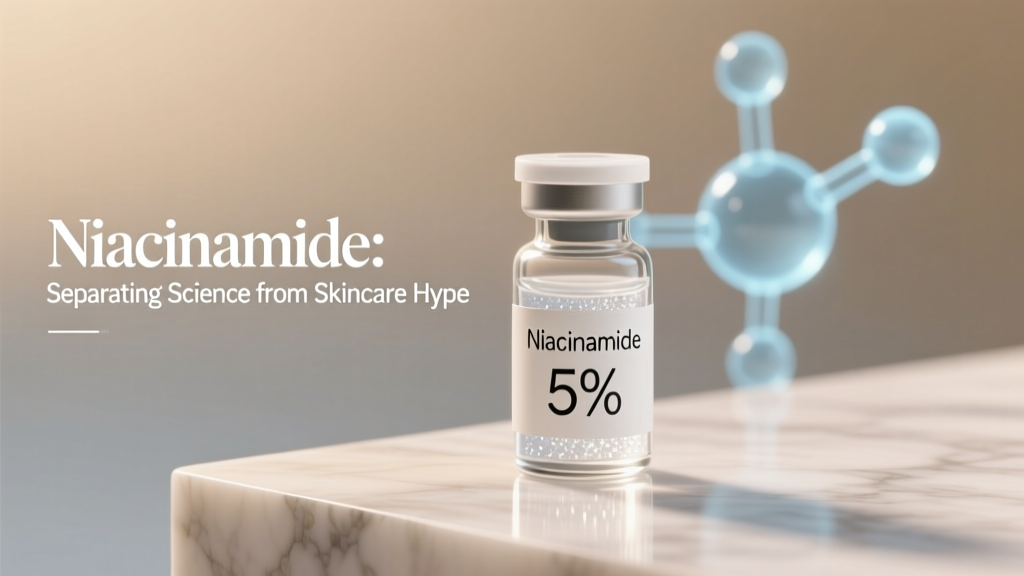
Niacinamide: Separating Science from Skincare Hype
Niacinamide (vitamin B3) has become one of the most hyped ingredients in skincare. But how much of the marketing is backed by actual science? As a cosmetic chemist, I want to separate proven benefits from inflated claims.
What Niacinamide Actually Does (Proven)
Barrier repair: Niacinamide increases ceramide and free fatty acid production in the stratum corneum. Clinical studies show 2-5% niacinamide applied for 4 weeks significantly improves barrier function as measured by transepidermal water loss.
Sebum regulation: At 2-4%, niacinamide reduces sebum production by approximately 20-30% after 4 weeks of use, making it effective for oily and acne-prone skin.
Brightening: Niacinamide inhibits melanosome transfer from melanocytes to keratinocytes, reducing hyperpigmentation. Studies show visible improvement at 5% concentration over 8 weeks.
The Concentration Myth
More is not better with niacinamide. Most clinical studies demonstrating efficacy used 2-5%. Products with 10-20% niacinamide are not necessarily more effective and carry a higher risk of irritation. The skin has a saturation point — excess niacinamide is simply wasted or causes flushing.
Niacinamide and Vitamin C: The Compatibility Truth
The claim that niacinamide and vitamin C cannot be used together is outdated. This was based on 1960s research using unstable, pure forms at high temperatures. Modern formulations are stable, and multiple peer-reviewed studies have confirmed that niacinamide and ascorbic acid can be layered without degrading either ingredient or causing niacin formation.
Who Should Use It
Niacinamide is one of the most universally tolerated skincare ingredients. It works for all skin types, does not increase photosensitivity, and is compatible with virtually every other active ingredient. The only exception is a small percentage of people who experience histamine-mediated flushing at higher concentrations.
What It Cannot Do
Niacinamide cannot replace retinoids for collagen production, cannot substitute for sunscreen, and will not eliminate deep wrinkles or severe acne on its own. It is an excellent supporting ingredient that enhances overall skin health but should not be marketed as a standalone miracle solution.