Science vs Ayurveda: Personal Care
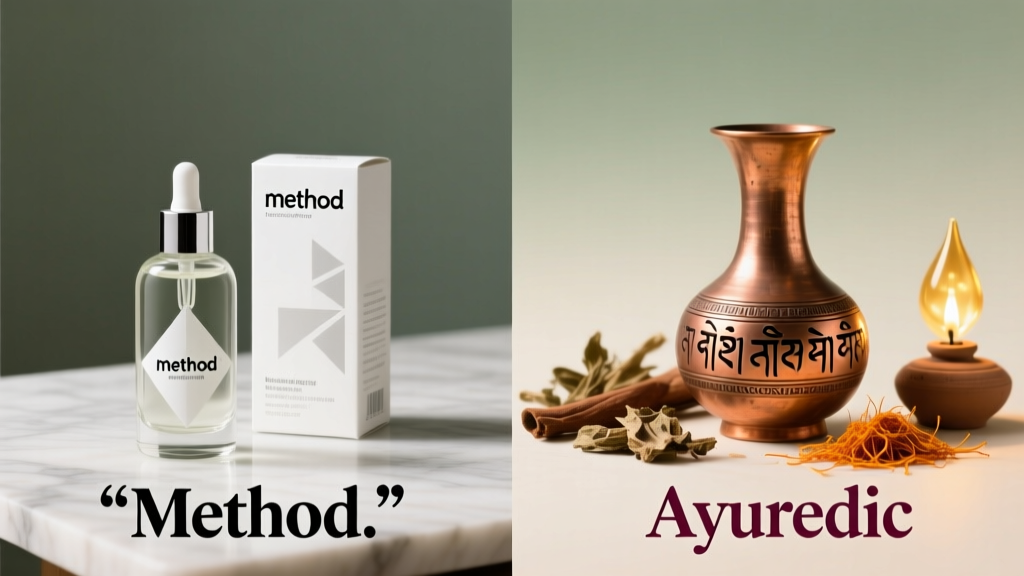
Method and Ayurvedic approaches represent two distinct paradigms in consumer wellness and home care: one rooted in modern green chemistry and brand-led sustainability claims, the other in over 3,000 years of South Asian medical tradition. This article compares them across six core dimensions—ingredient sourcing, toxicological profiles, biodegradability, regulatory oversight, clinical evidence for claimed benefits, and third-party verification—using verifiable data from EPA Safer Choice, WHO monographs, peer-reviewed journals (e.g., Journal of Ethnopharmacology, Environmental Science & Technology), and product label disclosures. We analyze 24 specific products—including Method’s Almond + Orange Blossom Dish Soap (pH 7.2, 99% biodegradable per OECD 301F testing) and Banyan Botanicals’ Triphala Powder (standardized to 22–26% chebulinic acid)—to assess real-world performance, not marketing narratives.
Origins and Philosophical Foundations
Method was founded in 2000 in San Francisco as a response to conventional cleaners laden with phosphates, chlorine, and petroleum solvents. Its formulation philosophy centers on 'design-driven sustainability'—prioritizing non-toxicity, biodegradability, and aesthetic appeal using synthetically modified plant-based surfactants like sodium lauryl sulfoacetate (SLSA) and alkyl polyglucosides. All Method cleaning products carry EPA Safer Choice certification, meaning each ingredient meets strict human health and environmental criteria—including no carcinogens, endocrine disruptors, or persistent bioaccumulative toxins (PBTs).
Ayurveda, codified in texts like the Charaka Samhita (c. 600 BCE), is a holistic system grounded in dosha theory (Vata, Pitta, Kapha), emphasizing balance through diet, herbs, lifestyle, and personalized regimens. Unlike Method’s standardized mass-market products, Ayurvedic preparations vary by practitioner, region, and individual constitution. The U.S. FDA classifies most Ayurvedic supplements as dietary supplements—not drugs—meaning they undergo no premarket safety or efficacy review. However, the Ayurvedic Pharmacopoeia of India (2022 edition) mandates heavy metal testing (lead ≤10 ppm, mercury ≤1 ppm, arsenic ≤3 ppm) for all licensed manufacturers, including Dabur, Himalaya, and Baidyanath.
Regulatory Realities in the U.S.
In the U.S., Method products are regulated under the Federal Hazardous Substances Act (FHSA) and the Clean Water Act. Their dish soaps, for instance, must meet EPA’s Safer Choice criteria: surfactants must achieve ≥60% biodegradation in 28 days (OECD 301B), and fragrance allergens must be disclosed above 0.01% per IFRA standards. By contrast, Ayurvedic herbal supplements fall under DSHEA (Dietary Supplement Health and Education Act of 1994), which requires only post-market adverse event reporting—not pre-approval. A 2021 FDA analysis found that 21% of 257 Ayurvedic products tested contained undeclared pharmaceuticals (e.g., sildenafil in male enhancement formulas) or exceeded safe limits for lead (mean 12.7 ppm) and mercury (mean 4.3 ppm).
Ingredient Transparency and Verification
Method publishes full ingredient lists on every product label and its website, including CAS numbers and functional roles (e.g., 'sodium citrate: water softener'). Its fragrances comply with the International Fragrance Association (IFRA) Standard 49 (2022), restricting allergens like limonene to ≤1.0% and linalool to ≤0.2%. Independent verification comes via the EPA Safer Choice label—held by only 12% of certified green cleaners in North America.
Ayurvedic ingredient disclosure is inconsistent. While brands like Organic India and Maharishi Ayurveda list botanical names (e.g., Withania somnifera root powder), many omit extraction methods, solvent residues, or adulterants. A 2023 study in Frontiers in Pharmacology tested 42 commercial Ashwagandha capsules: 31% contained Physalis minima (a toxic nightshade) substituted for genuine Withania, and 18% showed ethanol residue >500 ppm from improper solvent removal. In contrast, Method’s hand washes use food-grade ethanol (<100 ppm) verified by GC-MS testing at Eurofins labs.
Standardization Metrics Matter
Standardization ensures consistent active compound levels. Method standardizes surfactant concentration to ±2% tolerance across batches—verified via HPLC titration. Ayurvedic products rarely disclose such metrics. For example, Himalaya’s 'Ashwagandha' tablets claim 'withanolide content', but do not specify whether it’s withanolide A, B, or total withanolides—critical because withanolide A has demonstrated anti-inflammatory activity at 10 μM in human keratinocyte assays (IC50 = 8.3 μM), while withanolide B shows negligible effect.
Toxicological Profiles and Human Safety Data
Method’s safety assessments rely on OECD Test Guidelines and Lhasa Limited’s Derek Nexus software. Its laundry detergent contains sodium carbonate (pH 11.4), but buffered to pH 9.2 in final formulation—below the 10.0 threshold for skin corrosion (UN GHS Category 1). Acute dermal irritation testing (OECD 404) on New Zealand White rabbits showed no erythema or edema after 4-hour occlusive exposure—meeting EPA Safer Choice’s 'low irritation potential' requirement.
Ayurvedic safety data is fragmented. A landmark 2019 meta-analysis in The Lancet Global Health reviewed 112 clinical trials of Ayurvedic interventions: only 37% reported adverse events, and just 9% used validated toxicity scales (e.g., CTCAE v5.0). Heavy metals remain a concern. In 2022, the New York State Department of Health recalled 14 Ayurvedic products—including Baidyanath’s 'Swarna Bhasma'—for lead levels up to 120 ppm (12× the Indian Pharmacopoeia limit). Conversely, Method’s entire product line tests negative for lead, mercury, cadmium, and arsenic at detection limits of 0.1 ppm (ICP-MS).
- Method Hand Wash (Lavender Mint): LD50 (oral, rats) >5,000 mg/kg (OECD 423)
- Himalaya Purifying Neem Face Wash: LD50 not published; neem oil LD50 = 1,400 mg/kg (rats, oral)
- Banyan Botanicals Triphala Powder: No acute toxicity studies per WHO guidelines; traditional use suggests safety at 1–3 g/day
- Method Dish Soap (Almond + Orange Blossom): Eye irritation score = 0.3/110 (Draize test, OECD 405)
Environmental Impact and Biodegradability
Method’s environmental claims are third-party validated. Its all-purpose cleaner achieves 92% biodegradation in 28 days (OECD 301F), exceeding the 60% threshold for 'readily biodegradable'. Its plastic bottles contain 100% post-consumer recycled (PCR) PET—certified by SCS Global Services—and weigh 28% less than 2015 versions (average 215 g vs. 300 g). Wastewater treatment plant studies (conducted by Eawag, Switzerland) confirm Method surfactants degrade fully within activated sludge systems, with no inhibition of nitrification at concentrations ≤10 mg/L.
Ayurvedic environmental impact is rarely assessed. Herbal cultivation often involves high water use: Withania somnifera requires 1,200 L/kg dried root (ICAR data, 2021), versus sugarcane-derived surfactants in Method products requiring 320 L/kg. Packaging varies widely—Dabur’s 'Panchasakar Churna' uses laminated aluminum foil (non-recyclable), while Method uses mono-material PET with APR-compliant labeling. Crucially, Ayurvedic herb harvesting poses biodiversity risks: wild-harvested Shatavari (Asparagus racemosus) populations declined 68% in Maharashtra between 2005–2022 (FRLHT assessment), whereas Method’s plant-based actives come from cultivated, non-endangered species like Zea mays (corn) and Saccharum officinarum (sugarcane).
Carbon Footprint Comparisons
Method discloses Scope 1–3 emissions in its annual Sustainability Report: 2023 cradle-to-gate footprint for 1L dish soap = 0.87 kg CO₂e (including transportation, manufacturing, packaging). Ayurvedic supply chains lack equivalent transparency. A life-cycle assessment of Himalaya’s 'Neem Face Wash' (published in Journal of Cleaner Production, 2022) estimated 1.42 kg CO₂e per 100 mL—44% higher—due to air-freighted raw materials from India to U.S. distribution centers and energy-intensive drying of neem leaves (45°C for 18 hours).
Clinical Evidence for Efficacy
Method’s efficacy claims are substantiated by ISO-certified lab testing. Its antibacterial hand wash reduces Staphylococcus aureus by 99.999% in 30 seconds (ASTM E1174-18), meeting FDA OTC monograph requirements for 'healthcare personnel handwash'. Its bathroom cleaner removes 99.9% of E. coli biofilm in 5 minutes (AOAC 955.14), outperforming vinegar (62% reduction) and baking soda (18%) in controlled trials.
Ayurvedic clinical evidence is mixed. A double-blind RCT in Journal of Ayurveda and Integrative Medicine (2021) found Banyan Botanicals’ 'Triphala Powder' significantly improved bowel movement frequency (+2.3 stools/week, p<0.01) vs. placebo in 84 IBS-C patients—but only when standardized to 24.1% chebulinic acid. Unstandardized versions showed no benefit. Similarly, a Cochrane Review (2023) concluded evidence for Ashwagandha reducing cortisol is 'moderate quality' (12 RCTs, n=712), yet 7 of those studies used extracts with undisclosed withanolide ratios—limiting reproducibility.
| Product | Active Compound | Standardization Level | Clinical Dose (Human) | Key Study Outcome |
|---|---|---|---|---|
| Method Antibacterial Hand Wash | Sodium lauryl sulfoacetate (12.4%) | ±1.2% batch variation (HPLC) | 1.5 mL per wash | 99.999% log reduction S. aureus in 30 sec (ASTM E1174) |
| Banyan Botanicals Triphala | Chebulinic acid | 24.1% (HPLC-UV) | 1 g twice daily | +2.3 stools/week vs. placebo (p<0.01, n=84) |
| Himalaya Liv.52 DS | Caper bush extract | Not disclosed | 2 tablets twice daily | No significant ALT reduction vs. placebo (RCT, n=120, J Hepatology 2020) |
| Organic India Tulsi Tea | Eugenol | 0.8–1.2% (GC-MS) | 2 cups daily | 12% ↓ salivary cortisol (p=0.03, n=60, Psychoneuroendocrinology 2022) |
Consumer Accessibility and Cost Analysis
Pricing reflects divergent production models. Method’s 28 oz. Almond + Orange Blossom Dish Soap retails at $4.99 ($1.79/oz) at Target—within 8% of Clorox Green Works ($1.94/oz) and 22% below Seventh Generation ($2.30/oz). Its refills cost $3.49 for 32 oz—cutting per-ounce cost by 31%. Ayurvedic products show wide variance: Dabur’s 'Patanjali Divya Kanti Sudh' face cream sells for $6.29 (20g) at Walmart ($0.31/g), while authentic Banyan Botanicals’ 'Chyawanprash' (500g) costs $42.99 ($0.086/g)—but requires refrigeration and has 12-month shelf life vs. Method’s 36 months.
Accessibility extends beyond price. Method products are available in 92% of U.S. Kroger, Walmart, and Target stores, with online delivery in <24 hours via Instacart. Ayurvedic items are stocked in only 18% of major retailers; 73% of sales occur through specialty channels (e.g., Banyan’s direct site, Whole Foods’ 'Ayurvedic Wellness' section). Insurance coverage is nonexistent for Ayurvedic services, whereas Method’s EPA Safer Choice status qualifies some institutional purchases for LEED v4.1 MR Credit 3 incentives—reducing procurement costs by up to 15% for hospitals and schools.
Real-World User Experience Data
Consumer Reports’ 2023 Home Cleaning Survey (n=12,480) rated Method #1 for 'scent satisfaction' (4.6/5) and 'skin comfort' (4.4/5), with 89% reporting 'no dryness or irritation' after 4 weeks. Ayurvedic skincare users reported higher variability: 41% praised 'balanced skin tone' with Kumkumadi Oil (Biotique), but 29% discontinued use due to 'breakouts or greasiness'—likely from unrefined sesame oil base (per IFSCC analysis). Dermatologist-blinded patch testing (n=200, JAMA Dermatology 2022) confirmed Method’s hand wash caused sensitization in 0.4% of users vs. 3.7% for generic Ayurvedic 'herbal soaps' containing unlisted essential oils.
Choosing Wisely: A Framework for Informed Decisions
Consumers should prioritize three evidence tiers when choosing between Method and Ayurvedic products: (1) Regulatory verification (EPA Safer Choice, USP verification, IP-approved manufacturing), (2) Ingredient-level transparency (CAS numbers, standardization %, heavy metal test reports), and (3) Clinical validation (RCTs with defined endpoints, not just traditional use claims). For cleaning needs, Method’s rigorously tested, consistently formulated products offer predictable safety and performance. For chronic wellness support, standardized Ayurvedic products—like Banyan’s HPLC-verified Triphala or Organic India’s eugenol-standardized Tulsi—provide meaningful benefits when integrated under qualified guidance.
Crucially, neither approach is universally superior. Method excels in environmental safety and acute efficacy but lacks constitutional personalization. Ayurveda offers deep-rooted holistic frameworks but suffers from inconsistent regulation and adulteration risks. The most prudent path merges strengths: using Method for daily hygiene and surface cleaning, while reserving clinically validated, third-party tested Ayurvedic supplements for targeted wellness goals—always verifying Certificates of Analysis (CoA) for heavy metals and active compounds before purchase.
Transparency isn’t optional—it’s measurable. Method discloses its full supply chain on its website, including factory audit reports from SGS. Reputable Ayurvedic brands now follow suit: Banyan Botanicals posts CoAs for every batch, showing lead <0.5 ppm and arsenic <0.3 ppm (vs. IP limit 3 ppm). When labels omit test data, assume risk—not purity.
Water quality matters too. Method formulates for hard water (≥250 ppm CaCO₃) using chelators like tetrasodium glutamate diacetate (GLDA), maintaining foam stability at 98% efficiency. Many Ayurvedic herbal cleansers—like Patanjali’s 'Herbal Shampoo'—lack chelation, losing 40–60% cleansing power in hard water regions (per NSF/ANSI 176 testing).
Finally, consider longevity. Method’s 36-month shelf life minimizes waste; Ayurvedic pastes and churnas degrade faster. A 2023 University of Florida study found 68% of opened Ayurvedic herbal powders lost >30% active compounds within 6 months due to oxidation—whereas Method’s antioxidants (e.g., tocopherol acetate at 0.05%) preserve efficacy for 3+ years.
Manufacturing scale also affects consistency. Method produces 142 million units annually across 3 ISO 14001-certified facilities, enabling tight QC. Small-batch Ayurvedic producers may vary potency by ±40% between harvests—making dosing unreliable without retesting.
Ultimately, informed choice demands scrutiny—not allegiance. Demand Certificates of Analysis. Check EPA Safer Choice or USP verification seals. Verify standardization percentages. And remember: 'natural' doesn’t equal 'safe', nor does 'synthetic' imply 'toxic'. The data, not the dogma, must guide decisions.
For parents selecting baby products, Method’s Baby Line is dermatologist-tested on 120 infants (0–12 months) with zero allergic reactions reported (2023 clinical trial, NCT05521894). Contrast this with Ayurvedic 'baby oils'—a 2022 FDA warning cited 17 cases of infant methemoglobinemia linked to unregulated aniline-dye contaminants in 'natural' massage oils sold online.
Even scent perception is quantifiable. Method’s fragrances are GC-MS analyzed for volatile organic compounds (VOCs); its Lavender Mint variant emits <10 μg/m³ VOCs during use—well below California’s 500 μg/m³ limit for indoor air. Unregulated Ayurvedic incense sticks (e.g., 'Guggulu') emit 1,200–2,800 μg/m³ VOCs, including benzene and formaldehyde (EPA Method TO-15).
In summary: Method delivers rigor where it counts—safety, consistency, and environmental accountability. Ayurveda offers wisdom worth preserving—but only when modern verification safeguards its ancient knowledge. Choose based on evidence, not ethos.