## Climate-Based Skincare for Dehydrated Skin
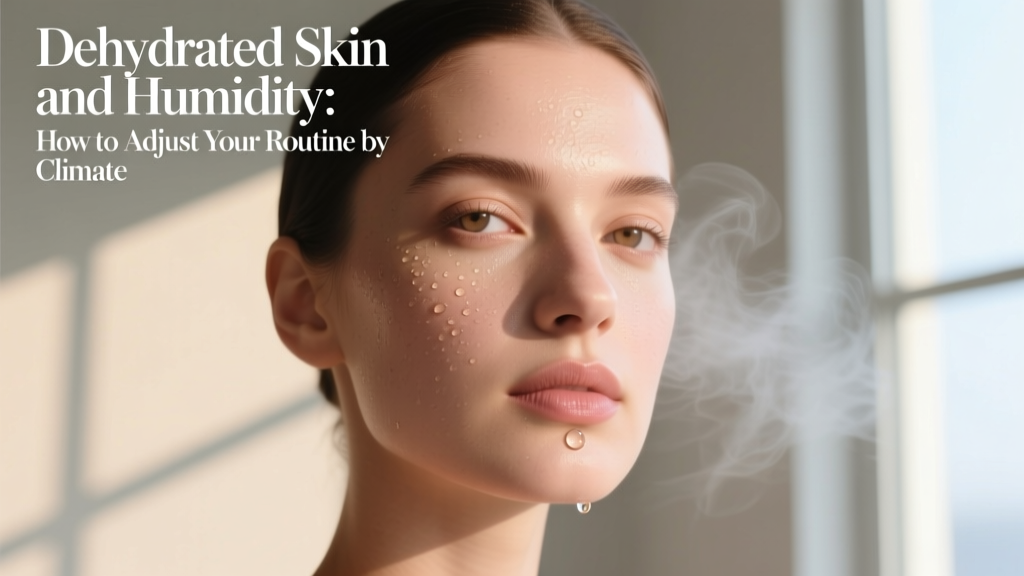
Your environment plays a massive role in skin dehydration. What works in a humid tropical climate will fail in a dry desert or heated winter home. Here's how to adapt.
### Understanding Humidity and Skin
**Relative Humidity (RH) and your skin:**
- **>60% RH**: Skin can absorb moisture from the air; humectants work well
- **40-60% RH**: Ideal range; balanced skincare works
- **<40% RH**: Skin loses water to the air; need stronger occlusives
- **<20% RH**: Extreme dehydration risk; aggressive protection needed
### Low Humidity Environment (<40% RH)
**Where**: Desert climates, heated indoor spaces, airplanes, winter in cold regions
**Routine adjustments:**
1. **Reduce humectant-only products** — HA alone can pull water FROM your skin
2. **Add occlusives** — Petrolatum, squalane, or dimethicone as last step
3. **Use a humidifier** — Target 40-60% RH in bedroom
4. **Layer aggressively** — Toner → serum → cream → oil → occlusive
5. **Avoid over-cleansing** — Once daily is enough
**Key products:**
- Aquaphor or CeraVe Healing Ointment (evening seal)
- Squalane oil (The Ordinary, Biossance)
- Rich ceramide creams (Aestura, Illiyoon)
- Humidifier (essential, not optional)
### Medium Humidity Environment (40-60% RH)
**Where**: Temperate climates, spring/fall in most regions
**Routine adjustments:**
1. **Balanced approach** — Humectants + emollients + light occlusives
2. **Standard routine works** — Cleanser, toner, serum, moisturizer, SPF
3. **Seasonal tweaking** — Lighter in summer, richer in winter
**Key products:**
- Standard ceramide moisturizer
- HA + glycerin serum
- Lightweight SPF
### High Humidity Environment (>60% RH)
**Where**: Tropical climates, summer in humid regions, coastal areas
**Routine adjustments:**
1. **Humectants shine here** — HA, glycerin, sodium PCA work optimally
2. **Lighter textures** — Gels and lotions instead of creams
3. **Less occlusive needed** — The air provides moisture
4. **Watch for over-hydration** — Too much moisture can cause milia
5. **Oil control** — Dehydrated skin can still be oily in humidity
**Key products:**
- Gel moisturizers (Neutrogena Hydro Boost, Laneige Water Bank)
- Lightweight serums
- Mattifying SPF (if oily)
- Blotting papers for excess oil
### Seasonal Transition Guide
| Season | Humidity | Key Concern | Adjustment |
|--------|----------|-------------|------------|
| Spring | Rising | Barrier recovery from winter | Gradually lighten products |
| Summer | High | Over-hydration, oiliness | Switch to gels, add oil control |
| Fall | Dropping | Increasing TEWL | Add richer moisturizer |
| Winter | Very low | Severe dehydration | Maximum occlusion + humidifier |
### Special Environments
**Airplane travel:**
- RH drops to 10-20% in cabin
- Apply thick moisturizer + occlusive before boarding
- Reapply hydrating mist every 2 hours
- Drink extra water
- Avoid alcohol and coffee
**Office with AC:**
- AC reduces humidity significantly
- Keep a hydrating mist at your desk
- Use a desktop humidifier
- Reapply moisturizer at lunch
**Gym/sauna:**
- High heat + sweating = temporary hydration
- Rinse with cool water immediately after
- Reapply moisturizer within 10 minutes
- Don't skip hydration post-sauna
### How to Check Your Humidity
- **Hygrometer**: $10-15 on Amazon, essential for skincare
- **Phone weather apps**: Most show current humidity
- **Physical signs**: Static electricity = low humidity; frizzy hair = high humidity
### The Golden Rule
Your skincare routine should change with the seasons and your environment. What works in July may dehydrate you in January. Listen to your skin and adjust accordingly.