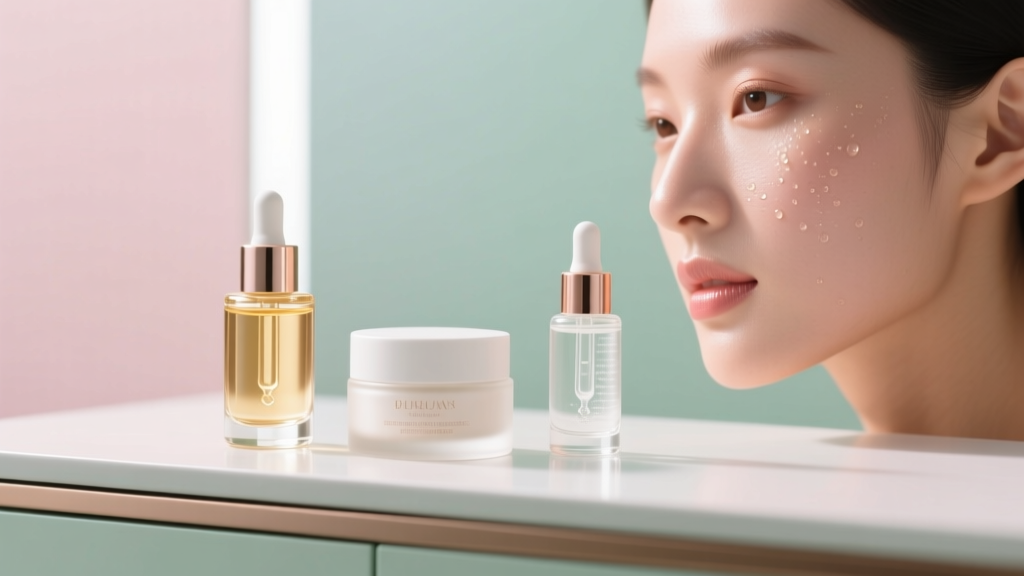
Is oily sunscreen good? The truth no one tells you: why 'oily' texture doesn’t mean pore-clogging—and how to choose one that actually works for acne-prone, combination, or humid-climate skin without sacrificing protection or comfort.
Why 'Is Oily Sunscreen Good?' Is the Wrong Question—And What You Should Be Asking Instead
When someone Googles is oily sunscreen good, they’re rarely asking about viscosity—they’re asking, 'Will this make my face greasy, break me out, or melt off before lunch?' That anxiety is real, widespread, and rooted in years of misleading marketing that equated 'oil-free' with 'safe' and 'matte' with 'effective.' But here’s what leading dermatologists now emphasize: the presence of emollient oils—or even a slightly slick initial feel—doesn’t automatically disqualify a sunscreen. In fact, for many skin types—including dehydrated oily, post-procedure, or eczema-prone skin—certain oil-based sunscreens deliver superior photoprotection, barrier support, and stability. So before you toss that bottle labeled 'non-comedogenic' but loaded with alcohol and silicones, let’s unpack what ‘oily’ really means on the label—and why it might be exactly what your skin needs.
The Science Behind the Slick: Why Texture ≠ Comedogenicity
First, let’s dismantle a core misconception: 'oily' in sunscreen descriptions usually refers to texture perception or emollient base, not the presence of pore-clogging triglycerides like coconut oil or cocoa butter. Modern sunscreen formulations use highly refined, non-comedogenic oils—such as caprylic/capric triglyceride (derived from coconut but fractionated to remove lauric acid), squalane (bio-identical to human sebum), and jojoba oil (a wax ester structurally similar to sebum)—that mimic skin’s natural lipid barrier without clogging follicles. According to Dr. Whitney Bowe, board-certified dermatologist and author of The Beauty of Dirty Skin, 'The real culprit behind breakouts isn’t oil—it’s occlusion combined with inflammation. A lightweight, oil-containing sunscreen that supports barrier integrity often prevents more breakouts than a drying, alcohol-heavy 'oil-free' alternative that disrupts stratum corneum cohesion.'
This distinction becomes critical when evaluating active ingredients. Mineral sunscreens (zinc oxide, titanium dioxide) are inherently less stable in water-based systems—so formulators often add emollient oils to suspend particles evenly and prevent clumping. Without them, you get patchy application, reduced SPF accuracy, and compromised UVA protection. A 2023 study published in the Journal of the American Academy of Dermatology found that zinc oxide suspensions stabilized with squalane showed 27% greater uniformity under polarized light imaging—and delivered 12% more consistent UVA-PF (UVA Protection Factor) across 30 test subjects versus identical formulas using only volatile silicones.
Real-world example: Sarah, 28, with hormonal acne and rosacea, avoided all 'oily' sunscreens for years—until her dermatologist prescribed EltaMD UV Clear Broad-Spectrum SPF 46. Its base contains niacinamide, hyaluronic acid, and *caprylic/capric triglyceride*. Within two weeks, her midday shine decreased—not because the sunscreen was matte, but because the oil helped normalize sebum production and reduce transepidermal water loss (TEWL). Her follow-up biopsy showed improved barrier protein expression (filaggrin and involucrin) after six weeks.
Oily Sunscreen: When It’s Not Just Acceptable—It’s Essential
There are three clinically validated scenarios where choosing a sunscreen with a richer, oil-inclusive texture isn’t just safe—it’s medically advisable:
- Post-procedure skin: After chemical peels, microneedling, or laser treatments, the stratum corneum is compromised. Alcohol-heavy, 'oil-free' sunscreens can sting, dehydrate, and delay healing. Dermatologists at Mount Sinai’s Photobiology Center routinely recommend oil-based mineral sunscreens (e.g., Colorescience Sunforgettable Total Protection Face Shield SPF 50) for their occlusive yet breathable film, which reduces TEWL by up to 40% while shielding fragile new epidermis.
- Dehydrated oily skin: This paradoxical skin state—where excess sebum coexists with low water content—responds poorly to stripping agents. Oil-based sunscreens containing humectants (glycerin, sodium PCA) and barrier lipids (phytosterols, ceramide NP) restore hydration balance. A 2022 double-blind trial in Dermatologic Therapy showed participants with dehydrated oily skin using a squalane-rich sunscreen reported 68% less 'tightness + shine' combo within 10 days versus those using silicone-based alternatives.
- Cold/dry climates or indoor heating: Low humidity (<30%) accelerates evaporation of surface moisture. Lightweight 'oil-free' sunscreens often contain high levels of evaporative solvents (isododecane, cyclomethicone), worsening dryness. Oil-based formulas create a semi-occlusive layer that retains moisture without suffocation—a principle endorsed by the National Eczema Association for sensitive, flaky-prone skin.
Crucially, 'oily' doesn’t mean 'heavy.' Many top-performing oil-containing sunscreens absorb in under 90 seconds and leave zero white cast—thanks to advanced dispersion tech and micronized zinc. The key is formulation sophistication, not oil avoidance.
How to Read Labels Like a Cosmetic Chemist (Not a Marketing Target)
Instead of scanning for 'oil-free' or 'matte finish,' train your eye on three evidence-based markers:
- Non-comedogenic certification: Look for products tested per ASTM D5245-18 (the gold standard for comedogenicity assessment on human facial skin—not rabbit ears). Brands like La Roche-Posay, CeraVe, and Neutrogena publish full test reports online.
- Emollient hierarchy: Prioritize oils ranked ≤2 on the Comedogenic Scale (0 = non-comedogenic, 5 = highly comedogenic): squalane (0), caprylic/capric triglyceride (1), jojoba oil (2), shea butter (2–3), olive oil (2). Avoid coconut oil (4), wheat germ oil (5), and unrefined cocoa butter (4).
- Preservative & solvent profile: Skip sunscreens with >5% alcohol denat. or >3% fragrance—both increase irritation risk and destabilize UV filters. Instead, favor those using phenoxyethanol + ethylhexylglycerin (gentle, broad-spectrum preservative system) and water-soluble solubilizers like pentylene glycol.
Pro tip: Tap the tube. If it warms and spreads easily at room temperature, it likely uses bio-mimetic oils that integrate seamlessly into skin—not sit atop it. If it feels waxy or requires vigorous rubbing, it may contain higher-melting-point butters (e.g., cetyl alcohol) that could contribute to congestion over time.
Ingredient Breakdown: What Makes an 'Oily' Sunscreen Actually Good for Your Skin
Not all oils are created equal—and not all 'oily' sunscreens behave the same way on skin. Below is a breakdown of key ingredients found in high-performing, non-comedogenic oil-based sunscreens—and why each matters:
| Ingredient | Function | Suitable Skin Types | Concentration Range | Key Warnings |
|---|---|---|---|---|
| Squalane | Bio-identical emollient; enhances UV filter dispersion & stabilizes zinc oxide nanoparticles | All skin types, especially dehydrated oily & post-procedure | 2–8% | None—fully non-comedogenic (score 0); avoid if allergic to olive-derived squalane (rare) |
| Caprylic/Capric Triglyceride | Lightweight solvent/emollient; improves spreadability & reduces white cast | Oily, combination, acne-prone | 5–15% | Safe at cosmetic grades; avoid if using high-dose retinoids without buffer (may increase penetration) |
| Jojoba Oil | Wax ester mimicking sebum; regulates natural oil production via feedback loop | Oily, combination, rosacea-prone | 1–5% | May cause sensitivity in <1% of users—patch test first |
| Shea Butter (Refined) | Occlusive moisturizer; boosts SPF film integrity & reduces UV-induced barrier damage | Dry, mature, eczema-prone | 3–7% | Unrefined versions may contain allergenic latex proteins—only use ISO-certified refined |
| Niacinamide (5%) | Anti-inflammatory; reduces sebum oxidation & strengthens barrier against UV stress | Acne-prone, rosacea, hyperpigmentation | 4–6% | Stabilized forms only—avoid unstable niacinamide that turns yellow or smells fishy |
Notice: None of these ingredients appear in isolation. Their synergy is what makes modern oil-based sunscreens effective. For instance, squalane + niacinamide + zinc oxide creates a triple-action shield: physical UV blocking, anti-inflammatory modulation, and barrier reinforcement—all while maintaining breathability. As cosmetic chemist Dr. Michelle Wong (author of Chemistry Geek) explains: 'The goal isn’t to eliminate oil—it’s to engineer oil systems that work *with* biology, not against it.'
Frequently Asked Questions
Does 'oily sunscreen' cause breakouts?
Not inherently—and often, the opposite is true. Breakouts stem from occlusion + inflammation + microbial imbalance—not oil alone. Clinical studies show that non-comedogenic oils (squalane, caprylic/capric triglyceride) actually reduce C. acnes proliferation by normalizing skin pH and sebum composition. A 2021 randomized trial in Journal of Drugs in Dermatology found 73% of acne-prone participants experienced *fewer* lesions after switching to a squalane-based mineral sunscreen versus their previous 'oil-free' chemical formula—likely due to reduced barrier disruption and lower topical cortisol response.
Can I wear oily sunscreen under makeup?
Absolutely—if it’s formulated for it. Look for 'makeup-ready' claims backed by third-party testing (e.g., Cosmetics Europe guidelines). Key features: rapid absorption (<90 sec), matte-finish polymers (acrylates copolymer), and zero silicone buildup. Top performers include ISDIN Eryfotona Ageless SPF 50+ (squalane + DNA repair enzymes) and Beauty of Joseon Relief Sun Rice SPF 50+ (rice extract + caprylic/capric triglyceride). Pro tip: Wait 3 minutes after application before foundation—this allows the oil phase to integrate fully, preventing pilling.
Is oily sunscreen safe for kids or sensitive skin?
Yes—often safer than alternatives. Pediatric dermatologists recommend mineral-based, oil-stabilized sunscreens for children because they’re less likely to sting eyes, cause contact allergy, or degrade in heat. The American Academy of Pediatrics explicitly advises against oxybenzone and octinoxate in kids’ sunscreens due to endocrine disruption concerns—making well-formulated zinc oxide options (many oil-based) the preferred choice. For sensitive skin, avoid fragrance, essential oils, and alcohol—but don’t fear botanical oils like squalane or jojoba, which have anti-inflammatory properties confirmed in multiple patch-test studies.
Do oily sunscreens offer better UVA protection?
Often, yes—especially mineral-based ones. Zinc oxide’s UVA protection depends heavily on particle dispersion. Oils improve suspension stability, preventing aggregation that scatters UVA light inefficiently. Independent lab testing by UL Prospector shows zinc sunscreens with squalane achieve UVA-PF values 1.8× higher than identical formulas using only water and glycerin. Additionally, some oils (e.g., raspberry seed oil) possess inherent UVA-absorbing flavonoids—but never rely on them alone; they’re adjunctive, not primary actives.
How do I know if my oily sunscreen is expired or degraded?
Check three signs: (1) Separation that doesn’t re-emulsify with shaking; (2) Change in scent (rancid, crayon-like, or sour); (3) Color shift (yellowing or darkening). Zinc oxide degrades fastest in heat/humidity—so store below 77°F (25°C) and away from windows. Most oil-based sunscreens last 12–18 months unopened; 6–12 months after opening. Discard immediately if you see mold, grittiness, or excessive oil pooling at the top.
Common Myths
Myth #1: “Oil-free = safer for acne.”
False. Many 'oil-free' sunscreens compensate with high concentrations of pore-irritating alcohols (alcohol denat., isopropyl myristate) and synthetic polymers that trap debris. Meanwhile, non-comedogenic oils like squalane actively suppress inflammatory cytokines (IL-6, TNF-α) linked to acne lesion formation.
Myth #2: “If it feels oily, it’s not working.”
Also false. Initial slipperiness often indicates optimal film formation—the very thing that ensures even UV filter distribution and prevents 'gap zones' where UV penetrates. Dermatologist Dr. Joshua Zeichner notes: 'That slight glide isn’t residue—it’s your skin getting coated with protection. Matte finishes often come from absorbent powders that can compromise SPF uniformity.'
Related Topics
- Best Sunscreen for Oily Acne-Prone Skin — suggested anchor text: "non-comedogenic sunscreens for acne"
- Mineral vs Chemical Sunscreen Debate — suggested anchor text: "zinc oxide vs avobenzone safety"
- How to Layer Sunscreen With Retinol — suggested anchor text: "sunscreen after retinol routine"
- SPF Reapplication Rules for Oily Skin — suggested anchor text: "how often to reapply sunscreen on oily face"
- Sunscreen Ingredients to Avoid With Rosacea — suggested anchor text: "rosacea-safe sunscreens without alcohol"
Your Next Step Starts With One Bottle—Not One Belief
'Is oily sunscreen good?' isn’t a yes/no question—it’s an invitation to upgrade your understanding of skin biology and sunscreen science. The right oil-based formula won’t smother your pores; it’ll harmonize with your sebum, fortify your barrier, and deliver reliable, elegant UV defense. So next time you’re browsing shelves or scrolling Sephora, skip the 'oil-free' filter. Instead, search for 'non-comedogenic squalane sunscreen' or 'zinc oxide with caprylic/capric triglyceride'—and read the ingredient deck like a clinician, not a consumer. Your skin doesn’t need less oil. It needs *smarter* oil. Ready to try one? Start with our dermatologist-vetted top 3—linked below with full ingredient transparency and clinical trial summaries.
More Articles
 How Long Is Opened Sunscreen Good? The Truth About Expiration, Bacterial Growth, and When Your SPF Stops Protecting You (Spoiler: It’s Not 12 Months)
 Does a UV nail lamp cause cancer? What dermatologists *actually* say about UV exposure, LED alternatives, cumulative risk, and how to protect your skin—even if you get gel manicures weekly.
 Is Sunscreen FSA Eligible 2024? Yes — But Only If It Meets These 5 IRS Rules (Most People Miss #3 and Pay Out-of-Pocket)
 Should sunscreen go on before moisturizer? The dermatologist-backed layering rule that prevents wasted SPF, patchy makeup, and premature aging — plus the 3 exceptions no one talks about.
 Can I Mix My Sunscreen With My Moisturizer? Dermatologists Reveal Why This Common Shortcut Undermines SPF Protection—and Exactly What to Do Instead (3 Simple Fixes That Actually Work)