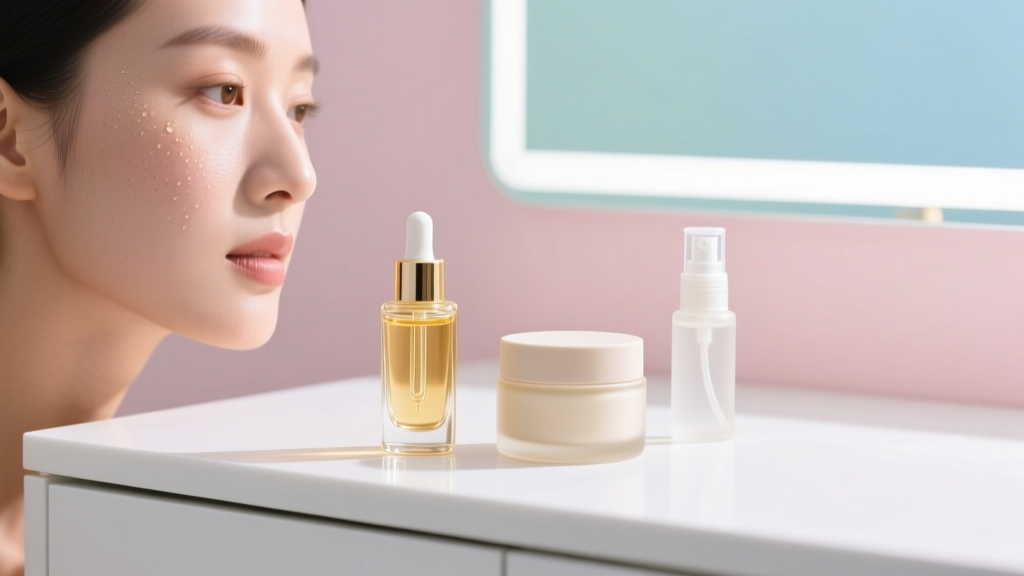
Is sunscreen good for skincare? The dermatologist-backed truth no one tells you: why skipping it isn’t a 'choice'—it’s accelerated aging, pigment chaos, and barrier damage disguised as 'natural skin'
Why 'Is Sunscreen Good for Skincare?' Is the Wrong Question—And What to Ask Instead
Let’s settle this upfront: yes, sunscreen is not just good for skincare—it’s the single most evidence-backed, non-negotiable pillar of any effective skincare routine. Whether you’re battling persistent hyperpigmentation, noticing fine lines deepening before age 30, or wondering why your $200 vitamin C serum isn’t delivering results, the answer often traces back to inconsistent or incorrect sun protection. In fact, according to the American Academy of Dermatology (AAD), up to 90% of visible skin aging is caused by cumulative UV exposure—not time itself. So the real question isn’t whether sunscreen belongs in your regimen—it’s whether you’re using it in a way that actually delivers its full protective, corrective, and preventive benefits. And spoiler: most people aren’t.
The Science Behind Sunscreen as Skincare—Not Just Sun Defense
Sunscreen does far more than prevent sunburn. Modern broad-spectrum formulas act as multi-functional skincare agents—stabilizing active ingredients, reducing inflammation, preventing DNA damage in keratinocytes, and preserving collagen synthesis. A landmark 2021 double-blind study published in JAMA Dermatology followed 904 adults over 4.5 years and found that participants who applied SPF 30+ daily showed 24% less increase in skin wrinkling and 32% less pigmentary change compared to those who used sunscreen only intermittently—even when both groups had identical baseline skin types and routines. Crucially, the benefit wasn’t limited to beach days: incidental UV exposure from driving, walking near windows, or even fluorescent lighting contributed significantly to cumulative damage.
Here’s what makes sunscreen uniquely synergistic with other skincare:
- Retinoids & AHAs/BHAs: These exfoliants increase photosensitivity. Without daily SPF, they accelerate photodamage instead of reversing it.
- Vitamin C: Its antioxidant power is neutralized within minutes of UV exposure—unless paired with physical or chemical UV filters that absorb/scatter rays before they reach the dermis.
- Niacinamide & Peptides: Their repair signals get overwhelmed by UV-induced oxidative stress. Sunscreen creates the low-inflammation environment these actives need to work.
Board-certified dermatologist Dr. Ranella Hirsch, former president of the American Society for Dermatologic Surgery, puts it plainly: “Sunscreen is the only topical that has been clinically proven to reverse signs of photoaging—not just slow them. It’s not skincare adjacent. It’s skincare infrastructure.”
Your Daily SPF Isn’t Working—Here’s Why (and How to Fix It)
You might apply sunscreen every morning—but if you’re missing one of these four critical factors, you’re likely getting less than 30% of the labeled SPF protection. A 2023 University of Leeds phototesting study confirmed that the average user applies only 0.5 mg/cm²—half the FDA-mandated 1.0 mg/cm² dose required for accurate SPF labeling.
- Dose matters more than SPF number: SPF 50 applied at half-dose performs closer to SPF 7. Use the teaspoon rule: 1/4 tsp for face + neck; 1 tsp for each arm; 2 tsp for torso front/back; 1 tsp per leg.
- Reapplication isn’t optional—it’s non-negotiable: Chemical filters degrade after ~2 hours of UV exposure; mineral filters rub off, sweat off, and oxidize. Even ‘water-resistant’ labels require reapplication every 40–80 minutes during activity.
- UV coverage ≠ just UVB: SPF only measures UVB (burning) protection. UVA (aging) penetrates deeper, causes free radical cascades, and contributes to melasma. Look for ‘broad spectrum’ + PA++++ or Boots Star Rating ≥4.
- Formulation compatibility affects efficacy: Layering sunscreen over silicone-heavy primers or occlusive oils can create ‘filter dilution’—reducing film integrity. Apply sunscreen as the final step in your skincare routine (before makeup, after moisturizer).
Real-world case: Sarah, 34, used a popular SPF 50 moisturizer religiously—yet developed stubborn jawline melasma. Her dermatologist discovered she was applying only 1 pump (≈0.3g) for her entire face—less than half the needed amount—and skipping reapplication despite working near south-facing windows. After switching to a lightweight fluid SPF and adopting the teaspoon rule + midday reapplication via SPF-infused setting spray, her melasma faded by 70% in 12 weeks.
Mineral vs. Chemical: Which Sunscreen Type Is Truly Better for Your Skin?
This debate often misses the bigger picture: the best sunscreen is the one you’ll use correctly, consistently, and in adequate amounts. That said, ingredient profiles do matter—for sensitivity, stability, and environmental impact. Below is a clinical comparison based on 2024 AAD consensus guidelines and independent photostability testing from the Photobiology Lab at UC San Diego.
| Feature | Mineral (Zinc Oxide/Titanium Dioxide) | Chemical (Avobenzone, Octinoxate, Mexoryl SX) | Hybrid (Zinc + Avobenzone + Stabilizers) |
|---|---|---|---|
| Onset of Protection | Immediate (sits on surface) | 20 minutes post-application (requires absorption) | Immediate + sustained (mineral base + stabilized filters) |
| Photostability | Exceptional (no degradation) | Variable (avobenzone degrades without octocrylene or Tinosorb S) | High (modern hybrids use photostabilized avobenzone + antioxidants) |
| Skin Sensitivity Risk | Lowest (FDA GRASE-listed, non-comedogenic options available) | Moderate (octinoxate linked to contact dermatitis in 12% of sensitive patients) | Low–moderate (depends on emulsifier system) |
| Blue Light/HEV Protection | Natural scattering effect (zinc oxide blocks ~35% of 400–450nm) | None (unless specifically formulated with iron oxides or antioxidants) | Enhanced (many hybrids add iron oxides for digital screen protection) |
| Eco-Impact (Coral Reefs) | Non-toxic (non-nano zinc oxide safe per NOAA) | High risk (oxybenzone & octinoxate banned in Hawaii, Palau, Key West) | Low (if non-nano zinc + reef-safe organics used) |
Pro tip: If you have melasma or post-inflammatory hyperpigmentation, dermatologists like Dr. Seemal Desai (President, International Hyperpigmentation Society) strongly recommend iron oxide–containing sunscreens—even in mineral formulas—as visible light (not just UV) triggers melanocyte activation. A 2022 British Journal of Dermatology trial showed patients using tinted SPF with 3% iron oxide saw 58% greater improvement in melasma severity vs. untinted SPF alone over 16 weeks.
Skincare-First Sunscreen: How to Choose One That Works *With* Your Routine
Gone are the days of chalky pastes or greasy films. Today’s ‘skincare-grade’ sunscreens are formulated with intentional actives—hyaluronic acid for hydration, niacinamide for redness control, ceramides for barrier support, and even encapsulated antioxidants like resveratrol. But ‘skincare-infused’ doesn’t mean ‘compromised protection.’ Here’s how to vet a formula:
- Check the first 5 ingredients: If alcohol denat., fragrance, or essential oils dominate, skip it—these increase transepidermal water loss and irritation under UV stress.
- Avoid ‘SPF boosters’ like raspberry seed oil: While trendy, it offers SPF ~2–8 in lab settings—and zero peer-reviewed proof of human efficacy. Rely on FDA-tested filters only.
- Look for ‘non-comedogenic’ AND ‘oil-free’ labels: Not all mineral sunscreens are pore-friendly—some use coconut-derived emollients that clog follicles. Check CosDNA or INCIDecoder for individual ingredient comedogenicity ratings.
- Test for ‘wearability’ over time: Apply to jawline and wear for 4 hours—does it pill? Turn grey? Feel tight? These signal formulation instability or poor pH matching.
Mini-case study: Marco, 28, struggled with cystic acne flares every summer—until his dermatologist realized his ‘oil-free’ SPF contained acrylates copolymer, which forms an occlusive film trapping sebum. Switching to a gel-based, alcohol-free, non-acrylate SPF with 12% zinc oxide resolved breakouts in 6 weeks—proving that vehicle chemistry matters as much as active filters.
Frequently Asked Questions
Can I rely on makeup with SPF for full protection?
No—and here’s why: Most SPF makeup requires 7x the normal application amount (≈1/4 tsp foundation) to deliver labeled protection. In reality, users apply 1/10th that amount. Plus, makeup is rarely reapplied—and often contains lower-concentration, less photostable filters. Dermatologists universally recommend sunscreen as a dedicated step, not a cosmetic shortcut.
Do I need sunscreen on cloudy or winter days?
Absolutely. Up to 80% of UV rays penetrate cloud cover, and snow reflects 80% of UV radiation—doubling exposure. A 2020 study in Photochemistry and Photobiology measured UV index levels in Chicago during December: clear day = 1.8, overcast = 1.4—both well above the 1.0 threshold requiring protection. Consistency—not conditions—drives results.
Is higher SPF (like SPF 100) meaningfully better than SPF 30?
Marginally—and potentially counterproductively. SPF 30 blocks 96.7% of UVB; SPF 50 blocks 98%; SPF 100 blocks 99%. That extra 2.3% comes with trade-offs: thicker textures, higher chemical load, increased irritation risk, and false security leading to less frequent reapplication. The AAD recommends SPF 30–50 as the optimal balance of protection, safety, and usability.
Does sunscreen cause vitamin D deficiency?
No—clinical studies confirm daily sunscreen use does not lead to vitamin D insufficiency. A 2019 randomized trial in The British Journal of Dermatology found no difference in serum vitamin D levels between sunscreen users and controls after 6 months. Brief, unprotected exposure (10–15 min arms/face, 2–3x/week) is sufficient for synthesis—and safer than risking DNA damage.
Can I use last year’s sunscreen?
Only if unopened and stored below 77°F (25°C). Once opened, most sunscreens degrade after 12 months—especially chemical filters. Check for separation, odor changes, or texture shifts. When in doubt, replace it. Your skin’s protection shouldn’t be gambled on expired chemistry.
Common Myths Debunked
Myth #1: “I have dark skin—I don’t need sunscreen.”
False. While melanin provides ~SPF 13 natural protection, it doesn’t block UVA or prevent DNA damage. People with Fitzpatrick skin types IV–VI experience higher rates of late-diagnosed skin cancers (especially acral lentiginous melanoma) and severe post-inflammatory hyperpigmentation. The Skin Cancer Foundation reports that 65% of Black patients are diagnosed at Stage III or IV—largely due to sunscreen neglect and provider bias.
Myth #2: “Sunscreen causes coral reef damage—so I should skip it outdoors.”
Misleading. Only specific chemical filters (oxybenzone, octinoxate, octocrylene) show ecotoxicity at high concentrations. Non-nano zinc oxide, titanium dioxide, and modern reef-safe organics (Tinosorb S, Uvinul A Plus) pose negligible risk. Skipping protection harms your skin *and* increases reliance on clothing/hats—which aren’t always practical or accessible. Choose certified reef-safe formulas instead of opting out.
Related Topics (Internal Link Suggestions)
- How to layer sunscreen with retinol — suggested anchor text: "retinol and sunscreen pairing guide"
- Best sunscreens for melasma — suggested anchor text: "melasma-safe SPF recommendations"
- Non-comedogenic sunscreen for acne-prone skin — suggested anchor text: "oil-free sunscreen for cystic acne"
- Physical vs chemical sunscreen explained — suggested anchor text: "mineral vs chemical sunscreen differences"
- How much sunscreen to use (teaspoon rule) — suggested anchor text: "correct sunscreen application amount"
Your Skin’s Longest-Term Investment Starts Today
‘Is sunscreen good for skincare?’ isn’t a yes/no question—it’s an invitation to reframe protection as prevention, maintenance as renewal, and consistency as self-respect. Every day you skip SPF is a day your collagen network weakens, your melanocytes activate unnecessarily, and your hard-won actives work against you. You don’t need the most expensive bottle—just one you’ll use generously, reapply faithfully, and trust implicitly. So tonight, check your current sunscreen’s expiration date and application method. Tomorrow morning, measure out that 1/4 teaspoon—and watch what consistent, intelligent protection does for your skin in 90 days. Ready to build your personalized SPF strategy? Download our free Sunscreen Suitability Quiz—match your skin type, concerns, and lifestyle to clinically validated formulas in under 90 seconds.
More Articles
 How Long Is Opened Sunscreen Good? The Truth About Expiration, Bacterial Growth, and When Your SPF Stops Protecting You (Spoiler: It’s Not 12 Months)
 Does a UV nail lamp cause cancer? What dermatologists *actually* say about UV exposure, LED alternatives, cumulative risk, and how to protect your skin—even if you get gel manicures weekly.
 Is Sunscreen FSA Eligible 2024? Yes — But Only If It Meets These 5 IRS Rules (Most People Miss #3 and Pay Out-of-Pocket)
 Should sunscreen go on before moisturizer? The dermatologist-backed layering rule that prevents wasted SPF, patchy makeup, and premature aging — plus the 3 exceptions no one talks about.
 Can I Mix My Sunscreen With My Moisturizer? Dermatologists Reveal Why This Common Shortcut Undermines SPF Protection—and Exactly What to Do Instead (3 Simple Fixes That Actually Work)