## Understanding Transepidermal Water Loss (TEWL)
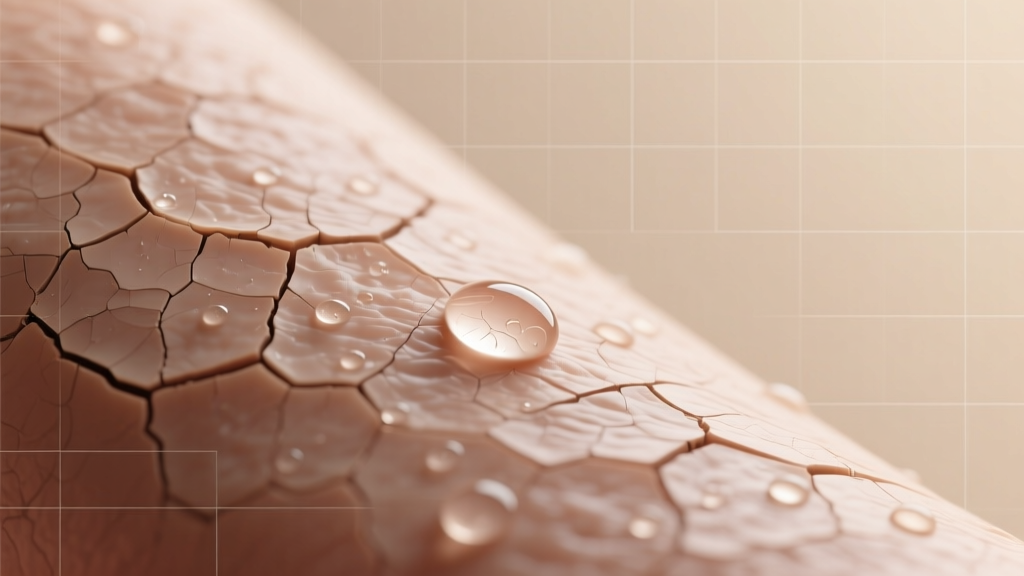
Transepidermal water loss is the process by which water passively evaporates through the skin to the external environment. It's the primary mechanism behind skin dehydration, and understanding it is key to treating dehydrated skin effectively.
### The Science of TEWL
Normal TEWL rates are approximately 8-10 g/m²/hour. When rates exceed this, your skin becomes dehydrated regardless of how much water you drink or how many hydrating products you apply.
**The skin barrier structure** (brick and mortar model):
- **Bricks**: Corneocytes (dead skin cells)
- **Mortar**: Intercellular lipids (ceramides, cholesterol, fatty acids)
When the mortar is damaged or depleted, water escapes rapidly—like a wall with crumbling mortar.
### What Increases TEWL?
**Environmental factors:**
- Low humidity (<30% RH)
- Cold, windy weather
- Indoor heating and air conditioning
- UV radiation damage
**Behavioral factors:**
- Hot showers and baths
- Harsh soaps and cleansers (pH >7)
- Over-exfoliation
- Not moisturizing after washing
**Biological factors:**
- Aging (natural ceramide decline)
- Genetic predisposition
- Skin conditions (eczema, psoriasis)
- Hormonal changes
### How to Measure Your TEWL at Home
While clinical TEWL meters cost thousands, you can estimate your barrier health:
**The tape test:**
1. Apply clear tape to your forearm
2. Peel off gently
3. Hold up to light
4. If lots of flakes are visible = high TEWL (damaged barrier)
5. Minimal flakes = healthy barrier
**The absorption test:**
1. Apply moisturizer after cleansing
2. If it absorbs in <30 seconds = dehydrated, high TEWL
3. If it sits on skin for 2+ minutes = normal barrier function
### Evidence-Based Strategies to Reduce TEWL
#### 1. Occlusive Ingredients
These form a physical barrier to prevent evaporation:
- **Petrolatum**: Reduces TEWL by 98% (gold standard)
- **Dimethicone**: Reduces TEWL by 40-60%
- **Squalane**: Reduces TEWL by 30-40%
- **Shea butter**: Reduces TEWL by 25-35%
#### 2. Barrier Repair Ingredients
These rebuild the lipid mortar:
- **Ceramide NP, AP, EOP**: Essential barrier components
- **Cholesterol**: 25% of barrier lipids
- **Free fatty acids**: Linoleic acid, oleic acid
- **Niacinamide**: Stimulates natural ceramide synthesis
#### 3. Humectants (with a caveat)
Humectants draw water to the skin but MUST be sealed with an occlusive:
- Glycerin, hyaluronic acid, sodium PCA, betaine
- Without an occlusive layer, humectants can actually increase TEWL in dry environments
### The Ideal Anti-TEWL Routine
**Step 1**: Cleanse (pH 5.0-5.5, non-foaming)
**Step 2**: Hydrating toner (humectants)
**Step 3**: Serum (HA + niacinamide)
**Step 4**: Moisturizer (ceramides + cholesterol + fatty acids)
**Step 5**: Occlusive seal (squalane or light petrolatum)
**Step 6**: SPF (mineral preferred for dehydrated skin)
### Clinical Research Highlights
- A 2023 study in the Journal of Investigative Dermatology found that a 3:1:1 ratio of ceramides:cholesterol:fatty acids most effectively reduced TEWL
- Glycerin at 10% concentration outperformed hyaluronic acid in reducing TEWL over 24 hours
- Niacinamide at 2-5% significantly improved barrier function within 4 weeks
### Key Takeaway
You cannot hydrate dehydrated skin by adding water alone. You must repair the barrier to prevent water from escaping. Focus on lipid replenishment and occlusion, not just humectants.