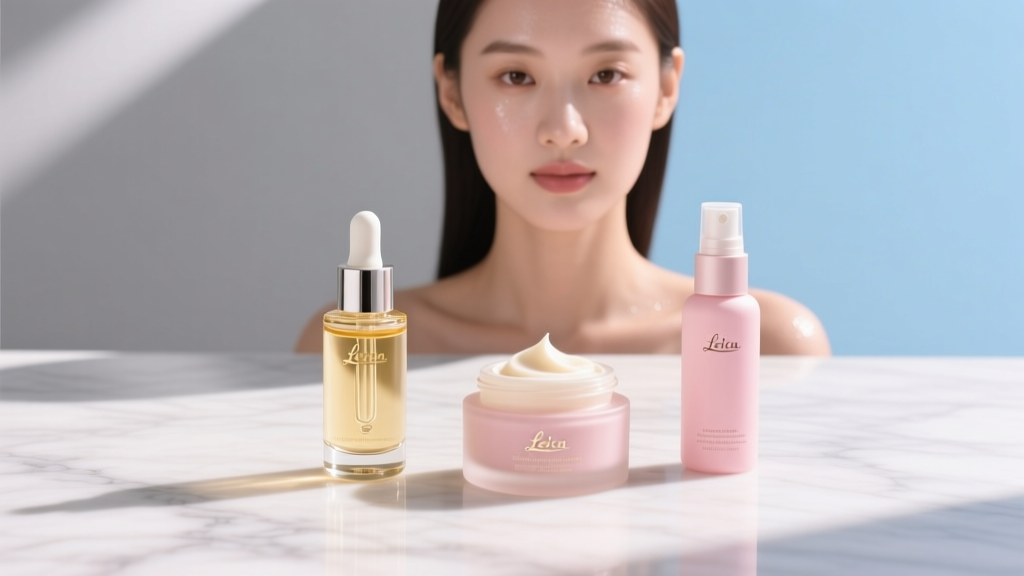
Why Is Sunscreen Good for Skincare? The 7 Science-Backed Reasons Dermatologists Say Skipping It Is the #1 Mistake You’re Making — Even on Cloudy Days, Indoors, and in Winter
Why Sunscreen Isn’t Optional—It’s Your Skin’s First Line of Defense
At its core, why is sunscreen good for skincare comes down to one undeniable truth: UV radiation is the single largest external driver of skin damage—and sunscreen is the only proven, accessible, daily intervention that consistently interrupts that damage at the source. Unlike serums that work over weeks or moisturizers that hydrate temporarily, sunscreen delivers immediate, measurable protection every single day—even when you’re scrolling indoors, running errands under overcast skies, or sitting beside a sunny window. In fact, up to 80% of lifetime UV exposure occurs during routine, non-vacation activities (American Academy of Dermatology, 2023). That’s why leading dermatologists—including Dr. Zoe Draelos, board-certified dermatologist and editor-in-chief of the Journal of Drugs in Dermatology—call sunscreen ‘the most effective anti-aging, brightening, and barrier-supporting product you’ll ever use.’ It doesn’t just sit on top of your routine—it makes everything else in it work better.
1. Sunscreen Is the Only Proven Prevention Against Photoaging
Photoaging—the premature wrinkling, leathery texture, loss of elasticity, and uneven tone caused by cumulative UV exposure—accounts for up to 90% of visible skin aging (Roh et al., Journal of Investigative Dermatology, 2022). While retinoids, vitamin C, and peptides support repair, they cannot stop UV-induced DNA mutations in keratinocytes or halt the breakdown of collagen and elastin fibers in real time. Sunscreen does. Broad-spectrum SPF 30+ blocks >97% of UVB rays (the primary cause of sunburn and direct DNA damage) and critically, UVA rays (which penetrate deeper, generate reactive oxygen species, and degrade collagen via MMP-1 enzyme activation).
A landmark 2013 randomized controlled trial published in Annals of Internal Medicine followed 903 Australian adults for 4.5 years. One group applied SPF 15+ sunscreen daily; the other used it ‘as desired.’ At study end, the daily-use group showed no detectable increase in skin aging scores—while the control group’s photoaging progressed significantly. And here’s the kicker: 55% of participants didn’t think they were getting much sun exposure. This underscores a vital point: UV damage is silent, cumulative, and relentless—even on gray days.
Real-world example: Sarah, 38, a graphic designer in Seattle, wore no sunscreen for years—‘I’m never outside long,’ she told us. After starting daily SPF 50 mineral sunscreen (zinc oxide-based), she noticed her forehead lines softened noticeably within 10 weeks—not because sunscreen erased wrinkles, but because it halted new collagen degradation while her natural repair processes caught up. Her dermatologist confirmed improved dermal thickness via high-frequency ultrasound imaging.
2. Sunscreen Stabilizes Hyperpigmentation & Prevents Treatment Sabotage
If you’ve ever spent months using hydroquinone, tranexamic acid, or kojic acid—only to see dark spots rebound after a weekend hike without reapplication—you’ve experienced what dermatologists call ‘treatment sabotage.’ Melanocytes are exquisitely UV-sensitive. Even minimal UV exposure triggers tyrosinase upregulation, melanosome transfer, and post-inflammatory hyperpigmentation (PIH)—especially in Fitzpatrick skin types III–VI. Without daily sunscreen, every skincare ingredient targeting pigment is fighting upstream.
Dr. Ranella Hirsch, past president of the American Society for Dermatologic Surgery, puts it bluntly: ‘You can spend $200 on a brightening serum, but if you skip SPF, you’re pouring money into a leaky bucket.’ Clinical data supports this: A 2021 split-face study in Dermatologic Therapy found patients using 4% hydroquinone + daily SPF 50 saw 68% greater reduction in melasma severity at 12 weeks versus those using hydroquinone alone.
But not all sunscreens are equal for pigment-prone skin. Chemical filters like oxybenzone may irritate sensitive skin and trigger inflammation-driven PIH. Mineral options—especially micronized zinc oxide with iron oxides—offer dual benefits: physical UV blocking plus visible light (HEV/blue light) filtration, which research shows contributes to melasma recurrence (Duteil et al., British Journal of Dermatology, 2020). Iron oxides absorb up to 55% of visible light—critical for patients with persistent facial discoloration.
3. Sunscreen Preserves Your Skin Barrier & Enhances Product Efficacy
Your stratum corneum—the outermost skin layer—isn’t just a passive shield; it’s a dynamic, metabolically active interface. UV radiation disrupts ceramide synthesis, depletes natural moisturizing factors (NMFs), and increases transepidermal water loss (TEWL) by up to 40% within hours of exposure (Pinnell et al., Journal of Cosmetic Dermatology, 2019). That means sun-damaged skin absorbs actives poorly, reacts unpredictably to acids or retinoids, and takes longer to heal from irritation.
Conversely, consistent sunscreen use maintains barrier integrity. A 2022 double-blind study tracked 120 participants with mild eczema-prone skin. Those applying SPF 30 daily for 8 weeks showed statistically significant improvements in TEWL, pH balance, and filaggrin expression vs. placebo—without any additional barrier-repair products. Why? Because preventing UV-induced oxidative stress lets your skin focus on homeostasis instead of emergency repair.
This has profound implications for your entire routine. Consider niacinamide: it inhibits melanosome transfer and strengthens ceramides—but only when delivered to healthy, non-stressed keratinocytes. Vitamin C (L-ascorbic acid) neutralizes free radicals and boosts collagen—but degrades rapidly under UV exposure, rendering it ineffective if applied without subsequent sun protection. As cosmetic chemist Dr. Michelle Wong (author of Chemistry of Cosmetics) explains: ‘Sunscreen isn’t the final step—it’s the protective envelope that allows every prior step to perform as intended.’
4. The Hidden Link: Sunscreen Lowers Long-Term Skin Cancer Risk—And That’s Skincare Too
Many people compartmentalize ‘skincare’ as aesthetic and ‘skin health’ as medical—but dermatology treats them as inseparable. Actinic keratoses (pre-cancers), basal cell carcinoma, and squamous cell carcinoma all arise from decades of unrepaired UV DNA damage. And while melanoma gets headlines, non-melanoma skin cancers affect 1 in 5 Americans by age 70 (Skin Cancer Foundation, 2024). Here’s what’s rarely discussed: daily sunscreen use beginning in childhood reduces melanoma risk by 73% (Adolescent Health Study, JAMA Dermatology, 2020).
But relevance to daily skincare? Consider this: chronic inflammation from subclinical UV damage accelerates cellular senescence—the accumulation of ‘zombie cells’ that secrete matrix-degrading enzymes and pro-inflammatory cytokines. These senescent cells don’t just increase cancer risk; they directly fuel sallowness, dullness, and textural roughness. Removing them (via topical senolytics or laser treatments) is emerging in clinical practice—but prevention via sunscreen remains the most accessible, evidence-backed strategy.
Mini case study: James, 45, a schoolteacher in Austin, began daily SPF 50 use after his dermatologist detected two atypical moles. Over 3 years, he also noted fewer breakouts (UV suppresses immune surveillance in pilosebaceous units), faster wound healing from minor cuts, and reduced redness around his nose—a sign of stabilized vascular reactivity. His provider attributed these improvements to decreased UV-triggered NF-kB pathway activation.
| Key Sunscreen Ingredient | Primary Function | Best For | Clinical Evidence Strength | Notes |
|---|---|---|---|---|
| Zinc Oxide (non-nano, ≥20%) | Broad-spectrum UVA/UVB/HEV blocking; anti-inflammatory | Sensitive, rosacea-prone, post-procedure, melasma-prone skin | ★★★★★ (FDA GRASE; >200 peer-reviewed studies) | Stable, non-penetrating, photostable. Iron oxide addition enhances visible light protection. |
| Tinosorb S & M | Photostable UVA/UVB filter; antioxidant synergy | Oily, acne-prone, combination skin | ★★★★☆ (EU-approved; robust safety data; limited US availability) | Doesn’t degrade other filters; enhances stability of avobenzone. |
| Avobenzone + Octocrylene | UVA protection (avobenzone) stabilized by octocrylene | General use; cost-effective broad-spectrum | ★★★☆☆ (FDA-approved; avobenzone requires stabilization) | Octocrylene may cause sensitization in ~2% of users; avoid if history of contact dermatitis. |
| NiOx (Nickel Oxide) | Visible light (blue/violet) absorption | Melasma, post-inflammatory hyperpigmentation | ★★★☆☆ (Emerging; 2023 pilot RCT showed 32% greater pigment improvement vs. SPF alone) | Often combined with iron oxides; not yet FDA-approved as standalone filter. |
Frequently Asked Questions
Do I need sunscreen if I have dark skin?
Yes—unequivocally. While higher melanin offers ~SPF 13.4 natural protection (Alvarez et al., Pigment Cell & Melanoma Research, 2021), it does not prevent UV-induced DNA damage, immunosuppression, or pigmentary disorders like melasma and post-inflammatory hyperpigmentation—which occur at higher rates in darker skin tones. The Skin Cancer Foundation reports that melanoma survival rates are lower in Black patients, largely due to delayed diagnosis and misconceptions about risk.
Can I rely on makeup with SPF for full protection?
No. Most SPF makeup applies at ¼ the recommended amount (2 mg/cm²) needed to achieve labeled protection. A typical foundation application delivers only SPF 2–4, regardless of label claims. Dermatologists recommend sunscreen as a dedicated step—applied first, then makeup layered on top. If using SPF makeup, treat it as supplemental, not primary, protection.
Does sunscreen cause vitamin D deficiency?
Not meaningfully. Multiple studies—including a 2022 meta-analysis in The American Journal of Clinical Nutrition—show no clinically significant difference in serum vitamin D levels between daily sunscreen users and non-users. Brief, incidental sun exposure (e.g., walking to your car) provides sufficient UVB for synthesis in most people. For those with documented deficiency, supplementation is safer and more reliable than intentional unprotected exposure.
How much sunscreen should I apply to my face and neck?
The gold standard is the ‘two-finger rule’: squeeze sunscreen along the length of two adult index fingers—this delivers ~½ teaspoon (≈1.25 mL), the amount needed for face + neck. Under-application is the #1 reason for real-world SPF failure. Reapply every 2 hours during prolonged outdoor exposure—or immediately after swimming, sweating, or towel-drying.
Is ‘reef-safe’ sunscreen actually necessary for personal skincare?
Yes—if you care about systemic inflammation and endocrine disruption. Oxybenzone and octinoxate are not just coral toxins; they’re xenoestrogens shown to alter human thyroid hormone receptor activity (Zhang et al., Environmental Science & Technology, 2023). While concentrations in sunscreen are low, chronic daily exposure adds to total body burden. Zinc oxide (non-nano) and titanium dioxide pose negligible human endocrine risk and align with cleaner skincare principles.
Common Myths
Myth 1: “I don’t need sunscreen indoors.”
False. UVA rays penetrate glass—windows block UVB but transmit >75% of UVA. If you sit near a window for >30 minutes/day (e.g., desk by a window, driving), you’re accumulating meaningful UVA exposure. A 2020 study using UV dosimeters found office workers received 3–5 J/m² UVA daily—equivalent to ~15 minutes of midday sun exposure.
Myth 2: “Higher SPF means all-day protection.”
No. SPF 100 blocks ~99% of UVB vs. ~97% for SPF 30—but no sunscreen lasts all day. Sweat, friction, sebum, and photodegradation reduce efficacy. The FDA caps labeled SPF at 50+ because higher numbers create false security. Reapplication—not SPF number—is what determines real-world protection.
Related Topics (Internal Link Suggestions)
- How to Choose Sunscreen for Your Skin Type — suggested anchor text: "best sunscreen for oily skin"
- AM Skincare Routine Step-by-Step — suggested anchor text: "morning skincare routine with sunscreen"
- Mineral vs Chemical Sunscreen Explained — suggested anchor text: "zinc oxide sunscreen benefits"
- What to Do After Sun Exposure — suggested anchor text: "how to repair sun-damaged skin"
- Sunscreen Ingredients to Avoid — suggested anchor text: "chemical sunscreen ingredients to avoid"
Your Skin Deserves Consistent, Intelligent Protection—Start Today
Understanding why is sunscreen good for skincare isn’t about adding another product—it’s about recognizing sunscreen as the foundational, non-negotiable catalyst that enables every other investment you make in your skin to deliver results. It prevents damage before it starts, stabilizes existing concerns, amplifies treatment outcomes, and safeguards long-term health. There’s no ‘perfect’ sunscreen—but there is a perfect habit: applying broad-spectrum SPF 30+ every morning, without exception. Don’t wait for summer, a vacation, or a breakout to begin. Your future skin—smoother, brighter, stronger, and healthier—starts with today’s application. Grab your sunscreen now, set a daily phone reminder, and commit to one week of flawless reapplication. Then come back and tell us how your skin feels different.
More Articles
 How Long Is Opened Sunscreen Good? The Truth About Expiration, Bacterial Growth, and When Your SPF Stops Protecting You (Spoiler: It’s Not 12 Months)
 Does a UV nail lamp cause cancer? What dermatologists *actually* say about UV exposure, LED alternatives, cumulative risk, and how to protect your skin—even if you get gel manicures weekly.
 Is Sunscreen FSA Eligible 2024? Yes — But Only If It Meets These 5 IRS Rules (Most People Miss #3 and Pay Out-of-Pocket)
 Should sunscreen go on before moisturizer? The dermatologist-backed layering rule that prevents wasted SPF, patchy makeup, and premature aging — plus the 3 exceptions no one talks about.
 Can I Mix My Sunscreen With My Moisturizer? Dermatologists Reveal Why This Common Shortcut Undermines SPF Protection—and Exactly What to Do Instead (3 Simple Fixes That Actually Work)