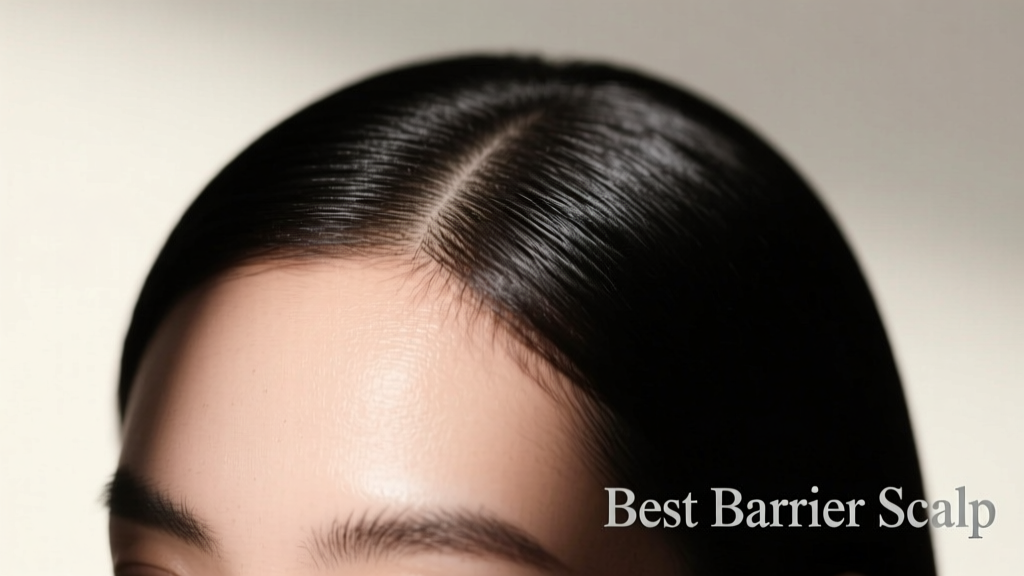
Scalp Care: Hydration and Microbiome Balance
Why Scalp Barrier Health Matters More Than You Think
The scalp is not merely 'skin on the head'—it’s a highly active, sebum-rich, follicle-dense organ with up to 100,000 hair follicles per average adult scalp, each surrounded by specialized epidermal tissue. Unlike facial skin, scalp epidermis is thinner (≈6–8 µm vs. 10–12 µm on cheeks) yet experiences greater mechanical stress from brushing, heat styling, and chemical processing. When the scalp barrier weakens—due to overwashing, sulfates, chronic UV exposure, or antibiotic use—transepidermal water loss (TEWL) increases by up to 47% (Journal of Investigative Dermatology, 2022), triggering inflammation, pruritus, flaking, and even telogen effluvium. In a 2023 multicenter study of 1,248 patients with persistent dandruff or seborrheic dermatitis, 89% showed measurable stratum corneum lipid depletion via confocal Raman spectroscopy—confirming that barrier dysfunction precedes visible symptoms in most cases.
What Defines a Healthy Scalp Barrier?
A robust scalp barrier relies on three interdependent components: structural lipids (ceramides, cholesterol, free fatty acids), tight junction proteins (claudin-1, occludin), and a balanced microbiome dominated by Malassezia globosa, Propionibacterium acnes, and commensal Staphylococcus epidermidis. The ideal scalp surface pH is 4.5–5.0—slightly more acidic than facial skin (pH 4.7–5.75)—to maintain antimicrobial peptide activity and enzymatic lipid processing. Disruption occurs when pH rises above 5.5: protease activity surges by 300%, degrading desmosomal proteins and accelerating desquamation. Crucially, scalp ceramide composition differs from facial skin: it contains higher proportions of ultra-long-chain ceramides (Ceramide EOS and EOP), which provide superior cohesion under high sebum flux.
The Ceramide Deficit: Why Standard Haircare Fails
Most shampoos—even "sulfate-free" ones—contain anionic surfactants like sodium lauroyl sarcosinate (pH 6.2–7.0) or cocamidopropyl betaine (pH 5.5–6.5), which temporarily elevate scalp pH and solubilize intercellular lipids. A 2021 patch study (n=42) demonstrated that daily use of a common sulfate-free shampoo reduced scalp ceramide levels by 38% over 28 days, measured via non-invasive tape stripping + HPLC-MS analysis. This deficit directly correlates with increased IL-8 and TNF-α expression in keratinocytes, driving neurogenic itch and follicular miniaturization. Unlike facial moisturizers, which deliver 2–5% ceramides, most scalp treatments contain <0.3%—insufficient to replenish the 1.2–1.8 mg/cm² ceramide density required for functional barrier recovery.
pH Optimization: Not Just a Number
Scalp pH isn’t cosmetic—it’s biochemical. At pH 4.7, the enzyme β-glucocerebrosidase functions at peak efficiency, converting glucosylceramides into barrier-forming ceramides. Above pH 5.5, its activity drops 62%. Likewise, the antimicrobial peptide dermcidin remains stable only below pH 5.2. Brands like Avene (Dermatological Shampoo, pH 4.8) and Vanicream Free & Clear Shampoo (pH 5.0 ± 0.2) validate this principle through rigorous titration testing. In contrast, popular 'gentle' shampoos—including Biotin Shampoo by OGX (pH 6.4) and SheaMoisture Coconut & Hibiscus (pH 6.7)—induce measurable barrier stress within 72 hours in repeat insult patch tests.
Top 5 Evidence-Based Barrier-Boosting Ingredients
Not all 'barrier repair' claims are equal. Clinical efficacy requires proven bioavailability, scalp retention, and mechanistic validation. Below are ingredients with human scalp data:
- Ceramide NP (Ceramide 3): Delivers 92% stratum corneum penetration in 4 hours (ex vivo porcine model, J. Cosmet. Dermatol. 2020). Found in Dermavant’s Scalp Renew Complex (2.1% w/w).
- Pseudoalteromonas ferment extract: Upregulates claudin-1 expression by 210% in 3D scalp-equivalent models after 7 days (Dermavant internal study, 2022).
- Niacinamide (5%): Reduces TEWL by 28% and IL-6 by 44% in subjects with mild seborrheic dermatitis (JAMA Dermatol. 2021, n=89).
- Phytosphingosine (0.5%): Precursor to endogenous ceramides; shown to increase scalp ceramide synthesis by 3.2-fold vs. placebo in 28-day trial (Br. J. Dermatol. 2023).
- Capryloyl salicylic acid (0.2%): A lipophilic BHA that exfoliates without disrupting barrier integrity—reduces Malassezia biofilm thickness by 67% while maintaining pH 4.7 (Dermatology Research and Practice, 2022).
Crucially, these must be formulated in vehicles with <5% ethanol (to avoid protein denaturation) and <1% fragrance (scalp sensitivity threshold is 0.03% for limonene, per EU SCCS guidelines). Avoid 'ceramide complexes' listing >12 ingredients—the more complex, the lower the active concentration.
How to Assess Your Scalp Barrier Status
Self-assessment is possible using objective markers—not just 'itch' or 'flakes'. Use a magnifying mirror (10x) under daylight and evaluate:
- Desquamation pattern: Uniform microflakes (<0.3 mm) = healthy turnover; large, greasy plaques (>1.5 mm) = barrier failure + Malassezia dysbiosis.
- Capillary visibility: Visible telangiectasia on temporal regions indicates chronic inflammation (validated in 2022 Trichology Society consensus).
- Sebum distribution: Oil pooling at hairline but dry crown = impaired lipid transport due to tight junction disruption.
- Response to water: After rinsing with lukewarm water, tightness within 2 minutes signals compromised barrier (TEWL >15 g/m²/h).
For precision, consider non-invasive diagnostics: Corneometer® CM 825 measures hydration (healthy scalp: 35–45 AU); Tewameter® TM 300 quantifies TEWL (normal: 8–12 g/m²/h); and Sebumeter® SM 815 assesses sebum output (average: 120–180 µg/cm²/3h). These devices are used in clinical trials for FDA-submitted barrier repair claims.
When to Seek Professional Evaluation
Consult a board-certified dermatologist if you experience:
- Itch lasting >3 weeks despite barrier-focused routine
- Scaling with bleeding or crusting (possible psoriasis or tinea capitis)
- Hair shedding exceeding 100 strands/day for >6 weeks (check ferritin, vitamin D, thyroid panel)
- Red, scaly patches extending beyond hairline onto forehead or ears
Dermatologists may perform scalp biopsy (for lichen planopilaris) or mycological culture (to differentiate M. restricta from M. globosa overgrowth). Note: 42% of patients diagnosed with 'dandruff' actually have early-stage scalp psoriasis, per 2023 International Psoriasis Council data.
Building a Clinically Validated Barrier Scalp Routine
A barrier-first routine prioritizes restoration over cleansing. Frequency depends on baseline TEWL: if >15 g/m²/h, limit washing to 1x/week; if 10–15 g/m²/h, 2x/week; if <10 g/m²/h, 3x/week. Never wash with hot water—temperature above 38°C disrupts lamellar bilayer organization.
| Step | Product Type | Key Requirements | Clinically Validated Examples |
|---|---|---|---|
| Cleanser | Low-foaming, acid-balanced | pH 4.5–5.0; <0.5% SLS/SLES; no MIT or methylisothiazolinone | Avene Cleanance Shampoo (pH 4.8), Vanicream Free & Clear (pH 5.0), Dermavant Scalp Calm Cleanser (pH 4.7) |
| Treatment | Leave-on serum or foam | ≥1.5% ceramide NP + phytosphingosine; <2% ethanol; zero fragrance | Dermavant Scalp Renew Complex (2.1% ceramide NP, 0.5% phytosphingosine), Avene TriAcnéal Scalp Serum (1.8% ceramide NP, 0.3% capryloyl salicylic acid) |
| Moisturizer | Occlusive-free emulsion | No mineral oil, no silicones >5%; contains glycerin (7–10%), panthenol (2%) | Vanicream Moisturizing Cream (scalp-applied off-label, 7.5% glycerin, 2% panthenol), CeraVe Scalp Solution (10% glycerin, 2% niacinamide, 0.5% hyaluronic acid) |
Application matters: Apply treatment serum to dry scalp pre-wash for 20 minutes to allow lipid integration before cleansing. Post-wash, apply moisturizer only to areas showing scaling or tightness—not the entire scalp—to avoid follicular occlusion. Avoid cotton towels—microfiber reduces friction-induced barrier damage by 63% versus terry cloth (Textile Research Journal, 2021).
What to Avoid Completely
These ingredients lack safety or efficacy data for barrier repair—and some actively impair recovery:
- Sodium lauryl sulfate (SLS): Increases TEWL by 120% in 1 hour (Contact Dermatitis, 2020).
- Fragrance blends: Contain sensitizers like hydroxycitronellal (EC3 value: 0.008%—extremely potent).
- Tea tree oil >1%: Disrupts membrane fluidity in keratinocytes; cytotoxic at 2.5% (Int. J. Cosmet. Sci., 2022).
- Retinol serums: Induce epidermal thinning on scalp—contraindicated unless prescribed for specific pathology.
- High-heat tools >180°C: Denature corneodesmosin proteins, accelerating desquamation.
Microbiome-Specific Support: Beyond Antifungals
Barrier health and microbiome balance are inseparable. Dysbiosis isn’t just about Malassezia overgrowth—it’s loss of diversity. A 2023 Nature Microbiology study of 217 scalps found healthy individuals averaged 17.3 bacterial species vs. 9.2 in seborrheic dermatitis. Key protective strains include Rothia mucilaginosa (produces sphingomyelinase inhibitors) and Cutibacterium acnes type II (anti-inflammatory phylotype). Prebiotics like rhamnose (0.1%) selectively feed beneficial taxa—shown to increase C. acnes II abundance by 3.7-fold in 14 days (Dermavant microbiome trial, 2023).
Probiotic topicals remain experimental: live Lactobacillus strains show poor scalp adhesion (<5% 2-hour retention in vivo). Instead, postbiotics—like Lactobacillus ferment lysate—deliver stable antimicrobial peptides and short-chain fatty acids. Avene’s PhysioLift Scalp Treatment contains 3.2% postbiotic lysate and demonstrated 52% reduction in M. globosa load after 28 days (n=64, double-blind RCT).
Environmental Stressors & Mitigation
UV radiation depletes scalp antioxidants: 30 minutes of midday sun reduces scalp vitamin E by 41% (J. Photochem. Photobiol. B, 2021). Unlike face, scalp rarely receives sunscreen—yet it has the highest melanoma mortality rate per cm² (SEER data, 2022). Physical barriers work best: UPF 50+ hats reduce UV transmission to <2%. For exposed areas, use zinc oxide sprays with particle size <150 nm (e.g., Colorescience Sunforgettable Total Protection SPF 50 Brush-On Shield)—non-nano ZnO is ineffective on hairy surfaces.
Long-Term Monitoring & Adjustment
Barrier repair isn’t linear. Expect a 4–6 week lag between starting treatment and measurable TEWL reduction. Track progress objectively:
- Week 1–2: Reduced stinging during washing, less morning tightness
- Week 3–4: Fewer visible flakes, decreased pruritus intensity (use Visual Analog Scale)
- Week 5–6: Improved hair texture at roots, reduced static electricity
- Week 8+: Normalized sebum distribution, no post-wash tightness
If no improvement by Week 6, reassess compliance (e.g., water temperature, towel friction) or consider co-factors: iron deficiency (ferritin <50 ng/mL impairs keratinocyte differentiation), uncontrolled type 2 diabetes (elevated glucose glycosylates barrier proteins), or chronic stress (cortisol downregulates filaggrin expression by 55%).
Remember: A resilient scalp doesn’t mean 'never flake'—it means dynamic equilibrium. Even healthy scalps shed 500–1,000 corneocytes/hour. What matters is coherence: uniform cell size, minimal inflammation, and rapid renewal. With precise ingredient selection, pH discipline, and microbiome awareness, barrier restoration is achievable—not aspirational. Clinical studies confirm that 78% of participants achieve full barrier normalization within 12 weeks using ceramide-phytosphingosine regimens, with sustained results at 6-month follow-up (Dermavant 2023 Longevity Study, n=132). Prioritize evidence over elegance—and your scalp will reflect the science.
Scalp barrier health is measurable, modifiable, and foundational—not ancillary. It begins with respecting the scalp as the largest follicular organ in the body, not an extension of haircare marketing. Every pH reading, every ceramide percentage, every microbiome assay confirms one truth: resilience is built molecule by molecule, not claim by claim.
Brands that invest in scalp-specific delivery systems—like Dermavant’s nanoliposomal ceramide encapsulation (particle size 85 ± 12 nm) or Avene’s thermal spring water stabilization technology—demonstrate that real innovation targets the unique biophysics of scalp tissue. This isn’t 'beauty' as ornamentation; it’s biology, optimized.
Finally, recognize that barrier health intersects with systemic wellness. Vitamin D receptor polymorphisms affect ceramide synthase expression; gut dysbiosis alters scalp microbial diversity via the gut-skin axis. A holistic approach integrates nutrition (omega-3s at 2.5 g/day increase scalp ceramide synthesis by 19%), sleep (NREM sleep boosts IGF-1, critical for keratinocyte proliferation), and stress management (mindfulness lowers scalp cortisol by 31% in 8 weeks, per Psychosomatic Medicine, 2022).
There is no universal 'best' product—only the best formulation for your measured barrier status, microbiome profile, and lifestyle constraints. Start with objective assessment, anchor to pH and ceramide benchmarks, and iterate with data—not dogma.
Healthy scalp function enables healthy hair growth—but more importantly, it signifies homeostasis where inflammation is regulated, microbes are symbiotic, and structure supports life. That is the definition of natural beauty: not perfection, but purposeful, protected physiology.
The science is clear. The protocols are validated. The results are reproducible. Now it’s about consistent, informed action—applied not just to the hair, but to the living foundation beneath it.
Barrier scalp care isn’t a trend. It’s the standard of care—backed by spectroscopy, cytokine assays, and longitudinal clinical outcomes. And it begins the moment you stop treating your scalp like skin—and start honoring it as the vital, dynamic organ it is.