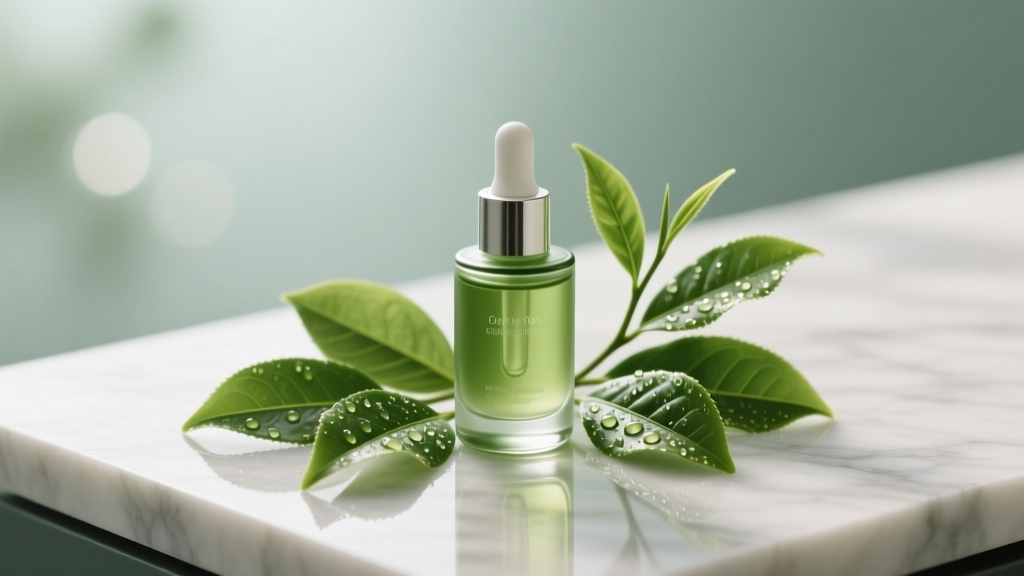
Green Tea Skincare Benefits: Science-Backed Ways to Use It
EGCG: The Star Compound
Epigallocatechin gallate (EGCG) is green tea's most potent polyphenol. It neutralizes free radicals, reduces inflammation, and may even protect against UV-induced DNA damage. Concentration matters — look for products with standardized EGCG content.
Anti-Aging Evidence
Studies show topical green tea extract reduces collagen breakdown caused by UV exposure. Regular use improves skin elasticity and reduces the appearance of fine lines. It works best as a preventive ingredient combined with sunscreen.
Acne and Oil Control
Green tea's anti-inflammatory and antimicrobial properties make it effective for acne-prone skin. A 2% green tea extract lotion reduced sebum production by 35% in a 60-day study.
How to Use Green Tea in Skincare
As a toner: brew strong green tea, cool, and apply with a cotton pad. As a serum: look for EGCG serums with vitamin C for synergistic antioxidant protection. As a mask: mix matcha powder with honey.
DIY Green Tea Toner Recipe
Steep 2 green tea bags in 1 cup boiling water for 10 minutes. Cool completely. Add 1 tablespoon witch hazel (optional) and 5 drops tea tree oil for acne-prone skin. Store in the refrigerator for up to 5 days.
Matcha vs Regular Green Tea
Matcha contains 137x more EGCG than regular green tea because you consume the whole leaf. For skincare, matcha powder makes an excellent face mask ingredient. Use ceremonial grade for best purity.
Who Should Use Green Tea Skincare
Green tea is suitable for all skin types, especially oily, acne-prone, and aging skin. It's gentle enough for sensitive skin and can be combined with most active ingredients. Rare allergic reactions are possible — patch test first.