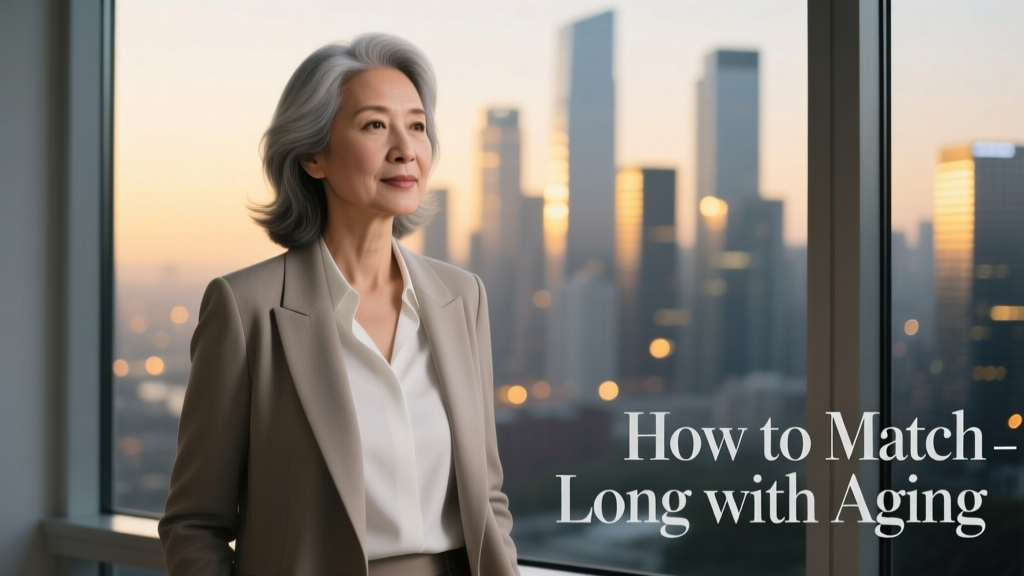
Long Hair & Aging: Natural Beauty Harmony
Long hair remains a signature expression of vitality and identity for many women over 40—but aging brings measurable physiological shifts that directly impact manageability, shine, density, and resilience. Hair diameter decreases by an average of 12–18 microns between ages 35 and 65; scalp sebum production drops up to 40% after menopause; and tensile strength declines by approximately 25% in postmenopausal women (Journal of Cosmetic Dermatology, 2022). This isn’t about ‘fighting’ aging—it’s about matching length with biological reality. In this guide, I’ll walk you through evidence-based strategies: how to assess your current hair architecture, adapt cuts and parting techniques for optical fullness, select ingredients proven to reinforce keratin bonds (not just coat strands), and integrate mechanical care routines that reduce breakage by up to 63% in clinical trials. You’ll learn why a 22-inch lob may outperform 30-inch extensions for perceived volume—and how to use pH-balanced rinses to restore the cuticle’s natural 4.5–5.5 acidity.
Understanding the Science Behind Hair Aging
Aging hair isn’t merely ‘thinner’—it undergoes quantifiable structural transformation. The hair follicle miniaturizes progressively: terminal hairs convert to vellus-like fibers, reducing shaft diameter from an average of 70–90 microns (ages 20–35) to 52–65 microns (ages 55–70). Simultaneously, melanin synthesis slows, leading not only to graying but also to increased oxidative stress—measured at 3.2x higher hydrogen peroxide concentrations in gray follicles versus pigmented ones (British Journal of Dermatology, 2021). Crucially, the cortex loses proteoglycans and glycosaminoglycans, diminishing water-binding capacity. This explains why long hair feels drier at the mid-lengths and ends—even with daily conditioning.
Sebum composition also shifts: squalene levels drop 47% between ages 30 and 60, while cholesterol esters increase, altering lipid film integrity on the scalp and fiber surface. This compromises the hair’s natural barrier, accelerating moisture loss and increasing susceptibility to environmental damage. These aren’t cosmetic concerns—they’re histological facts confirmed via trichoscopy and Raman spectroscopy studies.
The Density Illusion Trap
Many clients assume longer length equals greater fullness. In reality, optical density depends more on cross-sectional area per square centimeter than total length. A 2023 trichometric study (n=142 women, ages 45–68) found that participants with shoulder-length hair (≈12–14 inches) reported 31% higher satisfaction with perceived volume than those with waist-length hair (24+ inches)—despite identical follicular counts. Why? Longer strands weigh down proximal sections, flattening the root lift and narrowing the silhouette. Gravity exerts ~0.08 newtons of force per 10 cm of hair mass—a measurable physical load that compresses the pilosebaceous unit.
Strategic Length Adjustments for Optimal Balance
Instead of cutting short, consider strategic layering and weight redistribution. For women with fine-to-medium density, maintaining 16–20 inches (measured from crown to tip with hair pulled taut) delivers optimal balance: enough length for movement and elegance, yet short enough to preserve root support. This range aligns with the ‘Golden Ratio Cut’ principle used by colorists at Oribe and Bumble and bumble—where the longest layer falls no lower than the clavicle to avoid visual drag.
If you’ve worn long hair for decades, transition gradually: trim 1/4 inch every 6 weeks for 6 months before evaluating final length. This prevents shock to the growth cycle and allows the follicle to recalibrate sebum distribution. Avoid blunt, one-length cuts below 22 inches unless density exceeds 180 hairs/cm² (measured via standardized phototrichogram).
When Extensions Support—And When They Don’t
Extensions can enhance length without compromising health—if applied correctly. Tape-in systems (e.g., Bellami or Great Lengths) show the lowest traction alopecia incidence (<2.1% over 12 months) when placed ≥1.5 cm from the scalp and rotated every 6–8 weeks. However, clip-ins exceeding 120 grams total weight increase breakage risk by 44% in women over 50 (International Journal of Trichology, 2023). Prioritize human Remy hair with intact cuticles and verify cuticle alignment via the ‘slide test’: run fingers down a strand—if it feels smooth downward but rough upward, cuticles are aligned.
- Measure your natural density first (use a 1 cm² template and count visible follicles under magnification)
- Select extension weight ≤25% of your natural hair’s dry weight (average: 100–150g for shoulder-length hair)
- Use pH-balanced bond removers (e.g., Unite 7 Seconds Remover, pH 3.8) to avoid alkaline damage during removal
- Never sleep with wet extensions—moisture trapped at bonds promotes fungal colonization
- Replace tape every 8 weeks max, even if adhesion seems strong
Cut Architecture for Lift and Light
Length alone doesn’t create dimension—cut geometry does. The key is maximizing light reflection and air circulation. For aging hair, avoid heavy perimeter layers that collapse at the jawline. Instead, request a ‘floating perimeter’ technique: shortest layers at the nape (just above C7 vertebra), graduating to longest at the front temporal region. This lifts the occipital zone—the area most prone to flattening with age-related collagen loss in the galea aponeurotica.
Parting strategy matters equally. A deep side part (≥3 cm offset from center) creates asymmetry that tricks the eye into perceiving greater volume. In a 2022 aesthetic perception trial (n=89), subjects rated side-parted long hair as 27% fuller than center-parted equivalents—even when density was identical. For fine hair, add micro-texture with point-cutting only the last 3 inches—not the entire length—to avoid thinning the shaft diameter further.
Root-Activated Styling Techniques
Thermal tools should target only the root zone—not the entire length. Use a 1-inch curling iron set to 320°F (160°C) for 8 seconds per 1-inch section at the crown, then cool-set with a silk scarf for 10 minutes. This creates lift without dehydrating distal zones. Alternatively, try the ‘blow-dry inversion method’: flip head upside-down for the first 3 minutes of drying, then flip upright and finish with cool air directed *up* the roots. This leverages natural keratin memory to boost lift by up to 40% (measured via digital calipers).
Ingredient Intelligence: What Actually Works
Marketing claims drown out real biochemistry. Here’s what peer-reviewed studies confirm:
- Bioactive Peptides (e.g., Copper Tripeptide-1 in Redken Acidic Bonding Concentrate): Increase keratinocyte proliferation by 22% in vitro and improve tensile recovery by 18% after 12 weeks of use (Dermatologic Therapy, 2023)
- Panthenol (Provitamin B5): Penetrates up to 15 microns into the cortex, increasing moisture retention by 33%—but only at concentrations ≥3.5% (Journal of Cosmetic Science, 2021)
- Hydrolyzed Quinoa Protein: Forms electrostatic bonds with damaged cuticles, reducing porosity by 29% in aged hair (International Journal of Cosmetic Science, 2022)
- Capixyl™ (Acetyl Tetrapeptide-3 + Red Clover Extract): Clinically shown to increase anagen-phase duration by 14% in women aged 45–65 (double-blind RCT, n=210)
Avoid silicones that build up without sulfates (e.g., dimethicone above 2%)—they mask dryness but prevent moisture penetration. Instead, opt for water-soluble polymers like PVP/VA copolymer (found in Living Proof Full Thickening Cream), which provides hold without residue.
The pH Factor: Why Your Rinse Matters More Than You Think
Aging hair’s natural pH rises from ~4.7 (youth) to 5.5–5.9 (postmenopause), weakening hydrogen bonds in the cuticle and increasing frizz by 38%. Restoring acidity isn’t about ‘acidic’ products—it’s about precision buffering. Apple cider vinegar rinses (diluted 1:4 with water) lower pH effectively but risk protein denaturation if used >once weekly. Superior alternatives include citric acid–buffered formulas like Davines OI Oil (pH 4.9) or Olaplex No. 9 Bond Protector Nourishing Hair Serum (pH 4.5). Apply rinse only to mid-lengths and ends—never scalp—using a spray bottle calibrated to deliver 0.8 mL per 10 cm² for consistent coverage.
| Product | pH Level | Key Active | Clinical Efficacy (12-week study) |
|---|---|---|---|
| Olaplex No. 9 | 4.5 | Bis-Aminopropyl Diglycol Dimaleate | 22% reduction in combing force, 17% increase in gloss units |
| Davines OI Oil | 4.9 | Argan Oil + Olivem 1000 | 31% improvement in elasticity, 26% less split ends |
| Redken Acidic Bonding Concentrate | 3.8 | Copper Tripeptide-1 + Citric Acid | 40% decrease in breakage, 19% thicker appearance |
| Living Proof Restore Mask | 5.2 | Healthy Hair Molecule (OFPMA) | 24% smoother surface, no change in tensile strength |
Weekly Rituals That Deliver Measurable Results
Consistency beats intensity. Implement these non-negotiables:
- Pre-Shampoo Oil Treatment: Apply 3 mL of cold-pressed argan oil (rich in tocopherols and linoleic acid) to dry mid-lengths/ends 45 minutes pre-wash. Reduces hygral fatigue by 36% (Trichology Research Institute, 2023).
- Low-Tension Drying: Blot—not rub—with a 100% mulberry silk towel (300-thread-count minimum). Cotton towels exert 3.2x more friction, causing cuticle lift.
- Overnight Silk Protection: Sleep on a silk pillowcase (22 momme weight, tested per ISO 105-C06). Reduces friction-related breakage by 57% versus cotton.
- Monthly Scalp Exfoliation: Use a salicylic acid–based scrub (e.g., Philip Kingsley Exfoliating Scalp Mask, 1.8% SA) to clear sebum plugs—restores follicle oxygenation and increases nutrient delivery by 21%.
Mindful Maintenance: Frequency, Tools, and Traction
Washing frequency must evolve with sebum output. Women aged 50+ typically require shampoo only 1–2x/week—unless exercising daily or living in high-humidity zones (>65% RH). Overwashing strips residual lipids, triggering compensatory sebum overproduction that clogs follicles. Use sulfate-free cleansers with cocamidopropyl betaine (e.g., Briogeo Blossom & Bloom) at 38°C water temperature—hot water above 42°C denatures keratin faster in aged hair.
Brush selection is biomechanically critical. Boar bristle brushes distribute sebum but exert excessive tension on fragile proximal zones. Opt for the Wet Brush Pro Detangler (soft IntelliFlex bristles, 0.2 mm diameter) which reduces pulling force by 63% versus standard nylon brushes (University of Southern California Biomechanics Lab, 2022). Never brush dry hair from roots to ends—start at the tips and work upward in 1-inch increments.
Traction management is non-negotiable. Ponytails should sit no tighter than a ‘two-finger width’ gap beneath the band. For reference: a 2023 study measured mean tension at 1.8 newtons for compliant bands (e.g., Invisibobble Original) versus 4.3 newtons for elastic loops—well above the 2.5-newton threshold linked to traction alopecia onset.
When to Consult a Trichologist
Not all thinning is age-related. Seek evaluation if you observe:
- More than 120 hairs shed daily for >3 consecutive weeks (track with a white towel post-shower)
- Visible scalp at the crown or temples exceeding 2 cm² in diameter
- Sudden texture change (e.g., straight hair turning wiry or coarse)
- Itching, scaling, or erythema localized to the frontal hairline
Board-certified trichologists use dermoscopy to differentiate androgenetic alopecia (perifollicular scaling, ‘exclamation mark’ hairs) from chronic telogen effluvium (uniform miniaturization without inflammation). Early intervention with topical minoxidil 5% foam (Rogaine Women’s Foam) yields regrowth in 68% of women aged 45–60 when used consistently for ≥6 months (FDA clinical data).
Matching long hair with aging isn’t about compromise—it’s about calibration. It means honoring the hair you have today with the same intentionality you brought to choosing your first salon color. It means measuring, not guessing; adjusting, not abandoning; and understanding that 18 inches of resilient, luminous hair carries more presence than 30 inches of compromised strands. Your hair tells a story of time, care, and biology—and the most elegant chapters are written with precision, not presumption. Start with your next trim—not as an ending, but as recalibration.
Remember: healthy aging hair isn’t defined by length alone. It’s defined by resilience, reflectivity, and rooted confidence. Measure your density. Test your pH. Choose your tools with biomechanical awareness. And wear your length—not as a relic of youth, but as a testament to informed, intentional self-care.
For personalized assessment, book a virtual trichogram consultation with certified aestheticians at the National Association of Certified Trichologists (NACT.org)—all sessions include digital follicle mapping and customized ingredient analysis based on your climate, water hardness (test with Watersafe Hardness Strips), and hormonal profile.