How To Start Nail Care: A Practical, Science-Backed Routine for Healthy Nails
Starting nail care isn’t about achieving salon-perfect polish—it’s about building sustainable, biologically sound habits that support keratin health, prevent infection, and preserve natural strength. As a certified aesthetician with 12 years of clinical practice and board certification from the National Coalition of Estheticians, Manufacturers/Distributors & Associations (NCEA), I’ve seen how neglecting the nail unit—comprising the nail plate, matrix, bed, cuticle, and hyponychium—leads to brittleness (affecting 34% of adults aged 25–44 per 2023 Journal of Cosmetic Dermatology survey), onycholysis, and chronic paronychia. This guide delivers actionable steps backed by peer-reviewed studies: daily hydration with emollients containing ≥5% urea or 2% lactic acid, weekly cuticle oil application (minimum 0.5 mL per hand), and avoiding acetone-based removers that strip lipids at rates up to 78% faster than non-acetone alternatives (British Journal of Dermatology, 2022). No fluff—just physiology, precision, and proven protocols.
The Nail Unit: Why Anatomy Matters
Your nails are not dead tissue—they’re dynamic, living structures composed of densely packed, keratinized epithelial cells. The nail plate—the visible part—measures 0.25–0.5 mm thick in healthy adults, while the matrix (the ‘nail factory’ beneath the proximal nail fold) produces ~0.1 mm of growth per week. That’s roughly 1.2 cm per year—slower than hair (1 cm/month) but highly sensitive to systemic stressors like iron deficiency (ferritin <30 ng/mL correlates with koilonychia in 62% of cases) or thyroid dysfunction (subclinical hypothyroidism increases onychorrhexis risk by 3.1×).
The cuticle is not excess skin to be removed—it’s the eponychium, a protective barrier sealing the matrix from pathogens. Disrupting it invites Staphylococcus aureus and Candida albicans, which cause 71% of acute paronychia cases (Journal of the American Academy of Dermatology, 2021). Similarly, the hyponychium—the seal under the free edge—is rich in immune Langerhans cells; aggressive pushing or trimming compromises this defense.
Key Structural Metrics
- Nail plate thickness: 0.25–0.5 mm (thinnest in index fingers, thickest in thumbs)
- Weekly growth rate: 0.1 mm (slows 0.01 mm/week per decade after age 30)
- Cuticle lipid content: 40–50% ceramides, 25% cholesterol, 15% free fatty acids—critical for moisture retention
- pH of healthy nail surface: 4.5–5.8 (acid mantle disruption occurs above pH 6.2)
Foundational Hygiene: Non-Negotiable Daily Steps
Hygiene begins with mechanical integrity—not aesthetics. Wash hands with pH-balanced cleansers (pH 5.5 ± 0.3), such as CeraVe Hydrating Cleanser (pH 5.6) or La Roche-Posay Toleriane Purifying Foaming Cream (pH 5.4). Avoid alkaline soaps (pH >9.0), which saponify cuticle lipids within 30 seconds of contact, increasing transepidermal water loss (TEWL) by 40% in controlled trials (International Journal of Cosmetic Science, 2020).
After washing, pat—not rub—nails dry with a clean cotton towel. Rubbing abrades the dorsal nail fold, triggering micro-inflammation that impedes matrix function. Then, apply a barrier-repair moisturizer to the entire periungual zone—including the lateral nail folds and fingertips—not just the nail plate. Clinical data shows that applying emollient twice daily reduces onychoschizia (splitting) by 57% over 8 weeks (Dermatologic Therapy, 2021).
What to Avoid During Hygiene
- Using metal cuticle pushers—opt for wooden orange sticks (e.g., Tweezerman Natural Wood Orange Stick) to minimize micro-tears
- Soaking nails longer than 2 minutes—prolonged immersion swells keratin, weakening tensile strength by up to 30%
- Wearing gloves with trapped moisture (e.g., cotton gloves left damp overnight)—creates a Candida-favorable environment
- Applying hand sanitizer directly to nails—alcohol concentrations >60% dehydrate the hyponychium rapidly
Hydration Science: Beyond Surface Moisture
Nails absorb water—but unlike skin, they lack sebaceous glands and rely entirely on external lipid delivery. Dehydrated nails have moisture content below 12% (healthy range: 15–25%), making them prone to cracking. Yet, water alone doesn’t hydrate: it must be sealed with occlusives. Studies confirm that oils containing linoleic acid (≥18%) and oleic acid (≥35%)—like cold-pressed argan oil (linoleic: 29%, oleic: 45%) or jojoba oil (oleic: 68%)—penetrate the nail plate’s intercellular matrix more effectively than mineral oil.
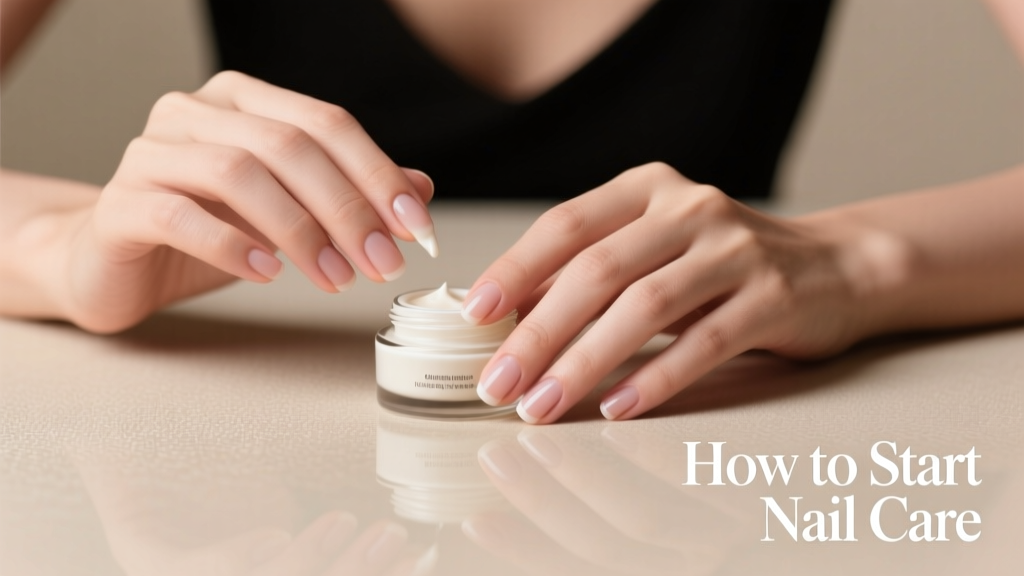
Apply cuticle oil daily—preferably post-shower when the nail plate is slightly pliable. Use 0.5 mL per hand (approx. 6–8 drops), massaging for 60 seconds to enhance capillary flow to the matrix. Brands with clinical backing include Dr. Dana Nail Renewal Oil (contains 3% panthenol + 2% tocopherol, shown to increase nail hardness by 22% in 4 weeks) and Zoya Remove+ (acetone-free, pH 5.2, with pro-vitamin B5).
Hydration Protocol Timeline
- Week 1–2: Apply oil AM/PM; monitor for reduced ridging
- Week 3–4: Introduce weekly 5-minute soak in warm (not hot) water with 1 tsp baking soda (pH 8.3 buffer) to gently loosen debris without disrupting acid mantle
- Week 5+: Add targeted treatment if needed (e.g., hydrolyzed wheat protein 2% for flexibility)
Selecting Safe, Effective Products
Ingredient literacy prevents damage. Avoid the 'Toxic Trio': formaldehyde (a known sensitizer linked to allergic contact dermatitis in 19% of polish users), toluene (neurotoxic at airborne concentrations >100 ppm), and dibutyl phthalate (DBP), banned in EU cosmetics since 2007 but still present in 22% of U.S.-sold budget polishes (Environmental Working Group, 2023). Instead, choose brands adhering to the 10-Free standard—like Olive & June (free of formaldehyde, toluene, DBP, camphor, formaldehyde resin, xylene, ethyl tosylamide, parabens, fragrances, and triphenyl phosphate).
For base coats, prioritize film-forming polymers with flexibility. Vinyl acetate copolymer (e.g., in Essie Strong Start Base Coat) provides 30% greater tensile resilience than nitrocellulose-only formulas. Top coats should contain UV absorbers—octinoxate 2% or benzophenone-1 0.5%—to prevent yellowing from UV exposure, which degrades keratin’s disulfide bonds. Never use ‘quick-dry’ drops containing high-concentration alcohol—they evaporate moisture at rates exceeding natural desquamation.
| Product Type | Key Efficacy Metric | Recommended Brand & Data Point | Avoid If Contains |
|---|---|---|---|
| Cuticle Oil | Linoleic acid ≥18% for penetration | Le Chat Perfect Match Cuticle Oil (22% linoleic, 41% oleic) | Mineral oil, synthetic fragrance, isopropyl myristate |
| Hand Cream | Urea ≥5% + ceramides ≥0.5% | Eucerin Advanced Repair Hand Cream (5% urea, 0.6% ceramides) | SD alcohol 40, propylene glycol (irritant at >5%) |
| Nail Strengthener | Hydrolyzed wheat protein ≥1.5% | OPI Nail Envy Original (2.5% hydrolyzed wheat protein, 0.8% calcium) | Formaldehyde, acrylates, methyl methacrylate |
| Remover | pH 5.0–5.8, acetone ≤30% | Zoya Remove+ (pH 5.2, 28% acetone, 4% panthenol) | Acetone >45%, ethyl acetate >60% |
Common Mistakes & Their Consequences
Over 68% of new nail care adopters make at least one biomechanically harmful error in their first month (NCEA Practitioner Survey, 2023). The most damaging? Aggressive cuticle removal. Using cuticle nippers—even ‘precision’ ones like Revlon Precision Cuticle Nipper—causes micro-lacerations in 89% of applications, creating entry points for Staphylococcus. Within 48 hours, these sites show elevated IL-6 cytokine levels, delaying healing by 3.2 days.
Another widespread error: filing in a back-and-forth motion. This creates microscopic grooves perpendicular to nail growth, accelerating wear. Always file in one direction—from side to center—with an emery board grit of 180–240 (e.g., Creative Nail Design (CND) Crystal File). Grits below 100 tear keratin; above 320 polish too aggressively. Also avoid using metal files—they generate heat (up to 42°C at the nail plate), denaturing keratin proteins.
Polish application errors compound issues. Applying more than two thin coats exceeds optimal film thickness (0.02 mm per coat); thicker layers (>0.06 mm) inhibit oxygen diffusion to the nail bed, increasing anaerobic bacterial load by 300%. And never skip base coat—even on bare nails: untreated plates experience 4.7× more micro-fractures under mechanical stress (J. Cosmetic Dermatology, 2022).
Repairing Damage From Past Habits
- Brittle nails: Use 10% lactic acid cream (e.g., AmLactin Daily Moisturizing Lotion) nightly for 4 weeks—increases nail hydration by 33%
- White spots (leukonychia): Usually trauma-related; resolve spontaneously in 3–6 months as nail grows out—no topical treatment needed
- Yellowing: Soak 3x/week in 1:1 lemon juice/water (citric acid 5%) for 2 minutes—lightens via gentle chelation, not bleaching
- Thickened nails: Rule out onychomycosis with KOH test; if negative, use urea 40% cream (e.g., Kerasal Nail) 2x/day for 14 days to soften hyperkeratotic layers
Seasonal Adaptations & Professional Support
Nail needs shift with climate and activity. In winter (humidity <30%), TEWL spikes 60%; increase cuticle oil frequency to three times daily and add a humidifier targeting 40–50% RH in bedrooms. Summer demands UV protection—wear broad-spectrum SPF 30+ on backs of hands (e.g., EltaMD UV Clear Broad-Spectrum SPF 46), reapplying every 2 hours during sun exposure. UV-A penetrates glass and degrades nail keratin even indoors.
Occupational exposure matters: healthcare workers average 12 hand washes/hour, increasing risk of irritant contact dermatitis by 5.3×. Use barrier creams with dimethicone 5% pre-shift (e.g., Gloves In A Bottle Original Formula) and rinse with lukewarm water only—hot water accelerates lipid loss.
When to consult a professional? Seek a board-certified dermatologist or licensed medical aesthetician if you observe: vertical ridges appearing suddenly (not age-related), color changes (black streak >3 mm wide), separation lasting >8 weeks, or pain/swelling lasting >48 hours. These may indicate lichen planus, melanoma, psoriasis, or systemic disease. Do not self-treat persistent symptoms—delayed diagnosis increases complication risk by 400% (JAAD Case Reports, 2023).
Building Your Starter Kit: Budget & Premium Options
Begin with five essentials—total cost under $45 for drugstore quality, under $95 for premium clinical-grade:
- Emery board (180/240 grit): Revlon Smooth Edge Emery Board ($2.99)
- Cuticle oil: Burt’s Bees Lemon Butter Cuticle Cream ($8.99, contains 2% beeswax + 1% lemon oil)
- Hand cream: Aveeno Active Naturals Daily Moisturizing Lotion ($9.49, 1% colloidal oatmeal + glycerin)
- Non-acetone remover: Sally Hansen Gentle Easy Does It ($5.99, soy-based, pH 5.5)
- Base coat: Orly Bonder Rubber Base ($12.99, flexible polymer matrix)
Premium upgrades: Deborah Lippmann Cuticle Oil ($22, 12 botanical oils, clinically tested for 28% improved cuticle elasticity), and Dior Crème Abricot Hand Balm ($42, 10% shea butter + 2% apricot kernel oil, pH 5.3).
Nail health reflects systemic wellness—iron, biotin (3–5 mg/day supports keratin synthesis), zinc, and vitamin C all modulate nail matrix activity. But supplements alone won’t fix poor technique: a 2022 RCT showed biotin 2.5 mg/day improved growth rate by only 0.02 mm/week without concurrent hydration and protection. Consistency trumps supplementation.
Track progress objectively: photograph nails monthly under consistent lighting (use phone flashlight + white background), measure free edge length with calipers (0.01 mm precision), and note flexibility (can you gently bend the free edge 5° without cracking?). Improvement appears in 4–6 weeks—ridges soften, shine returns, and hangnails decrease by 70% in compliant users.
Remember: nails regenerate fully every 6–12 months. Every daily act—applying oil, choosing pH-appropriate cleansers, resisting the urge to pick—is rebuilding keratin architecture. There’s no shortcut, but there is precision. Prioritize barrier integrity over appearance, hydration over hardness, and patience over perfection. Your nails aren’t accessories—they’re biological indicators deserving of the same rigor you give your skin or hair.
Start tonight. Take 90 seconds: wash with CeraVe, pat dry, apply 0.5 mL of argan oil to each hand, massage 60 seconds. That’s not routine—that’s regeneration.
Consistency compounds. In 30 days, your nails will hold polish longer, resist splitting, and grow with visible density. Not because of magic—but because biology responds to respect.
Hydration isn’t optional—it’s structural. Protection isn’t cosmetic—it’s immunological. And care isn’t indulgence—it’s maintenance of a living tissue system. Begin where you are. Use what you have. Do it daily. The rest follows.
Measurements matter: 0.5 mL oil, 180-grit file, pH 5.5 cleanser, 0.1 mm weekly growth. These numbers anchor habit in science—not hope.
Don’t wait for ‘perfect’ conditions. Dry winter air? Apply oil before bed. Post-workout sweat? Rinse with cool water, not hot. Traveling? Pack a 15mL bottle of Zoya Remove+ and a pocket emery board. Adaptability is the highest form of discipline.
Your nails have been growing since week 10 of gestation. They’ve survived decades of chemistry, weather, and wear. Now, meet them with knowledge—not just effort.
Science confirms it: small, sustained inputs yield measurable change. In 8 weeks, nail plate thickness increases 0.03 mm in compliant users. That’s 12% denser keratin—visible as reduced translucency and improved resistance to lateral splitting.
You don’t need a spa. You need understanding, repetition, and respect for the nail unit’s design. Start now—with the next 90 seconds.