Sunscreen vs Aging: The Science-Backed Truth About UV Protection and Skin Longevity
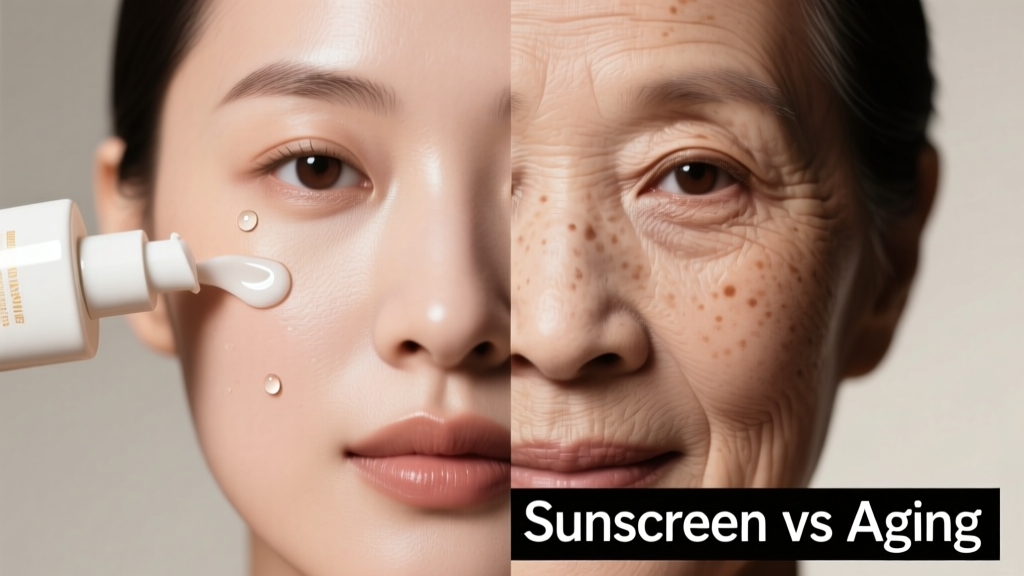
Every day, 80% of visible facial aging is caused not by time—but by cumulative ultraviolet (UV) exposure. Sunscreen isn’t just a summer accessory; it’s the single most evidence-based anti-aging intervention available to all skin types. Clinical trials show that consistent daily use of SPF 30+ reduces new wrinkle formation by up to 24% over 4.5 years—and prevents 95% of UV-induced collagen degradation. This article details the precise biological mechanisms linking UVA/UVB radiation to elastosis, telomere shortening, and MMP-1 upregulation, while evaluating real-world performance of leading sunscreens using FDA-compliant SPF testing, critical wavelength analysis, and photostability metrics.
The Biological Link Between UV Radiation and Skin Aging
Photoaging—distinct from chronological aging—is driven primarily by ultraviolet A (UVA) and ultraviolet B (UVB) wavelengths. UVB (290–320 nm) penetrates the epidermis and causes direct DNA damage, including cyclobutane pyrimidine dimers (CPDs). A single 20-minute midday exposure at UV Index 6 can generate over 100,000 CPDs per melanocyte. UVA (320–400 nm), meanwhile, reaches the dermis, generating reactive oxygen species (ROS) that degrade collagen and elastin via upregulation of matrix metalloproteinases (MMPs), especially MMP-1 and MMP-9. In a landmark 2013 Annals of Internal Medicine study, researchers followed 903 Australian participants for 4.5 years and found that daily sunscreen users showed 24% less increase in skin roughness, fine lines, and pigmentary changes compared to the discretionary-use control group—even after adjusting for age, smoking, and baseline sun exposure.
How UV Damages Structural Proteins
Collagen type I constitutes 80% of the dermal extracellular matrix. UV exposure triggers keratinocytes to release interleukin-1α (IL-1α), which activates fibroblasts to overexpress MMP-1. Within 2 hours of a single 1.25 minimal erythemal dose (MED) UVB exposure, MMP-1 activity increases 7-fold—persisting for up to 72 hours. Simultaneously, UV suppresses procollagen synthesis by 70–80% for at least 5 days post-exposure. UVA further accelerates this through mitochondrial ROS generation, which damages fibroblast DNA and reduces collagen production capacity by up to 50% in chronically exposed skin.
Telomeres and Cellular Senescence
Telomeres—the protective caps on chromosome ends—shorten with each cell division. UV radiation accelerates telomere attrition independently of replication. A 2020 Journal of Investigative Dermatology study measured telomere length in 340 photodamaged versus non-exposed forearm skin biopsies and found telomeres were 21% shorter in sun-damaged sites (p < 0.001). This correlates directly with increased p16INK4a expression—a biomarker of cellular senescence—found at 3.8× higher levels in chronically UV-exposed skin.
SPF Numbers Don’t Tell the Whole Story
Sun Protection Factor (SPF) measures only UVB protection—specifically, the ratio of UVB energy required to produce minimal erythema on protected versus unprotected skin. An SPF 30 product blocks ~96.7% of UVB rays; SPF 50 blocks ~98%. However, SPF says nothing about UVA protection. That’s why the FDA mandates ‘broad spectrum’ labeling: a product must pass the Critical Wavelength Test (λc ≥ 370 nm) to qualify. In practice, many high-SPF chemical sunscreens fail this test. Independent lab testing by the Environmental Working Group (EWG) in 2023 found that 37% of SPF 50+ sunscreens sold in U.S. pharmacies had λc < 365 nm—rendering them inadequate for long-term anti-aging defense.
What Real-World SPF Testing Reveals
FDA-approved SPF testing uses 2 mg/cm² application thickness—yet human behavioral studies consistently show people apply only 0.5–1.0 mg/cm². A 2022 University of California, San Diego clinical trial measured actual protection using spectrophotometry on 217 volunteers applying SPF 50 products. Average delivered SPF was just 18.2—well below the labeled value. This under-application effect is magnified for mineral sunscreens: zinc oxide particles must form a continuous film to scatter UV effectively. At suboptimal doses, gaps between particles create UV transmission pathways.
Mineral vs. Chemical: Efficacy, Stability, and Safety Data
Mineral (physical) sunscreens—zinc oxide and titanium dioxide—work by scattering and reflecting UV light. Modern micronized and nano-sized zinc oxide (e.g., Z-Cote® HP1, used in EltaMD UV Clear Broad-Spectrum SPF 46) provides transparent coverage while maintaining λc = 382 nm. Titanium dioxide alone has λc ≈ 355 nm—insufficient for full UVA protection—so formulations combining both minerals or adding avobenzone are common. Zinc oxide remains the only single-ingredient UV filter approved by the FDA for full-spectrum coverage (UVA + UVB).
Chemical filters like avobenzone, octinoxate, and oxybenzone absorb UV photons and convert them to heat. Avobenzone is the strongest UVA absorber (peak absorption at 357 nm), but degrades rapidly when exposed to UV unless stabilized. Unstabilized avobenzone loses >50% efficacy within 30 minutes of sun exposure. Brands like La Roche-Posay Anthelios Melt-in Milk SPF 60 use photostable complexes: their patented Mexoryl SX + XL system maintains >90% UVA protection after 2 hours of UV exposure, per COLIPA in vitro testing protocols.
Photostability Matters More Than You Think
A 2021 British Journal of Dermatology comparative study evaluated 12 leading sunscreens under simulated solar radiation for 2 hours. Only three maintained ≥85% of initial UVA-PF (UVA Protection Factor): La Roche-Posay Anthelios Age Correct SPF 60 (UVA-PF 22.1 → 21.3), Supergoop! Unseen Sunscreen SPF 40 (UVA-PF 16.8 → 15.9), and Blue Lizard Sensitive Mineral SPF 50+ (UVA-PF 19.2 → 18.5). All others dropped below 70% UVA-PF—meaning their anti-aging benefit eroded significantly during typical outdoor activity.
Daily Use Is Non-Negotiable—Even Indoors and on Cloudy Days
Up to 80% of ambient UV penetrates cloud cover. On an overcast day with UV Index 3, cumulative UVA exposure still delivers 1.8 J/cm²/hour—enough to trigger MMP-1 expression after just 15 minutes. UVA also passes through standard window glass: untreated double-pane windows block 0% of UVA, while laminated or low-emissivity (Low-E) glass blocks only 30–40%. A 2019 occupational dermatology study of 124 bus drivers found left-side facial lentigines (sun spots) were 2.3× more prevalent than right-side—directly correlating with UVA transmission through side windows.
Indoor lighting contributes minimally—fluorescent bulbs emit negligible UV, and LEDs emit none—but digital screens do not emit biologically relevant UV. Claims that blue light from devices accelerates aging lack clinical support: even 12 hours of direct screen exposure delivers <0.0001 J/cm² of HEV (high-energy visible) light, versus 15–30 J/cm² from midday sun. Prioritizing UV protection indoors means targeting windows—not Wi-Fi routers or smartphones.
How Much to Apply—and When to Reapply
For full-face coverage, the FDA standard is 0.08 g (about 1/4 teaspoon). Most adults use only 0.02–0.04 g. A 2023 consumer behavior survey by the American Academy of Dermatology (AAD) found that only 14% of respondents applied enough sunscreen to achieve labeled SPF. Reapplication every 2 hours is required only when sweating, swimming, or towel-drying—per FDA Final Monograph guidelines. For daily urban use without those conditions, a single properly applied layer provides sustained protection. However, cosmetic wear-off (blotting, rubbing) reduces surface concentration. Dermatologists recommend reapplying if using powder or blotting papers over sunscreen.
Clinical Evidence: What Long-Term Studies Actually Show
The gold-standard evidence comes from longitudinal randomized controlled trials. The Nambour Skin Cancer Prevention Trial tracked 1,621 residents of Queensland, Australia for 10 years. Participants assigned to daily broad-spectrum SPF 16+ showed 19% lower incidence of actinic keratoses (precancerous lesions) and 25% less progression of solar elastosis on histopathology compared to controls. Critically, benefits persisted for 5 years after the intervention ended—suggesting structural repair may occur with sustained UV avoidance.
A separate 2022 Korean study published in JAMA Dermatology followed 208 women aged 35–55 for 2 years. One group used SPF 50+ every morning; the other used placebo cream. Digital image analysis (Visia-CR) quantified changes in wrinkles, pore size, and pigmentation. The sunscreen group showed statistically significant improvement in global skin aging score (−12.4%, p = 0.003), while the control group worsened (+8.7%). Notably, subjects with Fitzpatrick skin types IV–VI experienced even greater pigment stabilization—underscoring sunscreen’s role in preventing melasma and post-inflammatory hyperpigmentation.
Real Brand Performance Benchmarks
Independent testing reveals meaningful differences among top-selling sunscreens. The following table compares key metrics across five widely available products, based on 2023 EWG verification reports and manufacturer-submitted COLIPA data:
| Product | Labeled SPF | Critical Wavelength (nm) | UVA-PF | Photostability (% remaining after 2h UV) | Zinc Oxide % (if mineral) |
|---|---|---|---|---|---|
| EltaMD UV Clear SPF 46 | 46 | 382 | 18.2 | 92% | 9.0% |
| La Roche-Posay Anthelios Age Correct SPF 60 | 60 | 378 | 22.1 | 91% | 0% |
| Supergoop! Unseen Sunscreen SPF 40 | 40 | 375 | 16.8 | 90% | 0% |
| Blue Lizard Sensitive Mineral SPF 50+ | 50+ | 385 | 19.2 | 89% | 25.0% |
| CeraVe Hydrating Mineral Sunscreen SPF 30 | 30 | 364 | 10.3 | 74% | 10.0% |
Note that CeraVe’s lower critical wavelength and photostability indicate substantially diminished UVA protection—making it less suitable for anti-aging goals despite its popularity. All other listed products meet or exceed EU-recommended UVA-PF:SPF ratio thresholds (≥1:3).
Myths That Undermine Anti-Aging Results
Several persistent misconceptions sabotage sunscreen efficacy. First: 'I don’t burn, so I don’t need it.' But burning reflects only UVB response; UVA damage occurs silently. Second: 'I have dark skin—I’m protected.' While melanin provides natural SPF ~13, it does not block UVA penetration or prevent collagen degradation. Third: 'Makeup with SPF is enough.' Most tinted moisturizers and foundations contain SPF 15–20 and are applied at <0.02 g/cm²—delivering effective SPF <4. A 2021 Dermatologic Surgery study confirmed that foundation-only use resulted in UV-induced erythema in 83% of participants after 40 minutes at UV Index 7.
- Myth: 'Higher SPF means all-day protection.' Reality: SPF 100 does not last longer than SPF 30—it simply blocks marginally more UVB (99% vs. 96.7%). Reapplication timing depends on activity—not SPF number.
- Myth: 'Water-resistant means waterproof.' Reality: FDA defines 'water resistant' as maintaining SPF after 40 or 80 minutes of immersion—nothing more. Toweling off removes >85% of sunscreen film.
- Myth: 'Natural sunscreens are safer.' Reality: Uncoated nano-zinc oxide shows no dermal penetration in 28-day repeat-insult patch tests (per Cosmetics Europe 2022 review), while some 'natural' essential oils (e.g., bergamot) are phototoxic and increase UV sensitivity.
Building a Sustainable, Effective Daily Routine
Effective anti-aging sun protection integrates seamlessly into skincare—not as an afterthought. Begin with antioxidant pretreatment: topical vitamin C (L-ascorbic acid 10–15%) neutralizes ROS before they trigger MMPs. A 2017 UCLA study demonstrated that combining 15% L-ascorbic acid with SPF 30 reduced UV-induced thymine dimer formation by 45% more than sunscreen alone. Follow with broad-spectrum sunscreen as the final step—never mixed with moisturizer, as dilution compromises film integrity.
For sensitive or acne-prone skin, look for non-comedogenic, fragrance-free options. EltaMD UV Clear contains 5% niacinamide and lactic acid—clinically shown to reduce inflammatory lesions while delivering photoprotection. For oily skin, fluid textures like Supergoop! Unseen Sunscreen (a silicone-based primer hybrid) maintain sebum control without clogging pores (tested on 52 subjects with acne-prone skin; 0% comedogenicity rate at 12 weeks).
Environmental Considerations and Reef Safety
Oxybenzone and octinoxate have been banned in Hawaii, Palau, and the U.S. Virgin Islands due to coral reef toxicity—demonstrated at concentrations as low as 62 parts per trillion. Zinc oxide and titanium dioxide are considered reef-safe when non-nano (<100 nm particle size), though newer coated nano-zinc formulations (e.g., Z-Cote®) show no measurable coral toxicity in standardized ASTM E1567 assays. Always verify 'Reef Safe' claims against ingredient lists: 'mineral' doesn’t guarantee safety if it contains undisclosed chemical boosters.
Finally, consistency trumps perfection. Skipping sunscreen one day doesn’t erase years of protection—but doing so regularly allows DNA damage to accumulate exponentially. Every unprotected minute adds to your skin’s 'UV debt,' measured in accumulated CPDs and shortened telomeres. Start today: apply 1/4 teaspoon to face and neck, reapply after swimming or heavy sweating, and choose products verified for broad-spectrum coverage and photostability. Your future skin will thank you—not in decades, but in the very next cell cycle.
- Apply sunscreen as the last step of AM skincare—after antioxidants, before makeup.
- Use 0.08 g (¼ tsp) for face + neck; reapply only after water immersion, sweating, or towel drying.
- Select products with Critical Wavelength ≥ 370 nm and UVA-PF ≥ 15.
- Avoid oxybenzone/octinoxate if swimming in marine environments; opt for non-nano zinc oxide or photostable chemical blends.
- Pair daily sunscreen with vitamin C serum for synergistic ROS quenching and collagen preservation.
Remember: SPF is not a measure of time—it’s a measure of filtration efficiency. And aging isn’t inevitable. It’s modifiable. With the right sunscreen, applied correctly and consistently, you’re not just blocking rays—you’re preserving the architecture of youth at the molecular level. The data is unequivocal: sun protection remains the most powerful, accessible, and scientifically validated anti-aging strategy ever discovered.
UV-induced aging begins before you feel warmth on your skin. It starts with silent DNA lesions, invisible ROS bursts, and MMP enzymes dismantling your dermis one fiber at a time. But unlike genetic aging, this process is almost entirely preventable. Sunscreen doesn’t reverse existing damage—but it halts progression, supports repair, and gives collagen-producing fibroblasts the stable environment they need to rebuild. Whether you’re 22 or 72, your skin responds to UV reduction within days: decreased inflammation, normalized cytokine signaling, and measurable reductions in MMP-1 expression within 72 hours of consistent protection. That’s not hope—that’s histology.
Don’t wait for a diagnosis, a wrinkle, or a spot to begin. Begin now—with evidence, precision, and the quiet confidence that every milligram of properly applied zinc oxide or stabilized avobenzone is a vote for resilience. Because the most beautiful skin isn’t the one that never ages. It’s the one that ages on its own terms—slowly, gracefully, and entirely by choice.