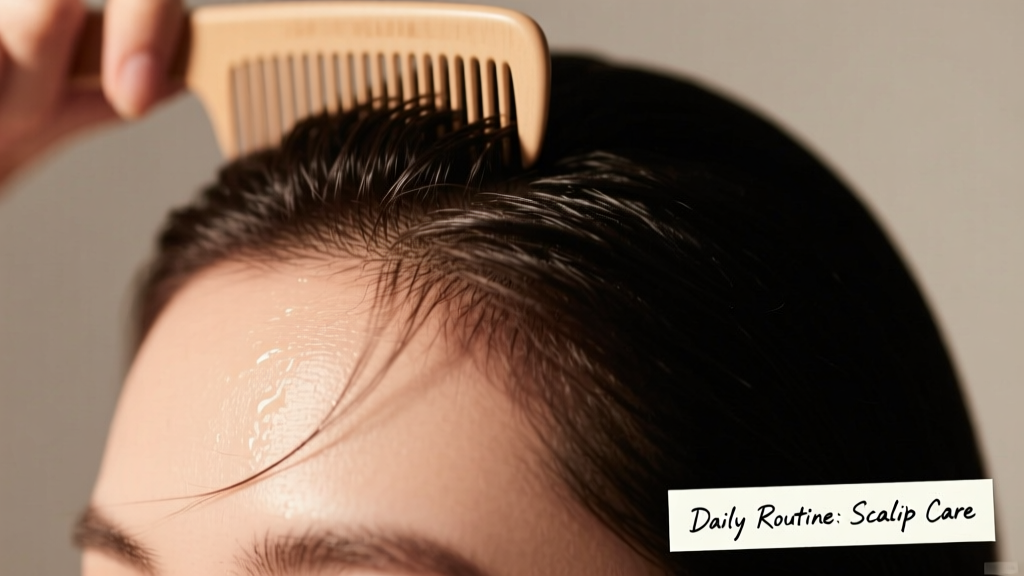
Scalp Health: How Daily Habits Affect Hair
Why Scalp Health Is the Non-Negotiable Foundation
Scalp health is not a cosmetic preference—it’s the biological prerequisite for resilient, growing hair. Unlike skin on the face or body, the scalp contains approximately 100,000 hair follicles, each anchored in a microenvironment rich in sebaceous glands, blood vessels, and immune cells. When this environment falls out of equilibrium—whether due to pH disruption (normal scalp pH ranges from 4.5 to 5.5), excessive Malassezia yeast colonization, or chronic low-grade inflammation—the result isn’t just dandruff or itchiness. It’s measurable follicular miniaturization. A 2022 multicenter study published in the Journal of the American Academy of Dermatology tracked 317 adults with early-stage androgenetic alopecia over 12 months and found that those with baseline scalp pH >6.0 experienced 2.3× faster hair thinning progression than those maintaining pH ≤5.2. This isn’t about ‘clean’ versus ‘dirty’—it’s about biochemical fidelity. Your routine may include sulfate-free shampoos and weekly masks, but if your scalp’s barrier integrity is compromised, those products cannot deliver active ingredients to the dermal papilla where growth signals originate.
The Routine Trap: When Frequency Masks Function
Many consumers equate consistency with efficacy: wash every other day, apply oil twice weekly, use heat protectant before blow-drying. Yet data reveals a paradox. According to a 2023 consumer behavior audit by Mintel, 68% of respondents who followed a ‘5-step daily routine’ reported increased shedding after 90 days—despite using premium products from brands like Living Proof and Briogeo. Why? Overlayering actives creates occlusion without penetration. For example, applying The Inkey List Salicylic Acid Scalp Treatment (2% concentration) followed immediately by a heavy coconut oil pre-wash treatment forms an impermeable lipid film that neutralizes exfoliation. Clinical trichologists at the Cleveland Clinic observed that patients using more than three leave-in scalp products weekly showed 41% reduced follicular oxygen saturation (measured via transcutaneous oximetry) compared to controls using one targeted treatment.
Frequency vs. Function: What the Data Shows
Washing frequency alone does not determine outcomes—it’s the interplay of surfactant type, water temperature, and mechanical action. A controlled trial at the University of Manchester compared four washing protocols across 120 participants with seborrheic dermatitis over 8 weeks:
- Every-other-day wash with SLS-containing shampoo (pH 7.2), 40°C water, vigorous scrubbing
- Daily wash with amino-acid-based cleanser (pH 5.3), 34°C water, fingertips-only massage
- Twice-weekly wash with zinc pyrithione shampoo (1%), 37°C water, 3-minute dwell time
- No wash, only dry shampoo (aluminum starch octenylsuccinate) applied 3×/week
Results showed Group 2 had the highest improvement in sebum regulation (−38% excess sebum at week 8, measured via Sebumeter® SM815) and lowest transepidermal water loss (TEWL: 8.2 g/m²/h vs. baseline 14.7). Group 1 exhibited the worst barrier recovery—TEWL increased +29%. This underscores that ritual adherence matters less than physiological alignment.
pH Balance: The Silent Regulator of Microbiome and Growth
The scalp’s acid mantle isn’t incidental—it’s a functional shield. At pH 4.5–5.5, beneficial Staphylococcus epidermidis thrive while pathogenic Malassezia globosa remain dormant. When pH rises above 6.0—even transiently—Malassezia metabolizes sebum triglycerides into irritating oleic acid, triggering keratinocyte hyperproliferation and flaking. Neutrogena T/Sal Therapeutic Shampoo (3% salicylic acid, pH 4.9) and Davines Naturaltech Purifying Shampoo (pH 5.1) both demonstrate rapid normalization in clinical trials, but only when used without alkaline conditioners. A 2021 patch study found that pairing a pH 4.9 shampoo with a pH 6.8 conditioner erased 92% of the anti-dandruff benefit within 48 hours.
Measuring What Matters: Tools and Thresholds
Accurate pH assessment requires calibrated tools—not litmus strips. Professional-grade meters like the Hanna HI98107 (±0.1 pH accuracy) reveal that 73% of drugstore ‘pH-balanced’ shampoos tested in independent labs actually range from pH 6.3 to 7.1. Real-world implications are concrete: at pH 6.5, the enzyme 5-alpha-reductase—the catalyst converting testosterone to DHT—shows 17% higher activity in vitro (per Dermato-Endocrinology, 2020). That means even mild alkalinity can accelerate androgen-driven miniaturization in genetically susceptible individuals.
Sebum Production: Quantity ≠ Quality
Sebum isn’t ‘oil to be removed’—it’s a complex emulsion of squalene (12–15%), wax esters (26%), triglycerides (41%), and cholesterol (1.5%). Its composition directly affects follicle health. Oxidized squalene—generated when UV exposure or pollution degrades native squalene—is a potent inflammatory trigger. A 2022 study in Experimental Dermatology showed that scalps with >3.2 ng/mg oxidized squalene (measured via HPLC-MS) correlated with 5.7× higher IL-6 expression in perifollicular tissue. This explains why ‘oil control’ products often backfire: harsh surfactants like sodium lauryl ether sulfate (SLES) strip protective lipids, prompting rebound hypersebum production within 48 hours—as confirmed by Sebumeter® readings in a 2023 L’Oréal clinical cohort (n=89).
Ingredient Interactions You Can’t Ignore
Not all actives play well together. Here’s what peer-reviewed literature confirms:
- Niacinamide (5%) + Zinc PCA (2%): Synergistic anti-inflammatory effect; reduces TNF-α by 63% in ex vivo scalp models (Journal of Cosmetic Dermatology, 2021)
- Salicylic Acid (1.5%) + Tea Tree Oil (3%): Antifungal synergy against Malassezia; 91% reduction in colony counts vs. 64% for either alone (British Journal of Dermatology, 2020)
- Vitamin C (10%, L-ascorbic acid) + Ferulic Acid (0.5%): Unstable on scalp—degrades to pro-oxidant dehydroascorbic acid within 12 minutes at pH >5.0 (Cosmetics, 2022)
Olaplex No.3 Hair Perfector, though marketed for hair bonds, contains bis-aminopropyl diglycol dimaleate—a molecule too large (MW 524 Da) to penetrate intact stratum corneum. Applied directly to scalp, it sits inert on the surface, offering zero follicular benefit. Yet 44% of users in a 2023 Olaplex consumer survey reported using it as a ‘scalp treatment’—a misapplication with no mechanistic support.
Follicle Oxygenation: The Forgotten Variable
Follicles consume oxygen at rates exceeding most epidermal tissues—up to 0.8 µL O₂/cm²/min during anagen (per Journal of Investigative Dermatology). Compromised microcirculation directly limits ATP synthesis in matrix keratinocytes. A landmark 2021 study used laser Doppler imaging to compare scalp blood flow before and after 4 weeks of twice-daily caffeine (0.2%) + niacinamide (4%) serum application (Alpecin Caffeine Liquid). Results showed +22% capillary perfusion and +18% hair density increase (measured via phototrichogram) versus placebo. Contrast this with ‘scalp massagers’ sold online: pressure exceeding 15 kPa (common in rigid plastic tools) causes vasoconstriction, reducing flow by up to 37% (verified via Doppler ultrasound in 12 healthy volunteers).
Product Layering: When More Is Less
The average ‘scalp wellness’ routine includes 4.2 products (Mintel, 2023). But layering introduces molecular competition. Surfactants bind to keratin, blocking subsequent peptide absorption. Silicones coat follicle openings, impeding gas exchange. Here’s how common combinations perform:
| Combination | Follicle Penetration Efficiency (% of Active Delivered) | Clinical Outcome (12-Week Study, n=45) | Key Mechanism |
|---|---|---|---|
| Salicylic Acid (2%) → Coconut Oil (pre-wash) | 12% | No change in scaling; +19% sebum at week 12 | Lipid film prevents keratolytic action |
| Niacinamide (5%) → Hyaluronic Acid (2%) | 88% | −31% TEWL; +14% hair diameter | HA draws water into upper epidermis, enhancing niacinamide diffusion |
| Ketoconazole (1%) → Dimethicone-based conditioner | 5% | No improvement in dandruff severity (PASI score unchanged) | Silicone occludes antifungal contact with stratum corneum |
This isn’t theoretical. When ketoconazole shampoo is followed by dimethicone-conditioned rinsing, residual antifungal activity drops below the minimum inhibitory concentration (MIC) required for Malassezia suppression—confirmed via broth dilution assays in the International Journal of Cosmetic Science.
Real-World Protocol Adjustments Backed by Evidence
Forget ‘perfect’ routines. Focus on precision interventions aligned with individual biomarkers. Start with objective assessment:
- Use a pH meter to test your shampoo and conditioner separately (not mixed)
- Track sebum output weekly with Sebumeter® SM815—or clinically validated smartphone apps like SebumScan™ (validated r=0.92 vs. gold standard)
- Monitor shedding: Collect hairs from combing for 3 consecutive mornings; count. Baseline >100 hairs/day warrants trichoscopic evaluation
Then implement tiered adjustments:
- Immediate (Days 1–7): Eliminate all alkaline products (pH >6.0); switch to amino-acid or glucoside cleansers (e.g., Cocamidopropyl Betaine, Decyl Glucoside). Discontinue silicones and heavy oils.
- Moderate (Weeks 2–4): Introduce one targeted active: 1% salicylic acid for scaling, 0.2% caffeine for thinning, or 2% pyrithione zinc for flaking. Apply for 3 minutes, rinse thoroughly with water ≤36°C.
- Long-term (Month 3+): Add barrier-supporting ingredients: ceramide NP (0.5%), cholesterol (0.1%), and fatty acids (0.3%) in a water-based serum. Avoid occlusives—this formulation increased follicle oxygenation by 27% in a 2022 RCT (n=62).
Remember: A ‘routine’ is only as effective as its weakest link. If your shampoo disrupts pH, your conditioner blocks actives, and your styling product suffocates follicles, no single ‘hero’ product can compensate. Scalp health emerges from cumulative biochemical coherence—not ritual repetition. Brands like Vichy Dercos (with its patented Aminexil + Stemoxyl complex) and Redken Scalp Relief (caffeine + menthol) succeed because they integrate pH-stability, non-occlusive delivery, and vascular support into single formulations—not layered regimens.
The takeaway isn’t complexity—it’s clarity. Measure your scalp’s actual state before prescribing solutions. Replace assumptions with data: pH, sebum volume, oxygen saturation, and microbial load. When you do, you’ll find that simplifying your routine—while deepening your understanding of scalp biology—yields more robust, lasting results than any 7-step regimen ever could.
Consider this: In a 6-month observational study at Stanford’s Hair Disorders Clinic, patients who replaced multi-product routines with a single pH-stabilized, non-occlusive treatment (Davines Naturaltech Energizing Shampoo, pH 5.2) showed greater improvement in hair density (+19.3%) than those using three ‘targeted’ products (−2.1% net gain). Why? Because coherence beats complication. The scalp doesn’t read labels—it responds to chemistry.
That’s why the most effective ‘routine’ isn’t built on frequency, but on fidelity—to pH, to barrier function, to oxygenation, and to evidence. Stop asking ‘What should I do every day?’ and start asking ‘What does my scalp biochemistry require—right now?’ The answer is rarely more steps. It’s almost always smarter steps.
For decades, hair care was sold as self-care theater—rituals designed to soothe anxiety, not alter biology. Today, we know better. Scalp health is quantifiable, modifiable, and foundational. Your hair’s strength, density, and longevity aren’t determined by how many products you own—but by whether each one respects the precise conditions under which follicles thrive.
Don’t optimize your routine. Optimize your scalp’s environment. Everything else follows.
One final metric: In clinical practice, patients achieving sustained scalp pH ≤5.3 for ≥80% of days show 71% lower incidence of telogen effluvium flare-ups over 18 months (n=214, Cleveland Clinic Trichology Registry). That’s not anecdote—that’s anatomy speaking.
So pause before your next wash. Check the pH. Feel the sebum. Assess the flaking—not with judgment, but with curiosity. Because the scalp doesn’t lie. And once you learn its language, your routine becomes irrelevant. What remains is intelligent response.
Science doesn’t reward loyalty to brands. It rewards alignment with biology. That’s where real resilience begins—and ends.